
Loading, please wait...
LOT 1916
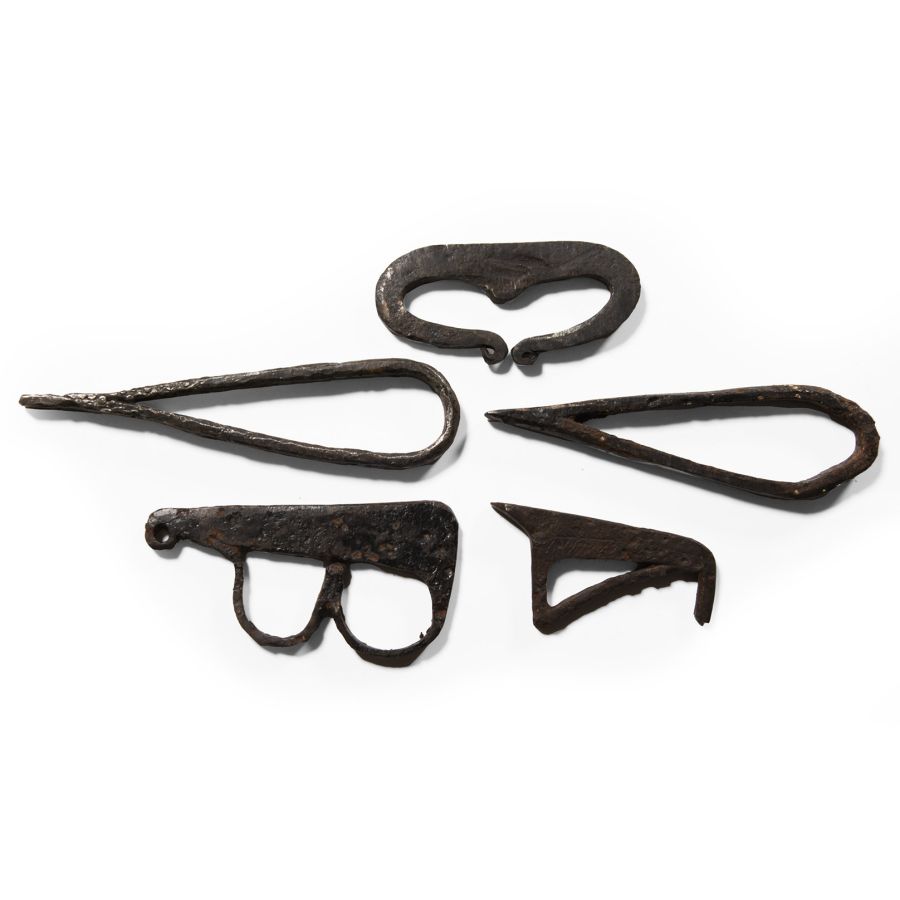
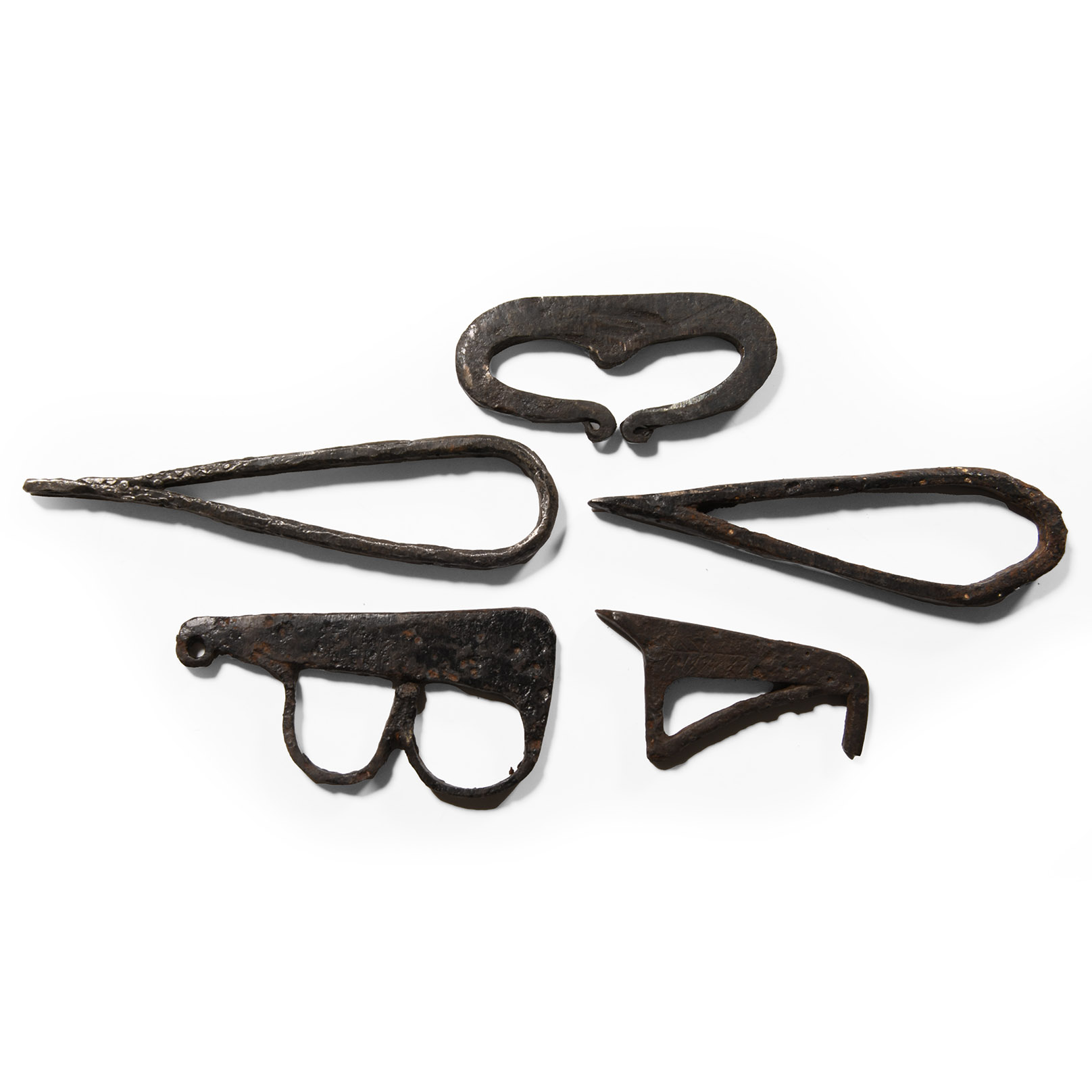
Medieval and Later 'Published' Iron Fire Steel 'Strike-a-Light' Collection
CIRCA 14TH-16TH CENTURY A.D.
2 1/4 - 4 1/4 in. (170 grams total, 5.7-10.8 cm).
Comprising four examples with curved handles. [5, No Reserve]
ProvenanceFrom the collection of the famous author, writer and speaker, Gordon Bailey, Essex, UK; formed since 1968.
LiteratureCf. similar specimen in PAS, PUBLIC-1CC6C6.
FootnotesFire steels were used to generate a spark from a 'strike-a-light' (a piece of flint or pyrite). The spark was directed into a tinder box containing a dry, flammable material such as charred linen until a flame was kindled.
CONDITIONTimeLine Auctions follows a vetting process to ensure the authenticity and legality of all items, reinforcing our commitment to integrity and responsible trading. Each antiquity, antique, and coin lot undergoes thorough examination by a vetting committee of at least ten external specialists, professional trade association members, scientists, and archaeologists: Our Vetting Process
AUCTIONS:
TimeLine is a leading auction house specialising in antiquities, ancient art, collectables, natural history, coins, medals, and books. Our auctions offer museums, collectors, historians, and enthusiasts the opportunity to acquire unique and historically significant pieces.
LOT 1916
Medieval and Later 'Published' Iron Fire Steel 'Strike-a-Light' Collection
Sold for (Inc. bp): £72
-
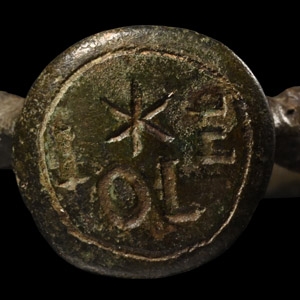
Medieval Bronze Ring with Star
15th-16th century A.D.Sold for (Inc. bp): £104
The shoulders fashioned as beast-heads, flared disc bezel with border and enigmatic 'IOLE' inscription surmounted by a six-pointed star. 5.70 grams, 24.13 mm overall, 17.40 mm internal diameter (approximate size British N 1/2, USA 6 3/4, Europe 14.35, Japan 13)
Ex German art market, 2000s. Acquired from an EU collector living in London. From the collection of Surrey, UK, gentleman. -
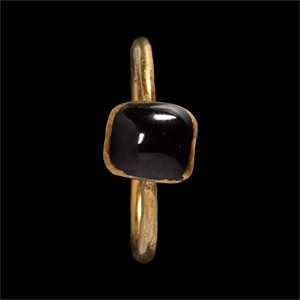
Medieval Gold Ring with Cabochon Garnet
14th century A.D.Estimate: £1,200 - 1,700 (+bp*)
Opening Bid: £600
With round-section hoop and inverted pyramidal cell, inset garnet cabochon. 3.59 grams, 27.40 mm overall, 18.69 mm internal diameter (approximate size British R, USA 8 1/2, Europe 18 3/4, Japan 18)
Acquired on the European art market in the 1990s. UK collection of a European gentleman. -
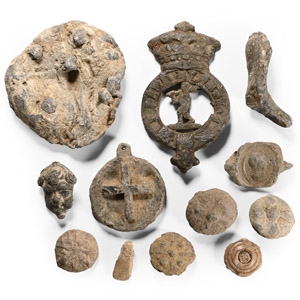
Medieval and Later Lead Artefact Collection
Circa 14th-19th century A.D.Sold for (Inc. bp): £13
Including bag seals, janiform figure's head, palm guard and other items; many of these objects are published in the Detector Finds book series. 503 grams total, 20-81 mm
From the collection of the famous author, writer and speaker, Gordon Bailey, Essex, UK; formed since 1968.
