
Loading, please wait...
LOT 1802
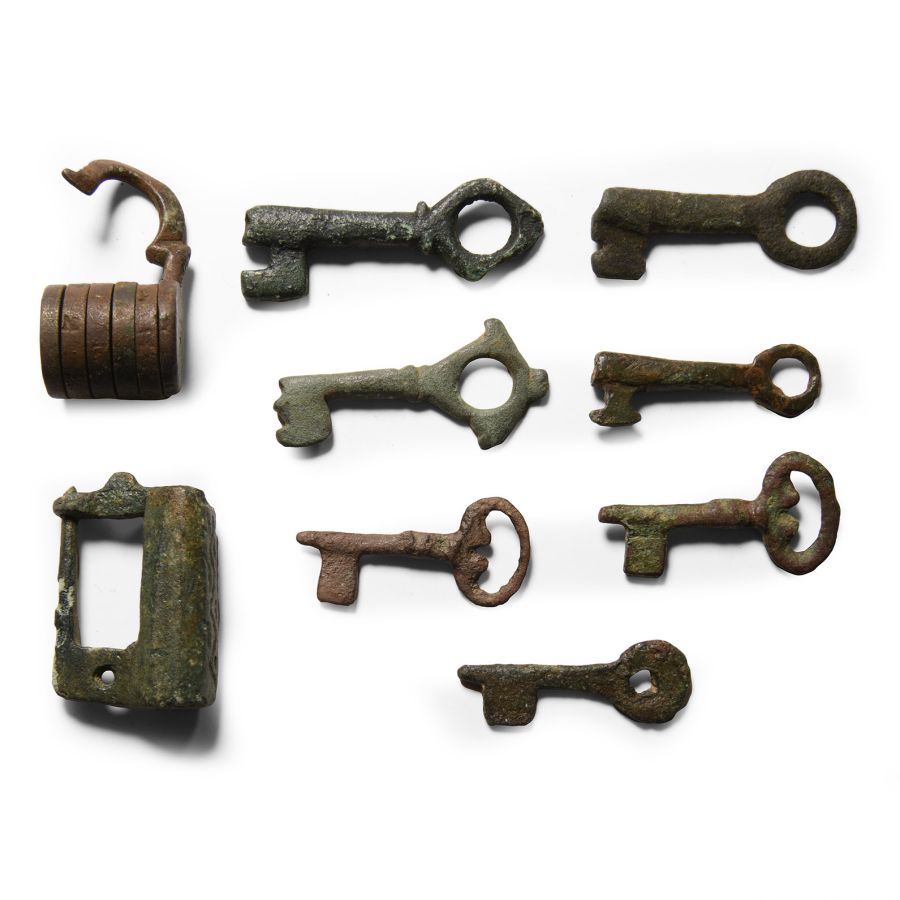
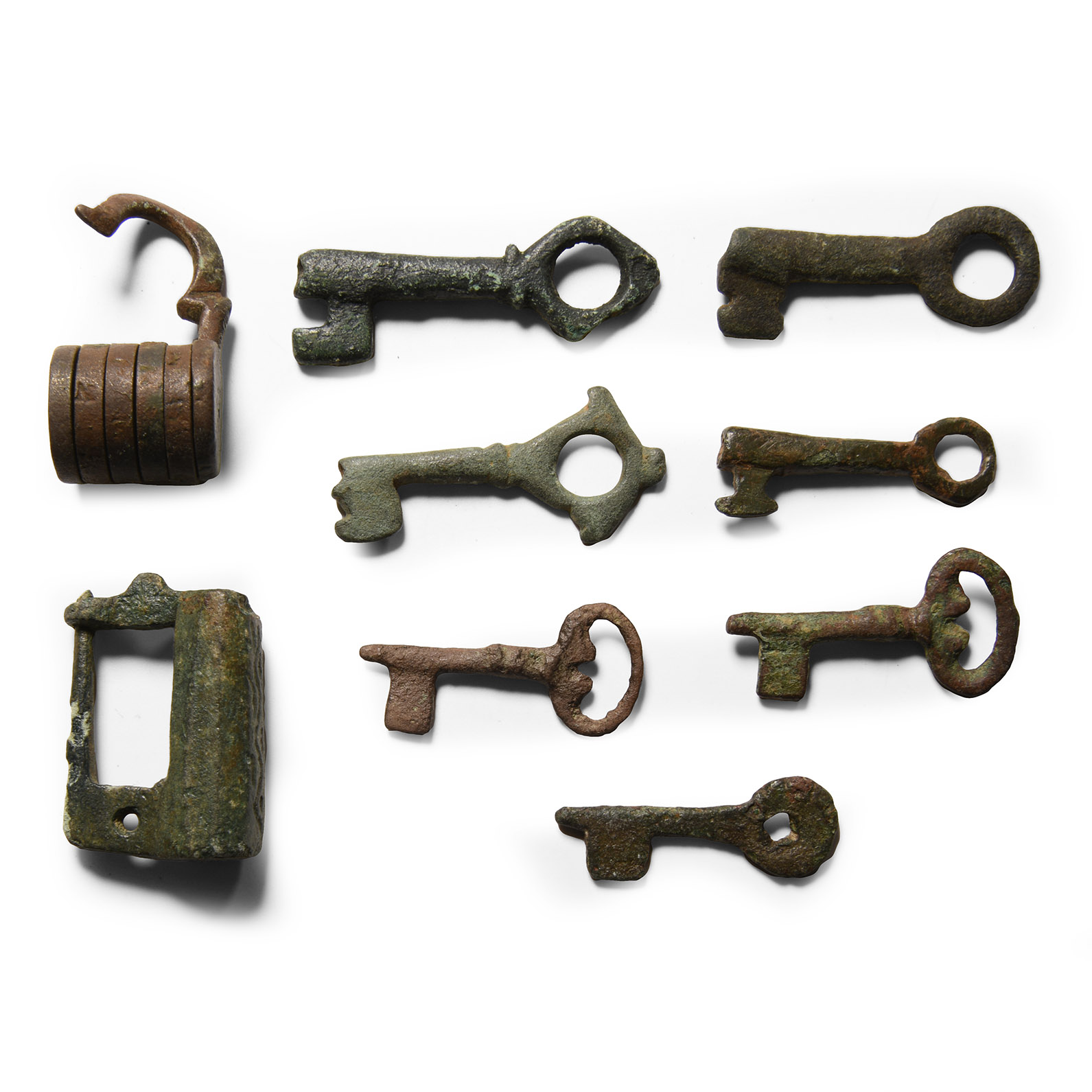
Medieval and Later 'Published' Bronze Casket Key and Padlock Collection
15TH-17TH CENTURY A.D.
1 1/4 - 1 5/8 in. (57 grams total, 31-41 mm).
Including barrel-shank and other key types, tumbler and barrel locks. [9, No Reserve]
ProvenanceFrom the collection of the famous author, writer and speaker, Gordon Bailey, Essex, UK; formed since 1968.
PublishedBailey, G., Detector Finds 3, Witham, 1997, p.42-45, for the barrel lock.
CONDITIONTimeLine Auctions follows a vetting process to ensure the authenticity and legality of all items, reinforcing our commitment to integrity and responsible trading. Each antiquity, antique, and coin lot undergoes thorough examination by a vetting committee of at least ten external specialists, professional trade association members, scientists, and archaeologists: Our Vetting Process
AUCTIONS:
TimeLine is a leading auction house specialising in antiquities, ancient art, collectables, natural history, coins, medals, and books. Our auctions offer museums, collectors, historians, and enthusiasts the opportunity to acquire unique and historically significant pieces.
LOT 1802
Medieval and Later 'Published' Bronze Casket Key and Padlock Collection
Sold for (Inc. bp): £72
-

Medieval 'Westminster' Bronze Buckle and Plate and Lead Pilgrim's Ampulla
Circa 14th century A.D.Sold for (Inc. bp): £46
Buckle with knuckles to outer edge of the loop and strap with incised tendril design; ampulla with lateral loops bent over. 63 grams total, 46-62 mm
Found Westminster, London, UK. Property of a Gloucestershire, UK, collector. Property of an East Sussex, UK, gentleman. -
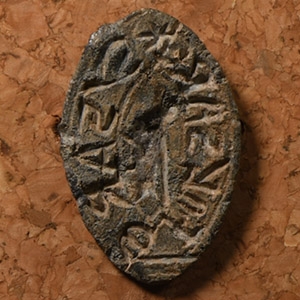
Framed Medieval Lead Seal Matrix of Sare Daughter of Sare
13th century A.D.Sold for (Inc. bp): £59
Vesica-shaped and fitted with attachment loop, legend in Latin script around a stylised bird, reading 'S. SARE FIL.SARE' i.e. 'SEAL OF SARE DAUGHTER OF SARE', a stylised flower to the reverse. 136 grams, 17 x 13 cm
From the collection of the famous author, writer and speaker, Gordon Bailey, Essex, UK; formed since 1968.
The lady of a wealthy family of merchants would have had her own small seal used for sealing her private letters, and the design of the matrix would have reflected this. On the vesica seals the legend around the border usually started at 12 o'clock position with a cross or a star (like here) and the word sigillum (seal) often indicated only by the letter S. Then, normally, the name of the owner and the one of the parent, after the letter F. (FILIUS or FILIA = son or daughter). -
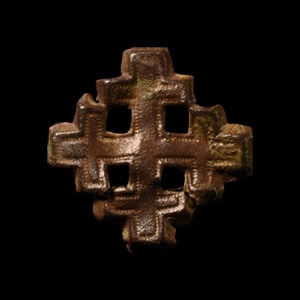
Medieval Bronze Knight's Holy Sepulchre Badge
Circa 13th-14th century A.D.Sold for (Inc. bp): £286
Formed as a cross-crosslet, the symbol of the Knights of the Holy Sepulchre, with punched-point border. 1.36 grams, 25 mm
Found near Skipsea, East Yorkshire, UK. Property of a Bradford, UK, gentleman.
The 'Equestrian Order of the Holy Sepulchre of Jerusalem' was an order of knighthood under the protection of the Pope, formed around 1099 AD by Duke Godfrey of Bouillon, the leader of the First Crusade. It was established for the protection of pilgrims travelling to the Holy Land and was recognised by a Papal Bull in about 1113 AD.
