
Loading, please wait...
LOT 1188
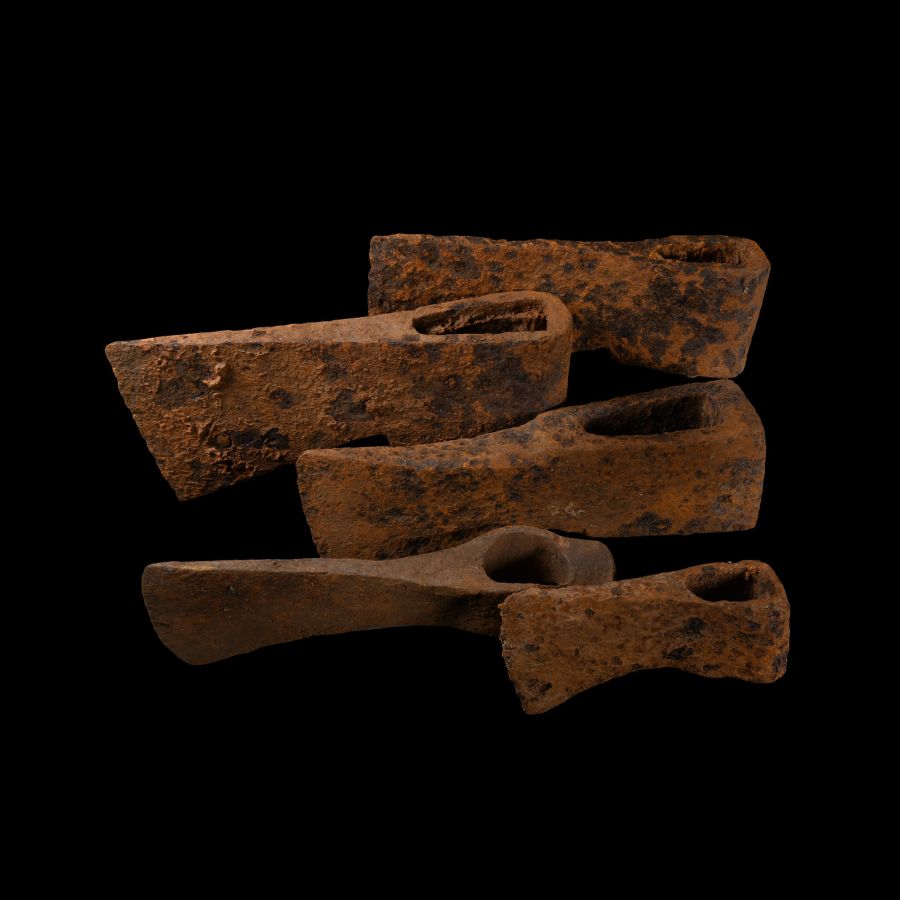
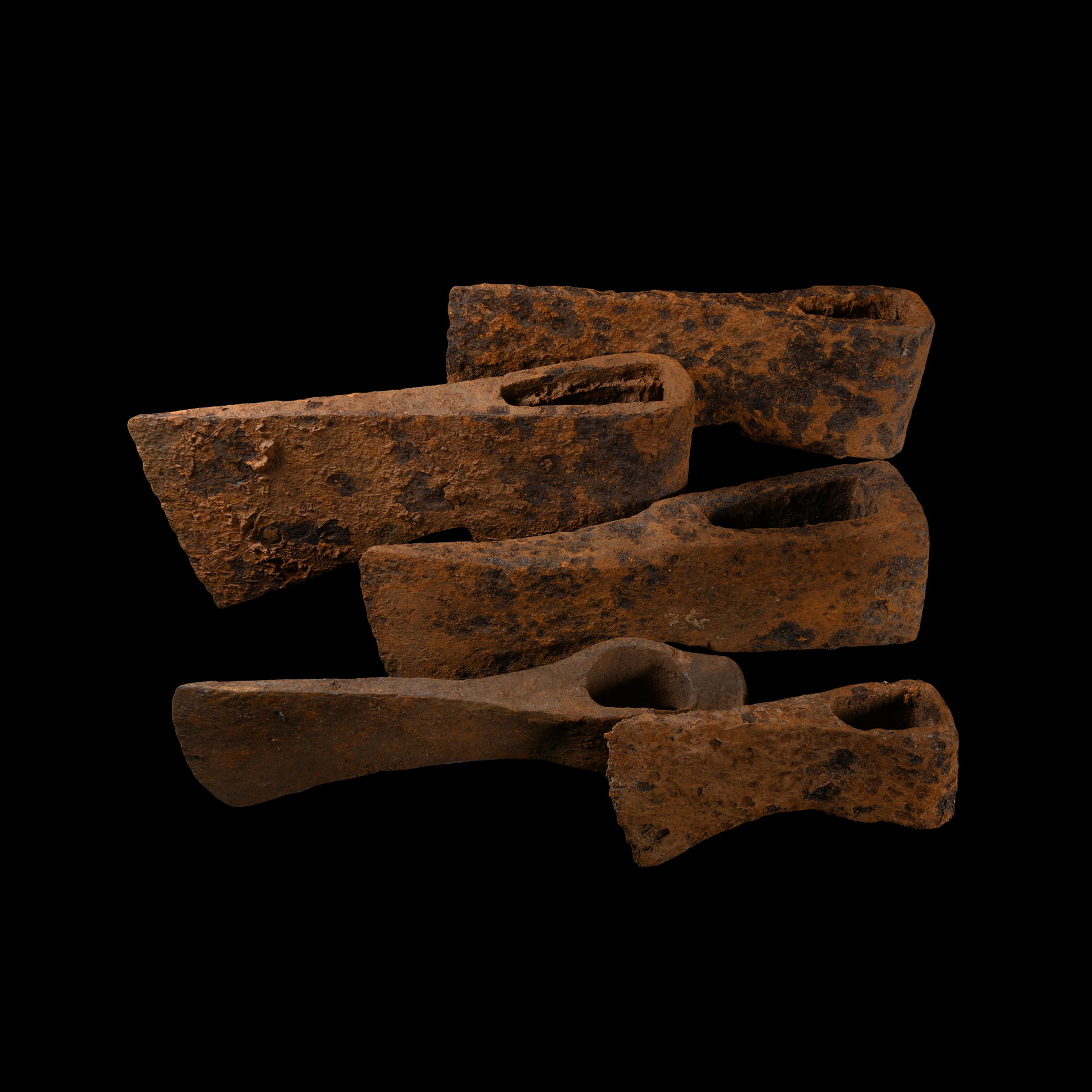
Medieval and Later Iron Axehead Collection
14TH-18TH CENTURY A.D.
4 3/4 - 7 1/2 in. (4.27 kg total, 12-19.2 cm).
Including socketted heads of various types, each with a convex cutting edge. [5]
ProvenanceAcquired 1990s-early 2000s.
East Anglian private collection.
TimeLine Auctions follows a vetting process to ensure the authenticity and legality of all items, reinforcing our commitment to integrity and responsible trading. Each antiquity, antique, and coin lot undergoes thorough examination by a vetting committee of at least ten external specialists, professional trade association members, scientists, and archaeologists: Our Vetting Process
AUCTIONS:
TimeLine is a leading auction house specialising in antiquities, ancient art, collectables, natural history, coins, medals, and books. Our auctions offer museums, collectors, historians, and enthusiasts the opportunity to acquire unique and historically significant pieces.
-
.jpg)
Luristan Bronze Blade Collection
Early 1st millennium B.C.Sold for (Inc. bp): £260
Comprising six bronze short tapering blades, all with rounded shoulders and flattened mid-ribs, four with tapering tangs, one with tang pierced at tip; one of the narrowest blades is without a tang. 485 grams total, 20-24 cm
Fine condition.
Acquired 1980-2015. Ex Abelita family collection.
Moorey, Gordon and Khorasani created a classification of bladed weapons, according to which daggers are edged weapons not greater than 36cm in length, dirks (short swords) are between 36cm and 50cm in length, and swords are edged weapons greater than 50cm in length. These weapons belong to the dagger category. -
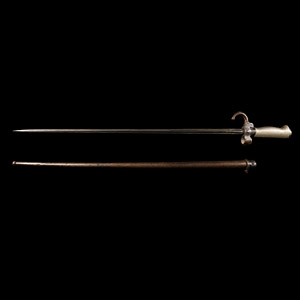
French Lebel 1886 Model 'Rosalie' Epee Bayonet with Scabbard
19th-20th century A.D.Sold for (Inc. bp): £52
Sword bayonet for use with the 8 mm M1886 Lebel rifle; fitted with 'German silver' grip scales; original scabbard. 532 grams, 65 cm
Property of a Luton, UK gentleman, by inheritance.
Known affectionately as “Rosalie” to French troops, the M1886 was the French mainstay during WWI and many were still in service at the Fall of France in 1940. The Lebel also saw extensive use worldwide by native troops in the French colonies. The M1886 introduced the distinctive cruciform blade, which remained a feature of most French bayonets until 1956. This example was made in 1890 at the Manufacture D'Armes St. Etienne (MAS). The scabbard was made by Manufacture Nationale d'Armes de Châtellerault (MAC). This is an early example that escaped later modifications, retaining its long blade, quillon, and raised round press stud. The silver-alloy grip is removable. -
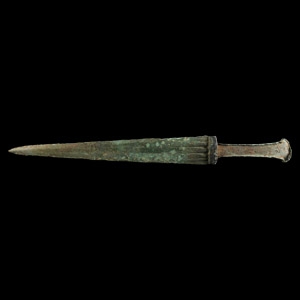
Luristan Bronze Dirk
Circa 1000 B.C.Sold for (Inc. bp): £234
Cast in one piece, with narrow blade having almost parallel edges, flanged hilt with narrow grip widening slightly towards the ricasso, decorated from five parallel grooves, and running smoothly into the blade. 188 grams, 33 cm
Ex German collection, Cologne, 1980-1990s.
The dirk belongs to the type III in the Medvedskaya classification, but with a smallest hand guard at the base. The dating of type III to the 12th century B.C., suggested by Medvedskaya and confirmed by Khorasani, was based on the series of dirks with an inscription of the Babylonian King Nebuchadnezzar I and of the name of Marduk Nadin Ahhe on similar types of daggers.
