
Loading, please wait...
LOT 1896
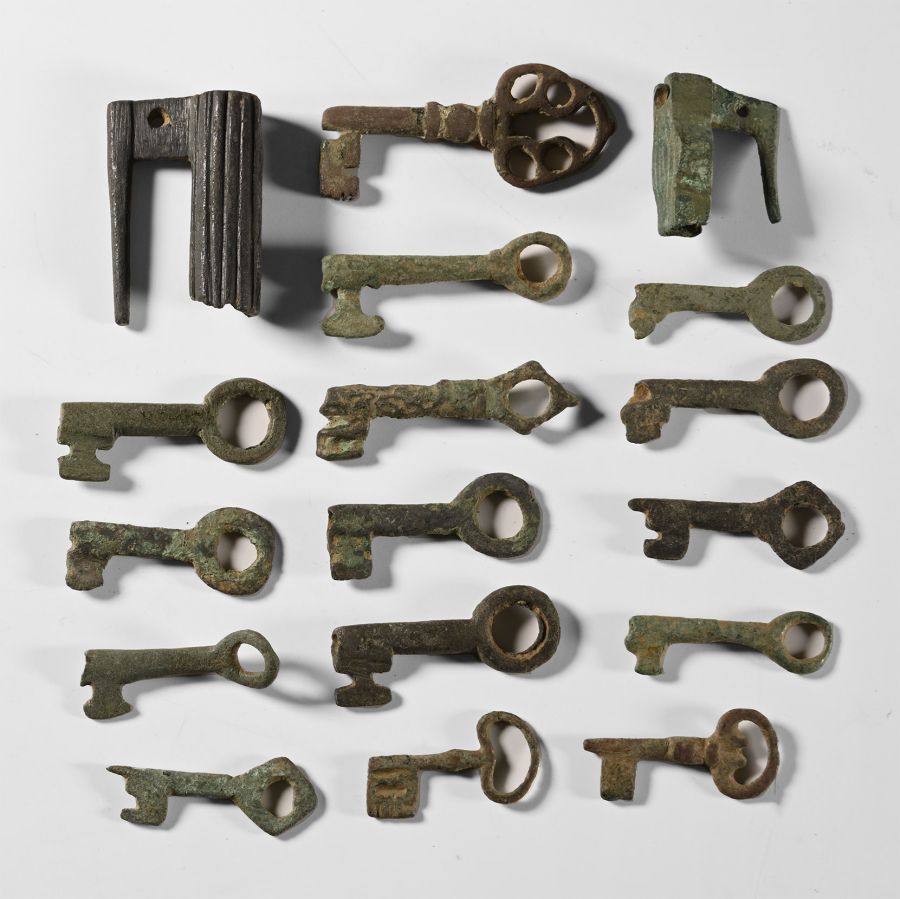
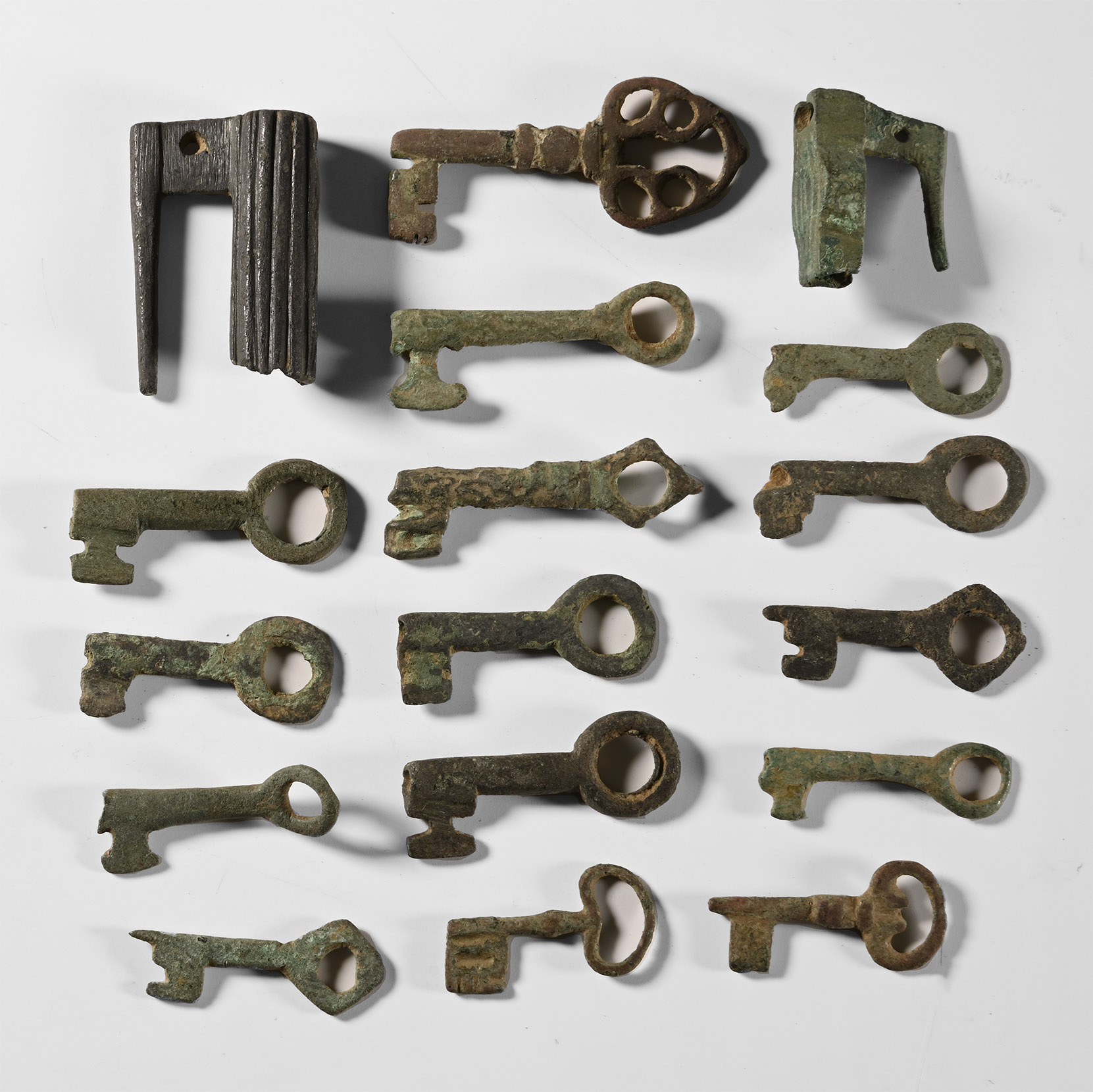
Medieval and Later Bronze Key and Lock Collection
CIRCA 15TH-17TH CENTURY A.D.
1 1/8 - 1 7/8 in. (89 grams total, 28-48 mm).
Including barrel and pin key-types, tubular lock cases and other items. [17, No Reserve]
ProvenanceFound on various UK sites since 1974.
Property of an Essex collector.
TimeLine Auctions follows a vetting process to ensure the authenticity and legality of all items, reinforcing our commitment to integrity and responsible trading. Each antiquity, antique, and coin lot undergoes thorough examination by a vetting committee of at least ten external specialists, professional trade association members, scientists, and archaeologists: Our Vetting Process
AUCTIONS:
TimeLine is a leading auction house specialising in antiquities, ancient art, collectables, natural history, coins, medals, and books. Our auctions offer museums, collectors, historians, and enthusiasts the opportunity to acquire unique and historically significant pieces.
-
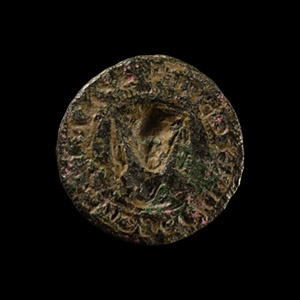
Medieval 'Published' Bronze Seal Matrix with Bust
14th century A.D.Sold for (Inc. bp): £111
Discoid seal with loop to the reverse, legend and central device of the vernicle. 4.07 grams, 21 mm
From the collection of the famous author, writer and speaker, Gordon Bailey, Essex, UK; formed since 1968. -
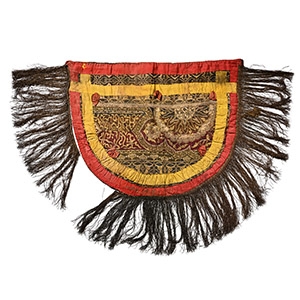
Spanish Military Banner Made from a Fragment of Nasrid Granada Embroidery
15th-19th century A.D.Sold for (Inc. bp): £1,170
D-shaped banner comprising an old woven panel with embroidered arabesque sections in red, blue, white and yellow on a newer coarse textile backing; applied strips of red and yellow fabric, red fabric rosettes, heavy fringes to the edges; securing loops to the outer edges. 960 grams, 74 cm wide
Private collection, London. This lot has been checked against the Interpol Database of stolen works of art and is accompanied by a search certificate no.12300-221678.
The Nasrid Dynasty was an Arab Emirate which ruled the territory of Granada from 1232 to 1492 A.D. At its demise, it was the last Muslim dynasty remaining in the Iberian Peninsula. -
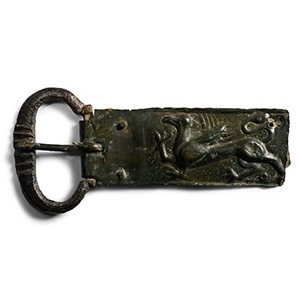
Medieval Bronze Buckle with Repoussé Griffin
France, 13th century A.D.Sold for (Inc. bp): £72
Rectangular buckle-plate with repoussé advancing griffin and plain backplate with fixing pins; broad loop with bulbs to the forward edge; narrow tongue. 11.4 grams, 78 mm
From the Sir Alistair McAlpine collection. London trade, 2001.
