
Loading, please wait...
LOT 1826
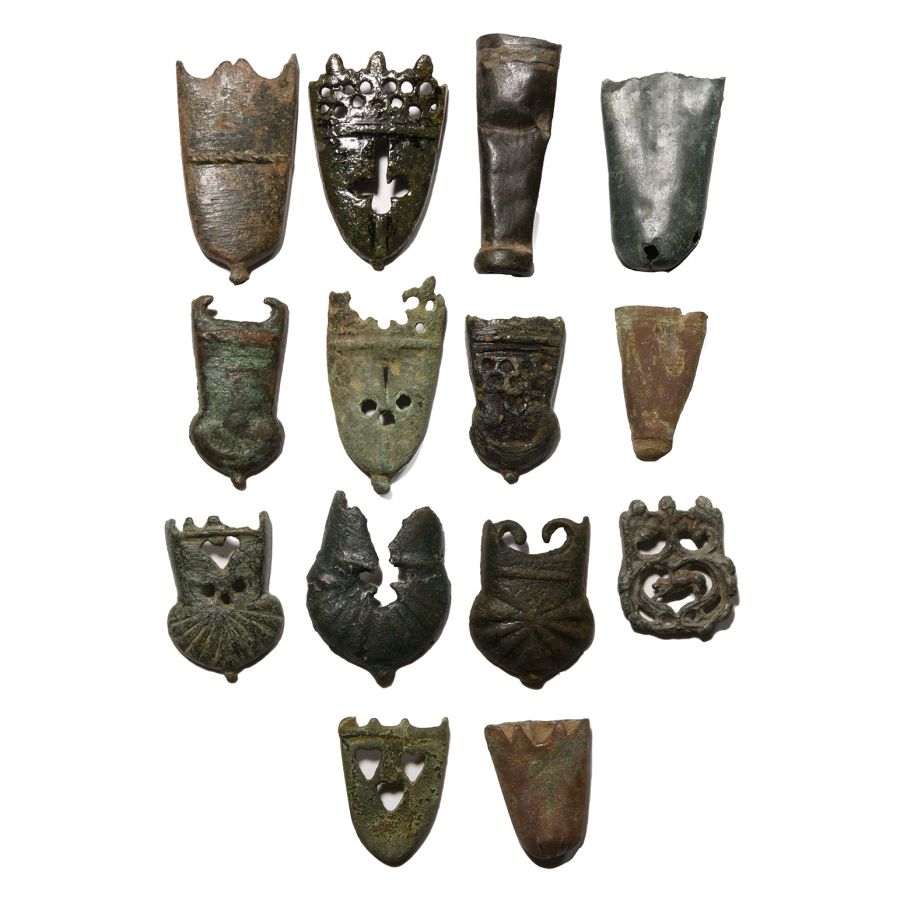
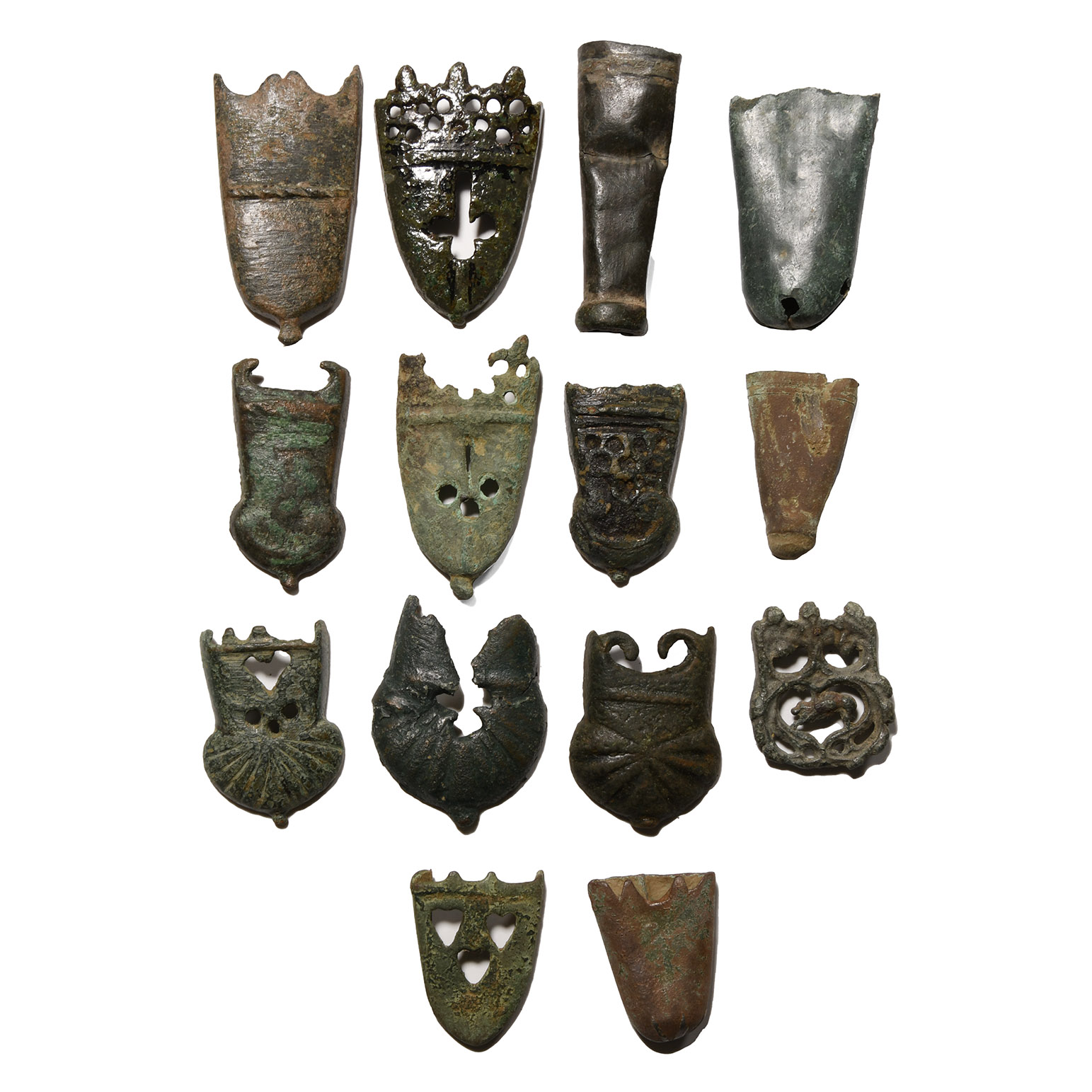
Medieval and Later Bronze Dagger Chape Collection
14TH-19TH CENTURY A.D.
1 1/4 in. (125 grams total, 31-53 mm).
Including enclosed bell-shaped, openwork single-face and other types; many of these objects are published in the Detector Finds book series. [14, No Reserve]
ProvenanceFrom the collection of the famous author, writer and speaker, Gordon Bailey, Essex, UK; formed since 1968.
CONDITIONTimeLine Auctions follows a vetting process to ensure the authenticity and legality of all items, reinforcing our commitment to integrity and responsible trading. Each antiquity, antique, and coin lot undergoes thorough examination by a vetting committee of at least ten external specialists, professional trade association members, scientists, and archaeologists: Our Vetting Process
AUCTIONS:
TimeLine is a leading auction house specialising in antiquities, ancient art, collectables, natural history, coins, medals, and books. Our auctions offer museums, collectors, historians, and enthusiasts the opportunity to acquire unique and historically significant pieces.
-
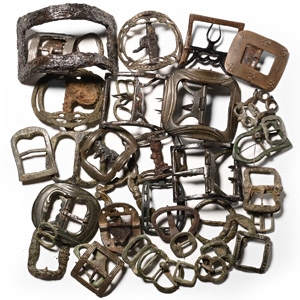
Medieval and Later Bronze Buckle Collection
14th-19th century A.D.Sold for (Inc. bp): £39
Including double-loop, rectangular, annular and other types; many of these objects are published in the Detector Finds book series. 429 grams total, 15-79 mm
From the collection of the famous author, writer and speaker, Gordon Bailey, Essex, UK; formed since 1968. -
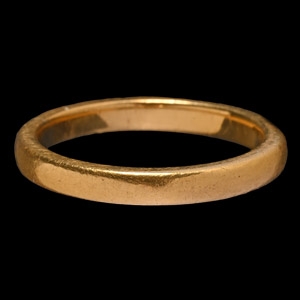
Medieval 'Published' Gold 'Keepers or Cramp' Ring
Circa 15th century A.D.Sold for (Inc. bp): £442
Square in section with slightly rounded outer face. 4.00 grams, 19.78 mm overall, 15.99 mm internal diameter (approximate size British J 1/2, USA 5, Europe 9.32, Japan 9)
From the collection of the famous author, writer and speaker, Gordon Bailey, Essex, UK; formed since 1968.
Cramp-rings were donatives issued every year on Good Friday by the monarch to prevent sickness, especially epilepsy. The rings were blessed in a religious service and sprinkled with holy water. The custom was officially abolished at the Reformation. -
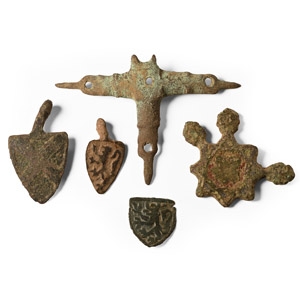
Medieval Bronze Knight's Heraldic Horse Harness Pendant Group
14th-15th century A.D.Sold for (Inc. bp): £39
Comprising: heater shield pendant with reserved saltire; heater shield stud with reserved lion rampant; teardrop shield pendant with reserved lion rampant; lozenge pendant with radiating knops, central circular recess with enamel fill and reserved cinquefoil; T-shaped strap with attachment holes. 28 grams total, 16-60 mm
Found UK. From the collection of a Wiltshire, UK, gentleman, 1990s.
