
Loading, please wait...
LOT 1718
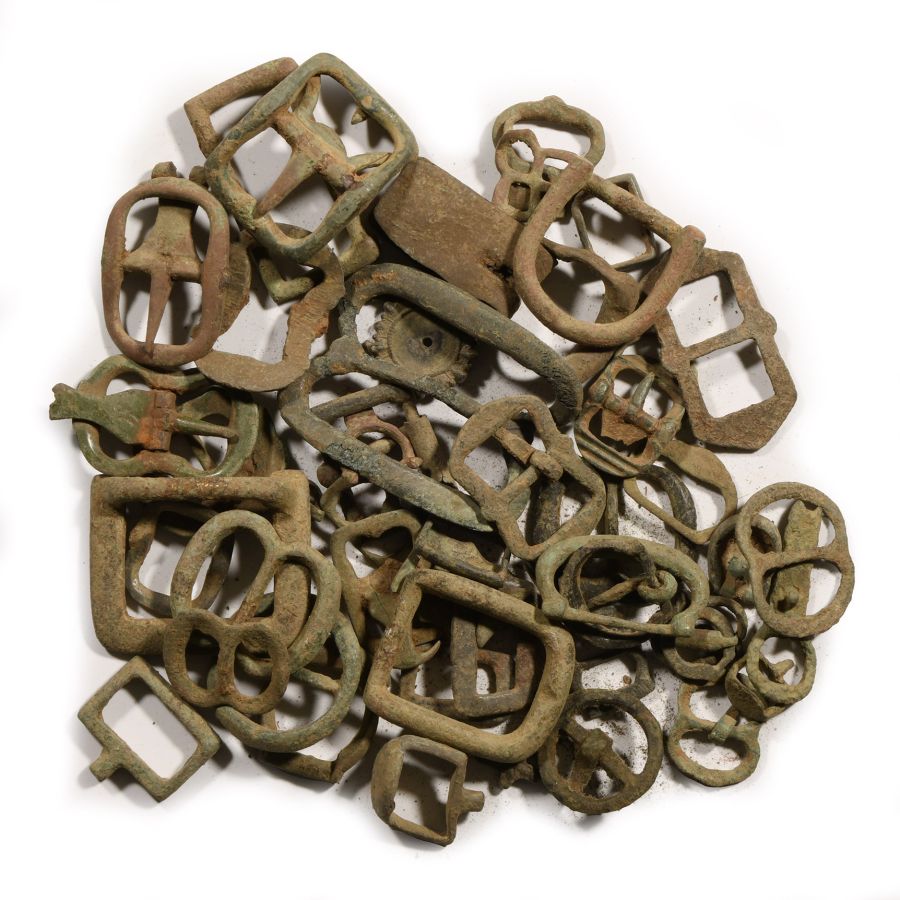
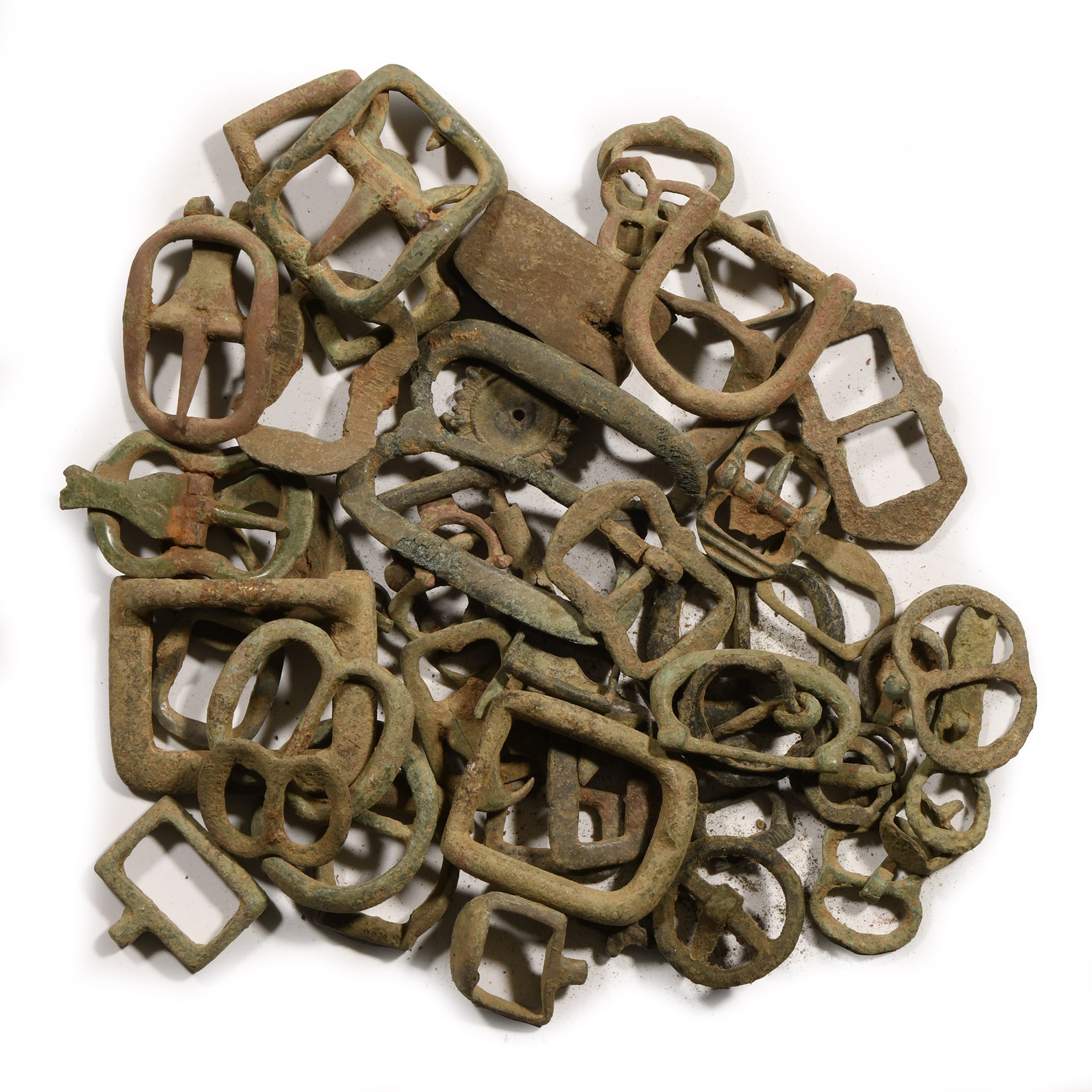
Medieval and Later Bronze Buckle Group
15TH-20TH CENTURY A.D.
1/2 - 2 in. (242 grams total, 12-50 mm).
Including D-shaped, rectangular, double-loop and other types. [49, No Reserve]
ProvenanceFound Suffolk, UK.
CONDITIONTimeLine Auctions follows a vetting process to ensure the authenticity and legality of all items, reinforcing our commitment to integrity and responsible trading. Each antiquity, antique, and coin lot undergoes thorough examination by a vetting committee of at least ten external specialists, professional trade association members, scientists, and archaeologists: Our Vetting Process
AUCTIONS:
TimeLine is a leading auction house specialising in antiquities, ancient art, collectables, natural history, coins, medals, and books. Our auctions offer museums, collectors, historians, and enthusiasts the opportunity to acquire unique and historically significant pieces.
-
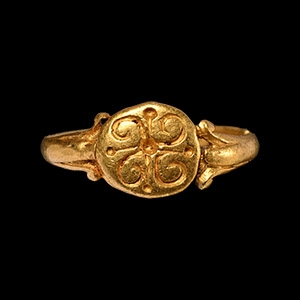
Medieval Gold Spiral Cross Ring
Circa 14th-16th century A.D.Sold for (Inc. bp): £624
With flared volute shoulders, ellipsoid plaque with incuse motif of four spirals with interstitial pellets; repaired. 2.91 grams, 16.93 mm overall, 14.93 mm internal diameter (approximate size British F 1/2, USA 3, Europe 4.3, Japan 4)
Acquired 1980-2015. Ex Abelita family collection. -
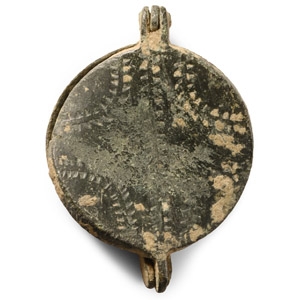
Medieval Bronze Portable Mirror Case
14th-15th century A.D.Sold for (Inc. bp): £52
Hinged at one edge, with punched triangular markings in curved bands. 14.4 grams, 43 mm
Found Cambridgeshire, UK. -
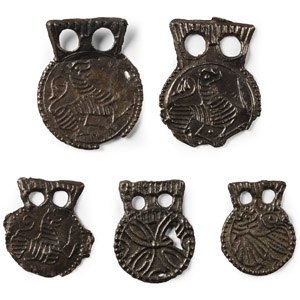
Medieval 'Thames' Decorated Spangle Group
13th-14th century A.D.Sold for (Inc. bp): £98
Including rosette, advancing beast and other types; pierced for attachment. 1.51 grams total, 12-17 mm
Found Billingsgate spoil from the Thames foreshore, London, UK, circa 1984. Property of an Essex collector. Exhibited at the Capital Gains Exhibition in the Museum of London, circa 1970s, opened by Michael Wood.
