
Loading, please wait...

LOT 1793
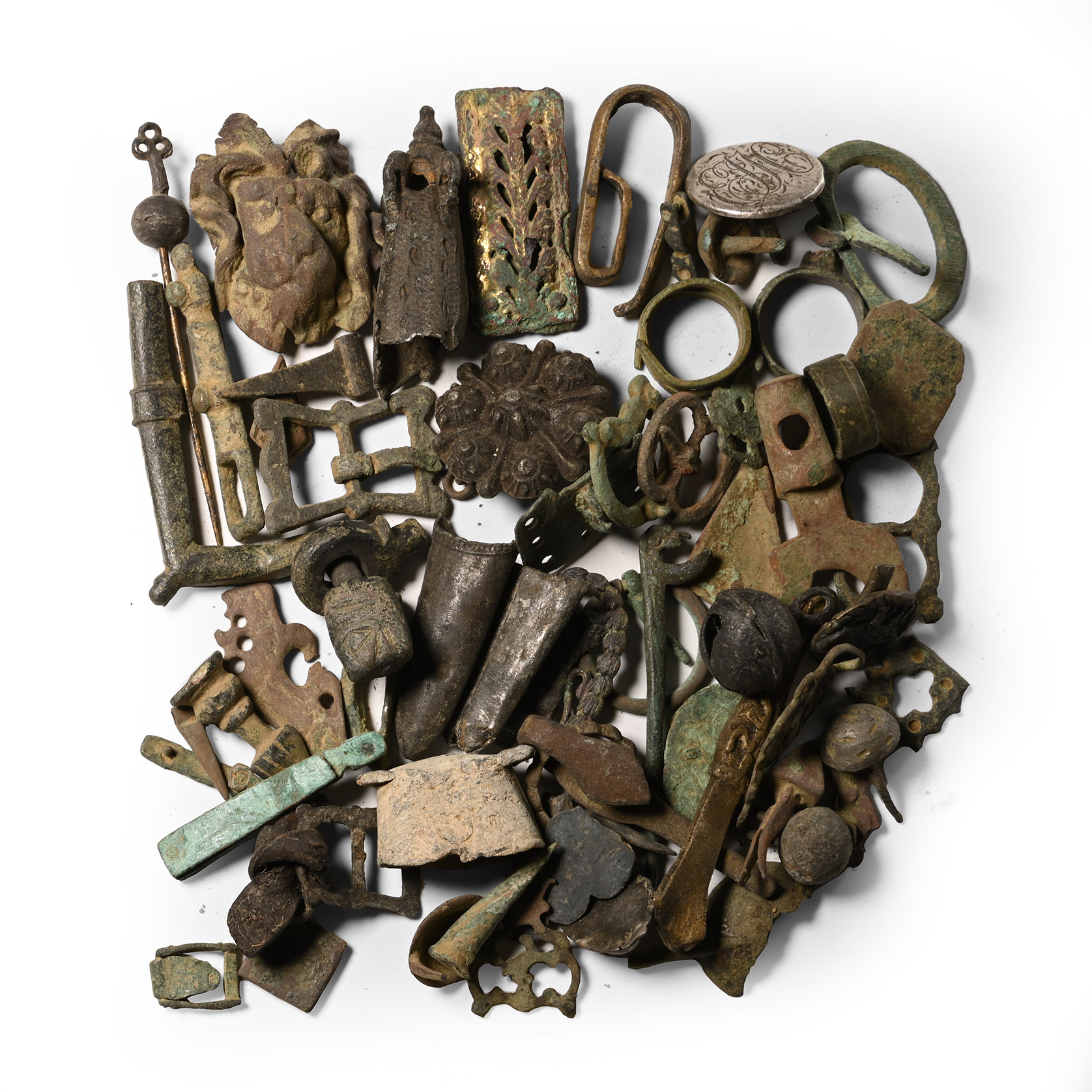
Medieval and Later Bronze Artefact Group
CIRCA 13TH-20TH CENTURY A.D.
3/4 - 3 in. (363 grams total, 8-76 mm).
Including buttons, casket key, dress pin, finger rings, buckle frames and other items. [60, No Reserve]
ProvenanceFound on various UK sites since 1974.
Property of an Essex collector.
TimeLine Auctions follows a vetting process to ensure the authenticity and legality of all items, reinforcing our commitment to integrity and responsible trading. Each antiquity, antique, and coin lot undergoes thorough examination by a vetting committee of at least ten external specialists, professional trade association members, scientists, and archaeologists: Our Vetting Process
AUCTIONS:
TimeLine is a leading auction house specialising in antiquities, ancient art, collectables, natural history, coins, medals, and books. Our auctions offer museums, collectors, historians, and enthusiasts the opportunity to acquire unique and historically significant pieces.
-
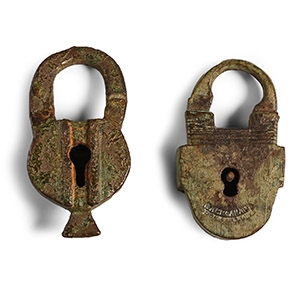
Medieval and Later Bronze Padlock Group
15th-19th century A.D.Estimate: £120 - 170 (+bp*)
Opening Bid: £50
One with thick C-shaped locking arm, keyhole with slot, wedge-shaped tab below; the other D-shaped with hinged arm, keyhole with turning pin, stamped maker's name '...CAHAP' beneath the hole. 55.6 grams total, 46-50 mm
Ex German art market, 2000s. Acquired from an EU collector living in London. From the collection of Surrey, UK, gentleman. -
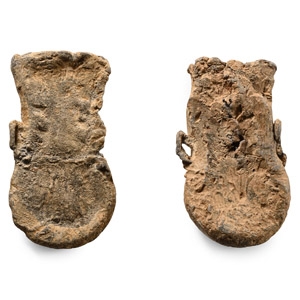
Medieval Lead Pilgrim's Holy Water Ampulla Group
14th-15th century A.D.Sold for (Inc. bp): £39
Each with lateral loops and low-profile rosette detailing to the bulb. 83 grams total, 51-52 mm
From the collection of the famous author, writer and speaker, Gordon Bailey, Essex, UK; formed since 1968. -
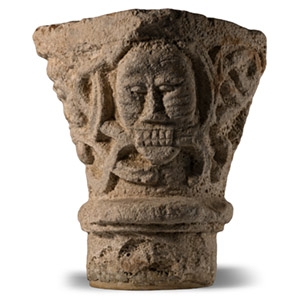
Medieval Limestone Cloister Capital with Green Man Heads
South West France, late 12th century A.D.Sold for (Inc. bp): £5,720
With square upper face developing to a round base; the spandrel decorated with a frieze comprising two grimacing faces linked by interlacing foliage; the back with two large acanthus leaves flanking a lanceolate floral motif. 16.1 kg, 28.5 cm
SAS Guillaumot-Richard, 25 June 2016, no.202. Ex central London gallery. Accompanied by an academic report by Dr Raffaele D’Amato. This lot has been checked against the Interpol Database of stolen works of art and is accompanied by search certificate no.12183-221702.
Green Man masks are commonly found as bosses in the aisles of churches or in the cloisters of monastic complexes.
