
Loading, please wait...
LOT 1806
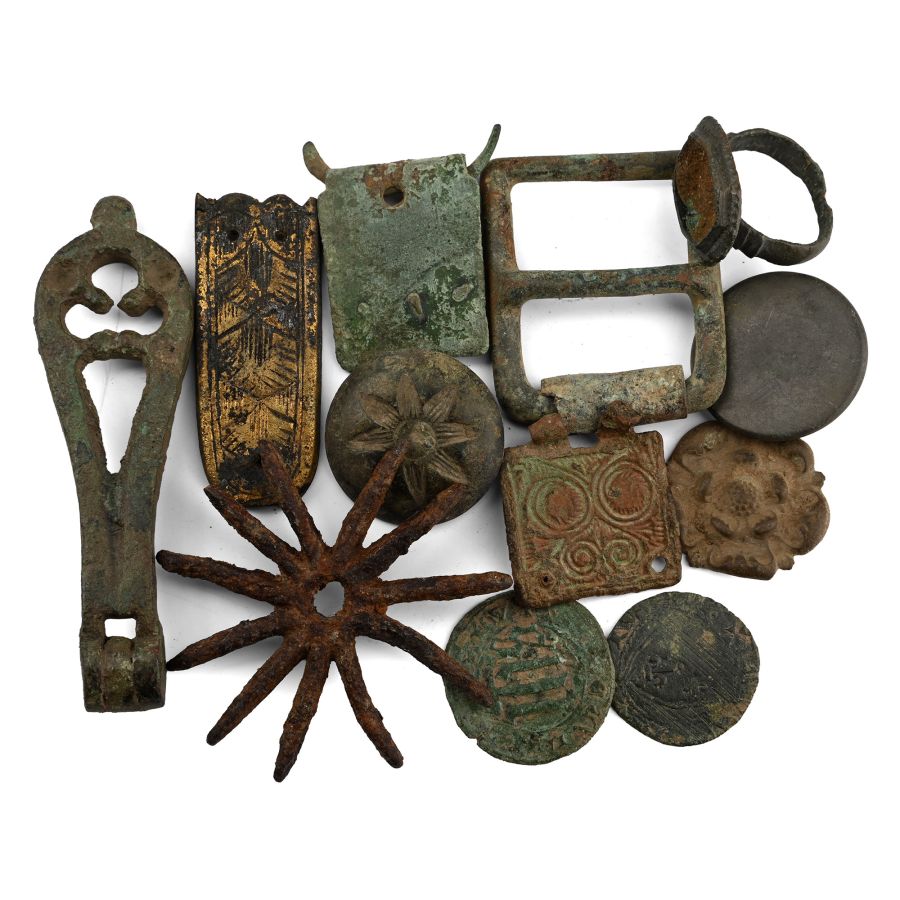
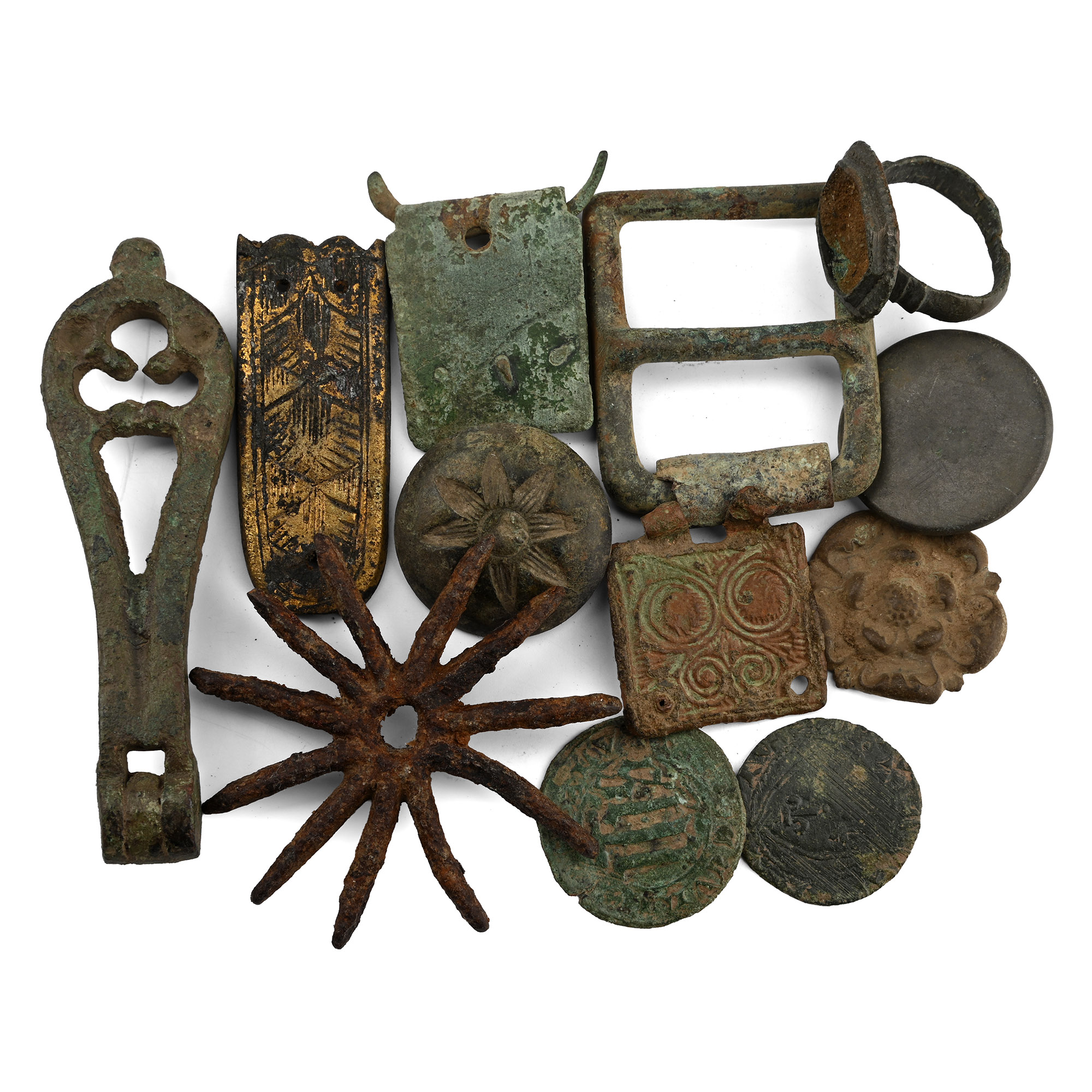
Medieval and Later Bronze Artefact Collection
14TH-18TH CENTURY A.D.
1 - 3 1/8 in. (133 grams total, 23-79 mm).
Including a spur rowel, finger ring, key bow, buckle loop and other items. [12, No Reserve]
ProvenanceFrom various collections, acquired circa 1950-early 2000s.
From the property of a late Lincolnshire, UK, gentleman.
TimeLine Auctions follows a vetting process to ensure the authenticity and legality of all items, reinforcing our commitment to integrity and responsible trading. Each antiquity, antique, and coin lot undergoes thorough examination by a vetting committee of at least ten external specialists, professional trade association members, scientists, and archaeologists: Our Vetting Process
AUCTIONS:
TimeLine is a leading auction house specialising in antiquities, ancient art, collectables, natural history, coins, medals, and books. Our auctions offer museums, collectors, historians, and enthusiasts the opportunity to acquire unique and historically significant pieces.
-
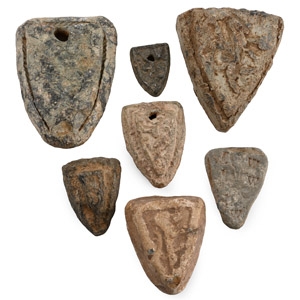
Medieval Lead Heraldic Trade Weight Collection
1200-1400 A.D.Sold for (Inc. bp): £39
Heater-shaped with high-relief reserved lion rampant and other motifs. 709 grams total, 23-56 mm
Acquired in the 1960s-1980s. From an old Carlisle private archaeological collection. From the property of a late Lincolnshire, UK, gentleman. -
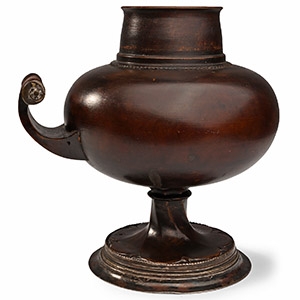
Medieval Boxwood Drinking Cup
Southern Germany, circa 1500 A.D.Estimate: £6,000 - 8,000 (+bp*)
Opening Bid: £2,556
Comprising a barrel-shaped turned wooden body with a broad neck and an everted rim, a slender stem and stepped base; a single scrolled handle to reverse. 445 grams, 19.6 cm high
Pfyffer von Sltishofen (1914), a well known family in Switzerland. with Artcurial Beurret Bailly Widrner, 2025. This lot has been checked against the Interpol Database of stolen works of art and is accompanied by search certificate number no.12993-246435. -
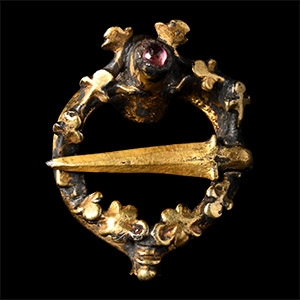
Medieval Gold Ring Brooch with Garnets
13th-14th century A.D.Sold for (Inc. bp): £390
An annular brooch set with decorative oak leaves, tall collet at the top set with a garnet cabochon, dagger-shaped pin. 1.74 grams, 18 mm
Private collection, UK.
In medieval jewellery, garnets were highly prized for their deep red hue and believed mystical properties. Associated with protection, vitality, and divine love, garnets were thought to ward off illness, protect against injury, and illuminate the darkness—both literal and spiritual. Their rich colour made them a symbol of Christ’s sacrifice, and they frequently appeared in religious and funerary jewellery. Garnets were also connected to concepts of faithfulness and truth, making them a popular choice in personal adornment and ecclesiastical pieces throughout the Middle Ages. Oak trees were widely regarded as symbols of strength, stability, and endurance, owing to their longevity and robust nature. In jewellery, oak leaves could represent resilience, fortitude, and the ability to withstand adversity—virtues admired in both secular and religious life. Within Christian art and ornamentation, the oak also carried spiritual significance, evoking the Tree of Life and the strength of faith. It was often interpreted as a symbol of God’s protection, particularly in devotional objects or pieces with sacred motifs.
