
Loading, please wait...


LOT 2068
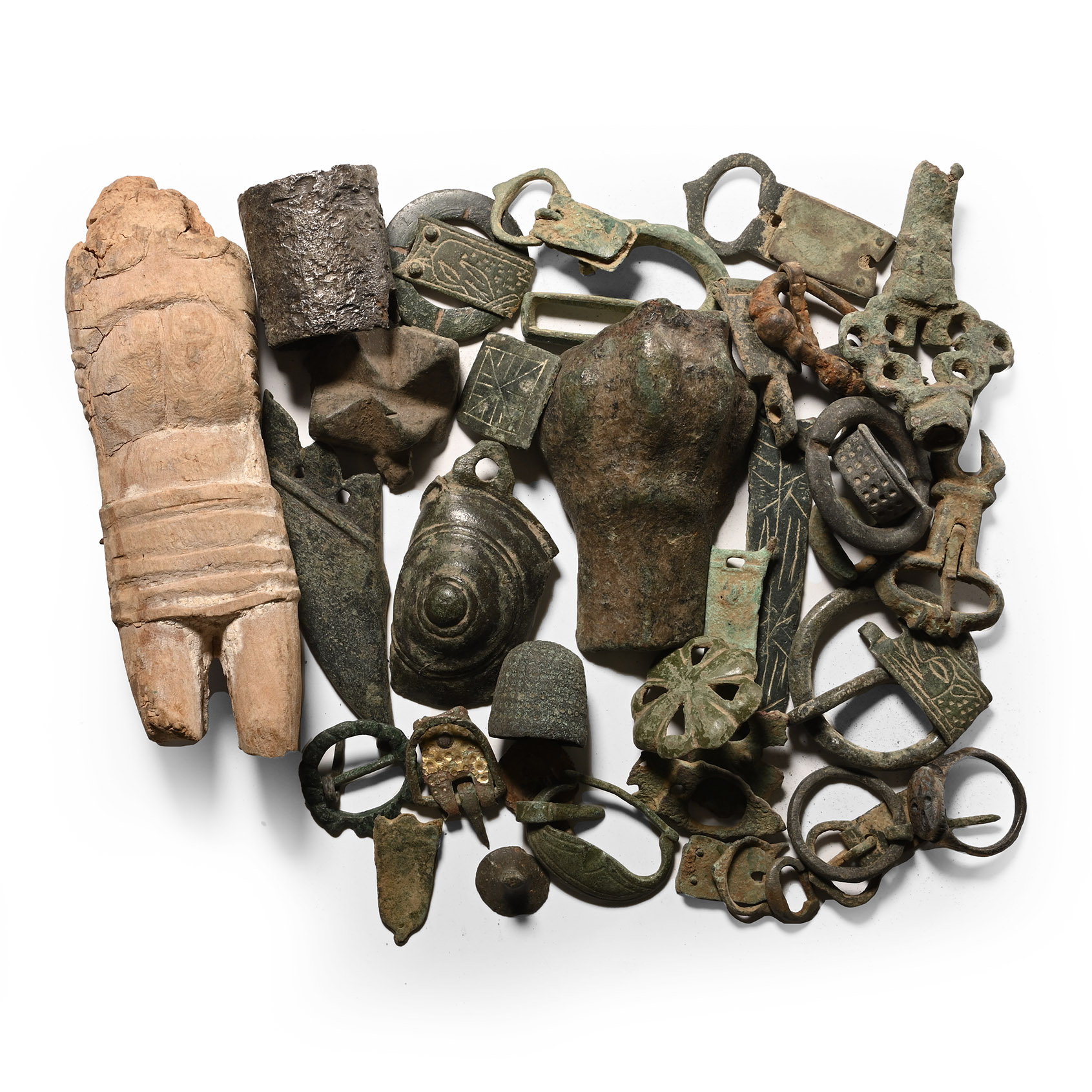
Medieval and Later Bronze Artefact Collection
16TH-20TH CENTURY A.D.
1/2 - 4 7/8 in. (560 grams total, 1.3-12.3 cm).
Including a ceramic figurine, strap end, belt buckle, key handle, sheath chape and other items. [39, No Reserve]
ProvenanceFound various site in the UK.
Ex N. Mills.
TimeLine Auctions follows a vetting process to ensure the authenticity and legality of all items, reinforcing our commitment to integrity and responsible trading. Each antiquity, antique, and coin lot undergoes thorough examination by a vetting committee of at least ten external specialists, professional trade association members, scientists, and archaeologists: Our Vetting Process
AUCTIONS:
TimeLine is a leading auction house specialising in antiquities, ancient art, collectables, natural history, coins, medals, and books. Our auctions offer museums, collectors, historians, and enthusiasts the opportunity to acquire unique and historically significant pieces.
-
Bactrian Style Lapis Lazuli Bead Necklace String
20th century A.D.Sold for (Inc. bp): £13
Restrung group of beads, mainly tubular and annular types. 13 grams, 42.5 cm
London, UK, art market, 1980-2000s -
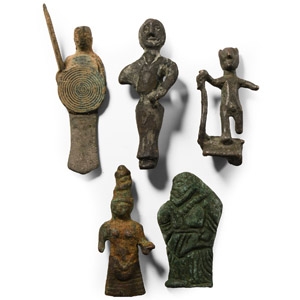
Bronze Figurine Group
20th century A.D. or earlierSold for (Inc. bp): £33
Including a warrior with spear and shield, D-section plaque with bound captive and other types. 319 grams total, 62-92 mm
From a collection acquired on the UK art market from various auction houses and collections mostly before 2000. From an important Cambridgeshire estate; thence by descent. -
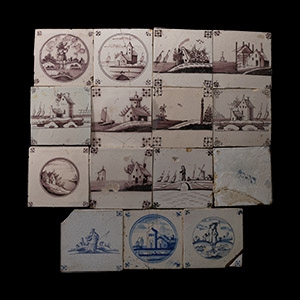
Post Medieval Dutch Glazed Ceramic Tile Group
Circa 18th century A.D. and laterSold for (Inc. bp): £182
Displaying different colour glazes and designs including animals, figural vignettes and landscape scenes featuring buildings and sailing vessels. 3.4 kg total, 13 x 13 cm
Acquired 1990s-early 2000s. East Anglian private collection.
