
Loading, please wait...
LOT 1715
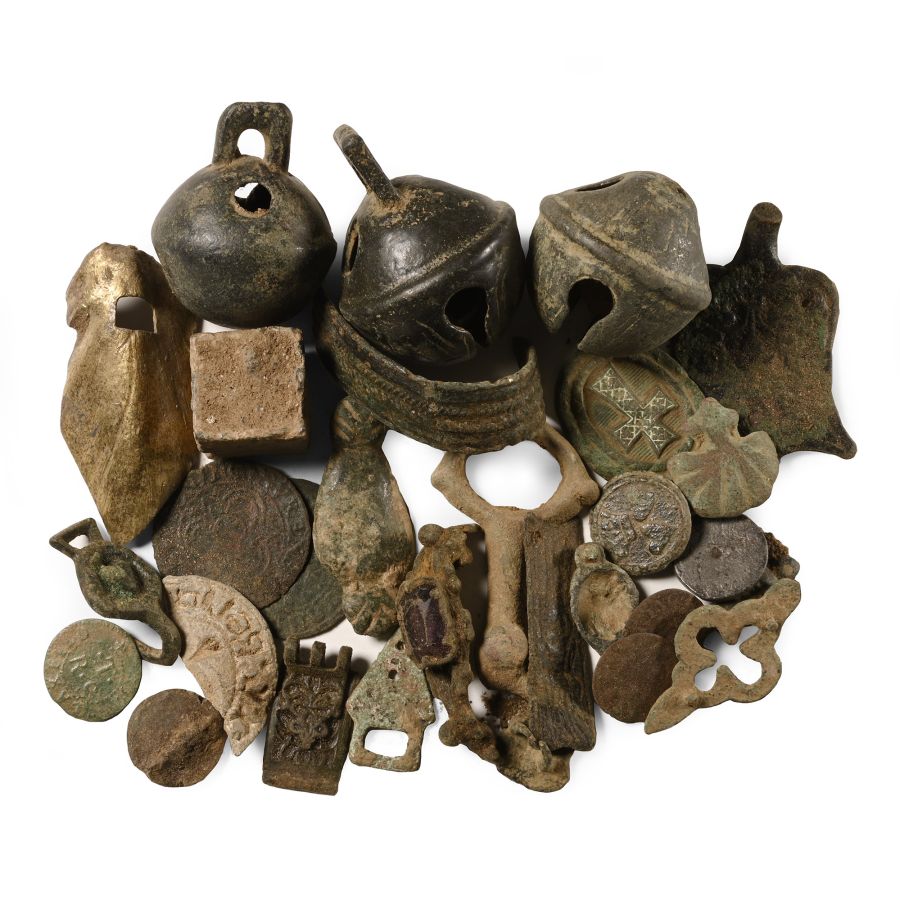
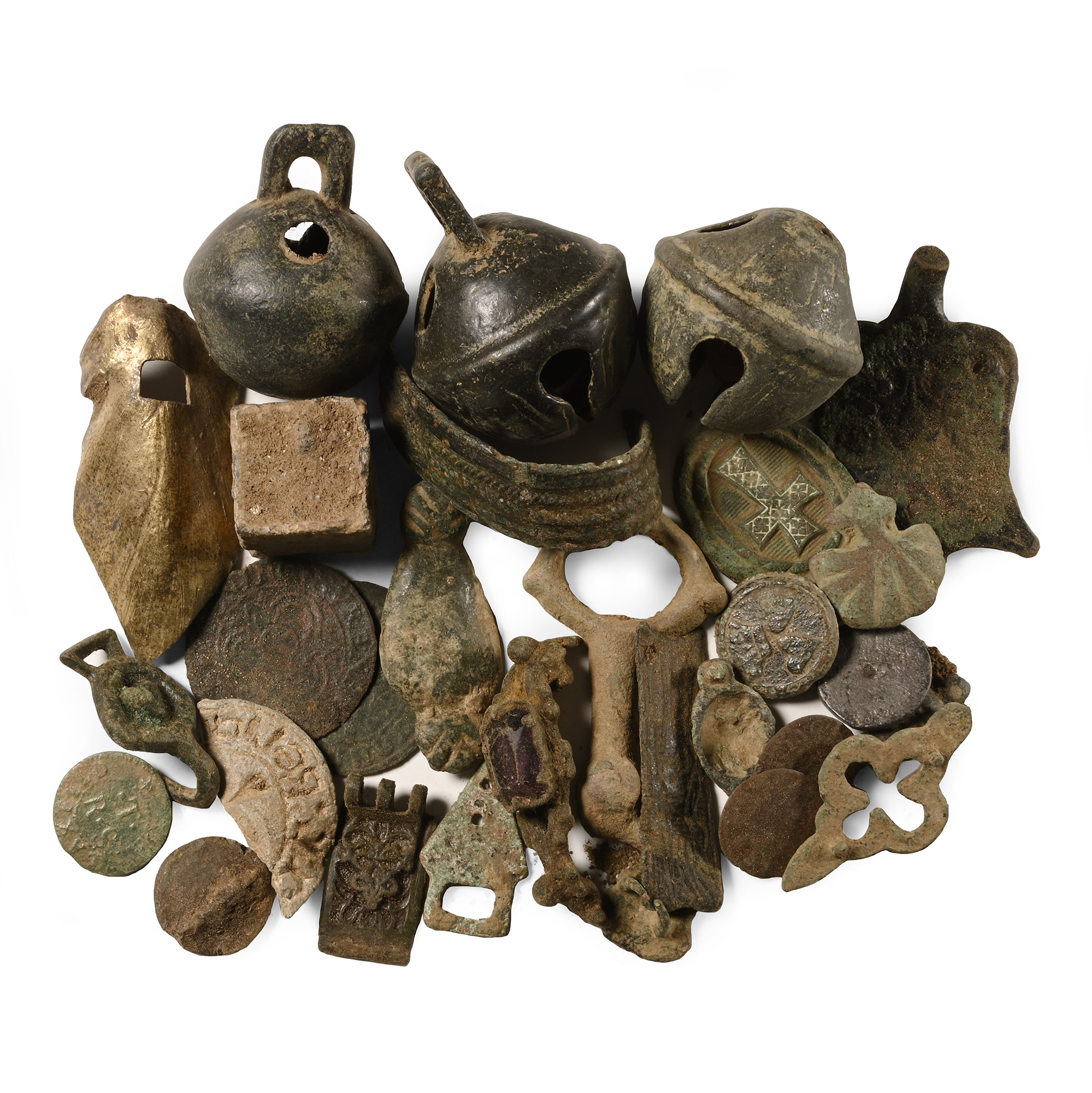
Medieval and Later Artefact Group
11TH-19TH CENTURY A.D.
1/2 - 2 in. (200 grams total, 13-50 mm).
A mixed group comprising coins, mounts, crotal bells, and other items. [29, No Reserve]
ProvenanceFound Suffolk, UK.
This lot is accompanied by an illustrated lot declaration signed by the Head of the Antiquities Department, Dr Raffaele D'Amato.
N.B. This lot is for UK buyers only. Not for export.
CONDITIONTimeLine Auctions follows a vetting process to ensure the authenticity and legality of all items, reinforcing our commitment to integrity and responsible trading. Each antiquity, antique, and coin lot undergoes thorough examination by a vetting committee of at least ten external specialists, professional trade association members, scientists, and archaeologists: Our Vetting Process
AUCTIONS:
TimeLine is a leading auction house specialising in antiquities, ancient art, collectables, natural history, coins, medals, and books. Our auctions offer museums, collectors, historians, and enthusiasts the opportunity to acquire unique and historically significant pieces.
-
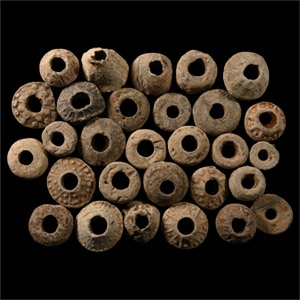
Medieval and Other Lead Spindle Whorl Collection
Circa 12th-18th century A.D.Sold for (Inc. bp): £13
Comprising mainly biconical and conical spindle whorls with some weights, some displaying impressed decoration. 1.28 kg total, 18-33 mm
Found Yorkshire, UK. From the private collection of Robin Sykes, Yorkshire, UK, formed since the late 1990s. This lot is accompanied by an illustrated lot declaration signed by the Head of the Antiquities Department, Dr Raffaele D'Amato. -
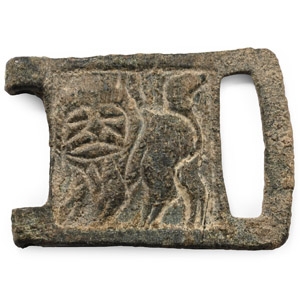
Medieval Bronze Belt Plate with Lion
13th-14th century A.D.Sold for (Inc. bp): £46
Rectangular with a low-relief facing lion on the upper face. 9.82 grams, 39 mm
Ex German art market, 2000s. Acquired from an EU collector living in London. From the collection of a Surrey, UK, gentleman. This lot is accompanied by an illustrated lot declaration signed by the Head of the Antiquities Department, Dr Raffaele D'Amato. -
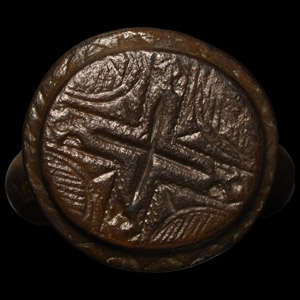
Medieval Bronze Ring with Cross
14th-16th century A.D.Sold for (Inc. bp): £72
Comprising a keeled hoop with a raised plaque to the base, large discoid bezel with cross on a hatched background. 16.60 grams, 30.72 mm overall, 21.13 mm internal diameter (approximate size British T, USA 9 1/2, Europe 21.26, Japan 20)
Ex German art market, 2000s. Acquired from an EU collector living in London. From the collection of a Surrey, UK, gentleman. This lot is accompanied by an illustrated lot declaration signed by the Head of the Antiquities Department, Dr Raffaele D'Amato.
