
Loading, please wait...
LOT 1707
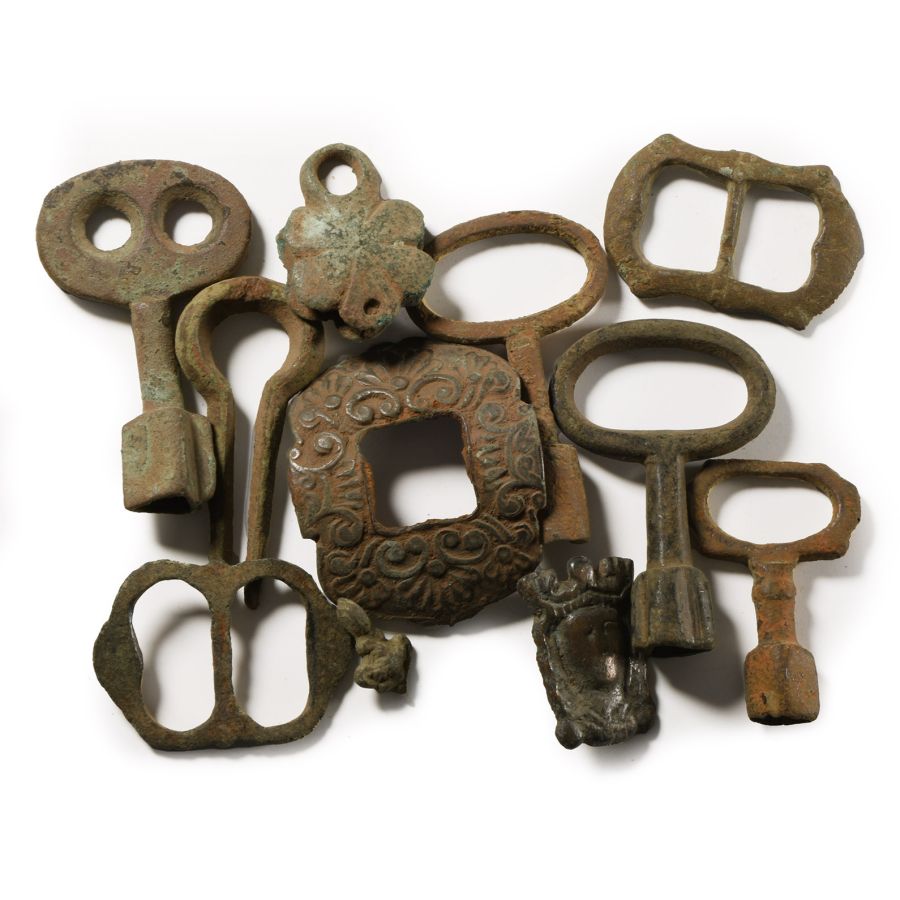
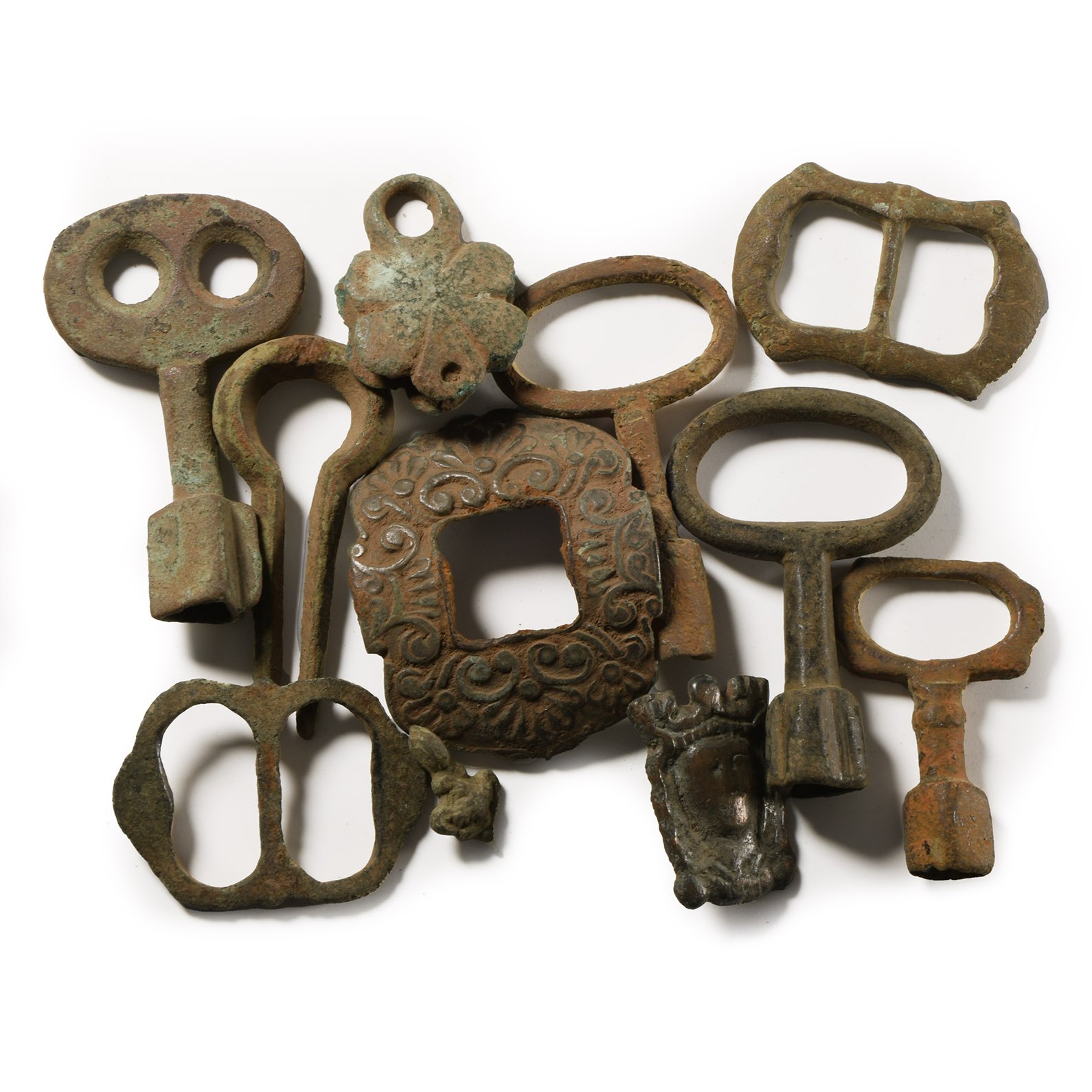
Medieval and Later Artefact Group
14TH CENTURY A.D. AND LATER
3/4 - 2 in. (133 grams total, 19-53 mm).
Including a winder key, belt buckles, jaws harp and other items. [11, No Reserve]
ProvenancePrivate collection, Buckinghamshire, UK; formed in the 1980s.
Property of a Scottish collector, acquired in 2013.
TimeLine Auctions follows a vetting process to ensure the authenticity and legality of all items, reinforcing our commitment to integrity and responsible trading. Each antiquity, antique, and coin lot undergoes thorough examination by a vetting committee of at least ten external specialists, professional trade association members, scientists, and archaeologists: Our Vetting Process
AUCTIONS:
TimeLine is a leading auction house specialising in antiquities, ancient art, collectables, natural history, coins, medals, and books. Our auctions offer museums, collectors, historians, and enthusiasts the opportunity to acquire unique and historically significant pieces.
-
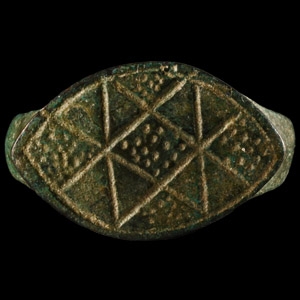
Medieval Bronze Ring with Triangles
Circa 12th-14th century A.D.Sold for (Inc. bp): £59
With scaphoid bezel, reserved geometric motif with pointillé detailing. 4.09 grams, 21.95 mm overall, 17.85 mm internal diameter (approximate size British P, USA 7 1/2, Europe 16.23, Japan 15)
Acquired on the London art market in the late 1980s-1990s. From the family collection of an East London, UK, gentleman. -
.jpg)
Medieval Bronze Casket Padlock
Circa 15th century A.D.Sold for (Inc. bp): £416
The body decorated with chevrons; the hinged, semi-circular hoop retained within the body of the lock; the keyhole protected by a sliding panel; complete. 18.8 grams, 76 mm
Ex property of a North London gentleman. From the collection of a North American gentleman. -
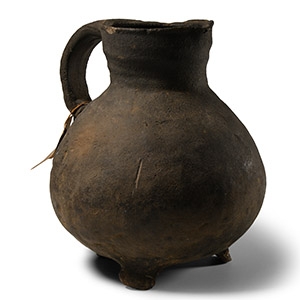
Medieval Globular Tripod Jug
Germany, lower Saxony (?), 14th century A.D.Sold for (Inc. bp): £364
Wheel-thrown vessel with oblate profile, three small flange feet, rounded mouth with inturned rim and short pinched spout, ribbed strap handle to the rear' inked accession number to the underside: 'W.M. V.16.'; old card catalogue label with remains of wax seal and handwritten 'V / No.16' and pencilled 'Welfen Museum'. 1.05 kg, 21.5 cm high
Welfen Museum, circa 1860; thence by descent at Marienburg Castle, Hanover, Lower Saxony, Germany. with Sotheby's, Royal House of Hanover Sale, 10 October 2005, no.1254. Accompanied by an old card catalogue label with remains of wax seal and handwritten 'V / No.16' and pencilled 'Welfen Museum'. Accompanied by a copy of a previous cataloguing page.
Evidence of soot accretion to the underside, implying use on or beside a hearth.
