
Loading, please wait...
LOT 0380
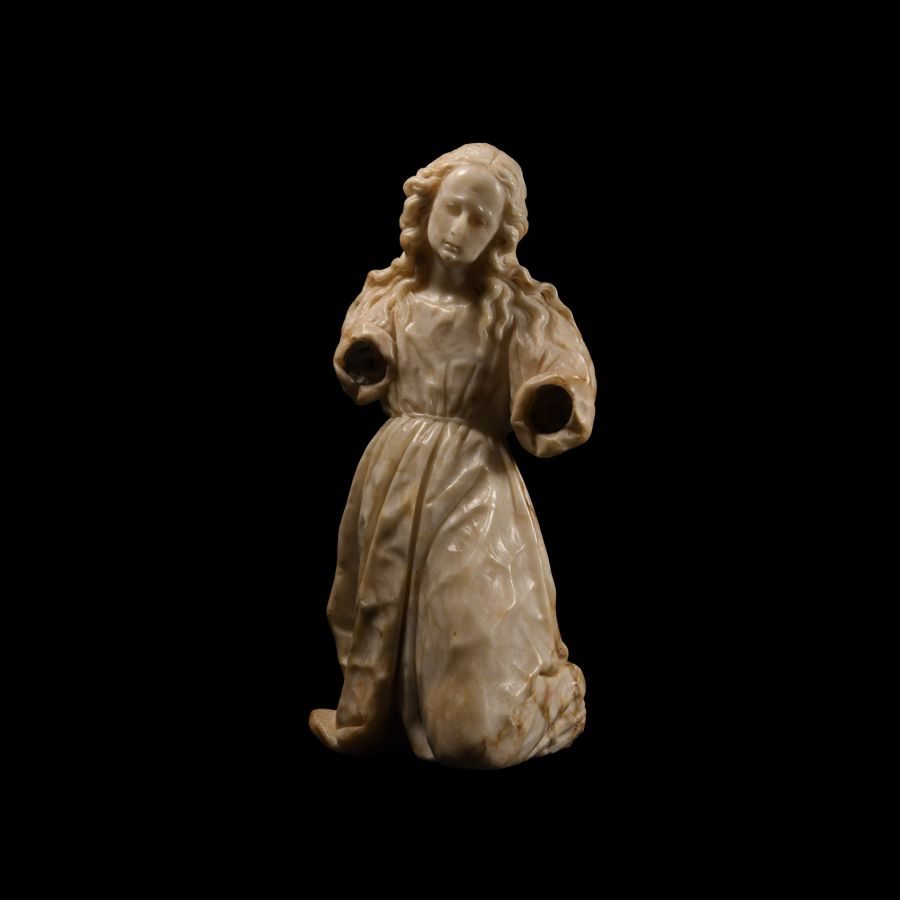
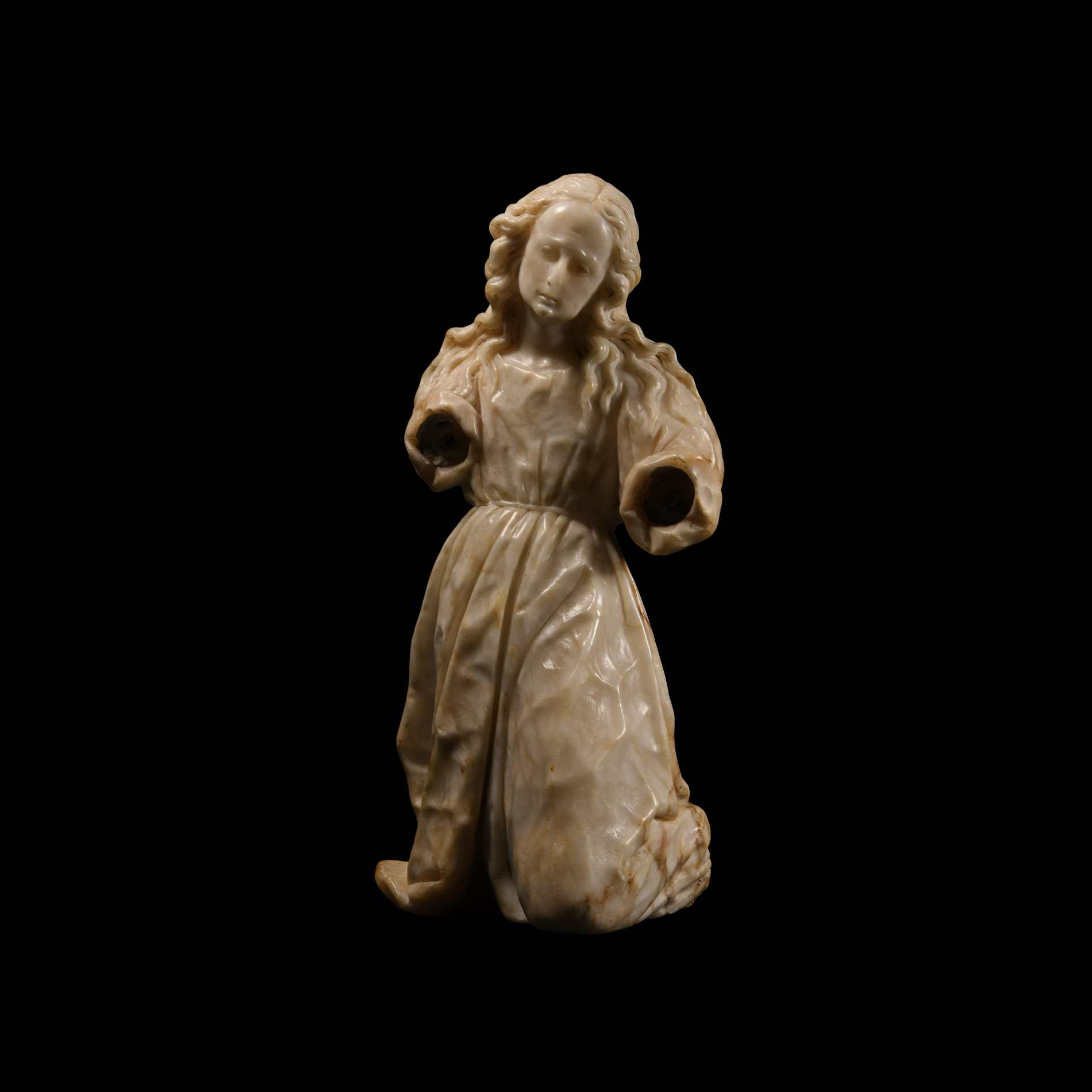
Medieval Alabaster Weeping Mary Magdalene
SICILY, CIRCA 1500 A.D.
13 in. (4.95 kg, 33 cm).
From a Lamentation scene, modelled in the round with naturalistic facial features and flowing hair; Mary depicted kneeling and wearing a long tunica talaris with short sleeves; her head downcast with sorrowful expression, lips slightly parted. [No Reserve]
ProvenanceEx Palau Antiguitats, Barcelona, 2022.
Ex central London gallery.
Accompanied by an academic report by Dr Raffaele D’Amato.
This lot has been checked against the Interpol Database of stolen works of art and is accompanied by search certificate no.11748-202078.
Cf. Lasheras, S.G., ‘Use of alabaster as sculptural material in Zaragoza at the end of the Middle Ages’ in Ars & Renovatio, no.7, 2019, pp.82-104, figs.1,5.
FootnotesMary was considered the former sinner par excellence who, having abandoned the path of sinful vice, returned to original purity through the light of Christ, and accompanied Jesus until the last moments, shared the pain of his death with his mother and was witness of the Resurrection. Because of this, her appearance was often that of a simple girl, with long hair that echoed the biblical account. It was believed that through devotion and prayer to images of Mary Magdalene, the viewer might, like her, regain purity and find the same redemption that she was given by Christ.
CONDITIONTimeLine Auctions follows a vetting process to ensure the authenticity and legality of all items, reinforcing our commitment to integrity and responsible trading. Each antiquity, antique, and coin lot undergoes thorough examination by a vetting committee of at least ten external specialists, professional trade association members, scientists, and archaeologists: Our Vetting Process
AUCTIONS:
TimeLine is a leading auction house specialising in antiquities, ancient art, collectables, natural history, coins, medals, and books. Our auctions offer museums, collectors, historians, and enthusiasts the opportunity to acquire unique and historically significant pieces.
LOT 0380
Medieval Alabaster Weeping Mary Magdalene
Estimate £3,000 - 4,000€3,480 - 4,640 (for guidance only)$4,050 - 5,400 (for guidance only)
-
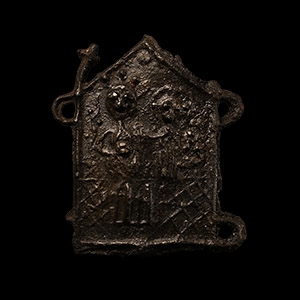
Medieval Pewter Pilgrim's Badge with Church
14th-15th century A.D.Sold for (Inc. bp): £65
In the form of a church building with one cross remaining to roof, raised hatching to reverse and Virgin and Child figural scene to the other; three remaining attachment loops. 4.86 grams, 34 mm
European collection, 1990s. Property of a Cambridgeshire, UK, gentleman. -
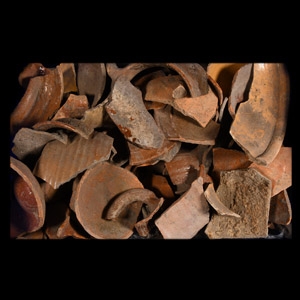
Medieval and Later Dutch Pottery Pit Dug Fragment Group
Circa 15th-17th century A.D.Sold for (Inc. bp): £1
Most glazed and from various vessel types, including examples with handles and coloured glaze. 15 kg total, 4-25.5 cm
Acquired 1990s-early 2000s. East Anglian private collection. -
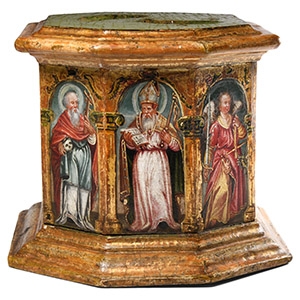
Renaissance Gilt Wooden Octagonal Socle with Paintings of Saints
South Germany, probably Augsburg, circa 1500-1520 A.D.Sold for (Inc. bp): £1,950
Intended for a religious statue, with foot-shaped recesses to the top face; the left side with a painted polychrome scene comprising Saint Jerome and Saint Ambrose with Saint Michael holding a sword and scales for weighing souls; the right side painted with a scene comprising Saint Gregory the Great, Saint Augustine and Saint John the Evangelist; both scenes set with gilt architectural frame; the reverse with the Holy Spirit depicted as a dove. 1.95 kg, 16.5 cm high
Very fine condition.
Ex Julius Böhler Ltd, Munich, Germany, 2000. Ex central London gallery. Accompanied by an academic report by Dr Raffaele D’Amato. This lot has been checked against the Interpol Database of stolen works of art and is accompanied by search certificate no.11741-202052.
The base probably housed a statue of Christ. The painting, although mannerist, reflects the style of the Germanic Renaissance. The saints surrounding the dove are easily recognisable by their attributes. St Jerome as a penitent was often represented in front of a crucifix, next to him the hourglass and the skull, symbolising fleeing time leading to death. St Ambrose is represented with his whip, defending people from the enemies of the faith. St Michael is holding the sword and balance and St Augustine is represented with the child who appeared to him on the seashore admonishing him. Many representations from the Middle Ages show Pope St Gregory the Great (of a noble family and pontiff from 590 to 604) with the Dove of the Holy Spirit perched on his shoulder. St John the Evangelist is represented here according to the golden legend of Jacopo da Varazze, with a snake and a chalice.
