
Loading, please wait...
LOT 1552
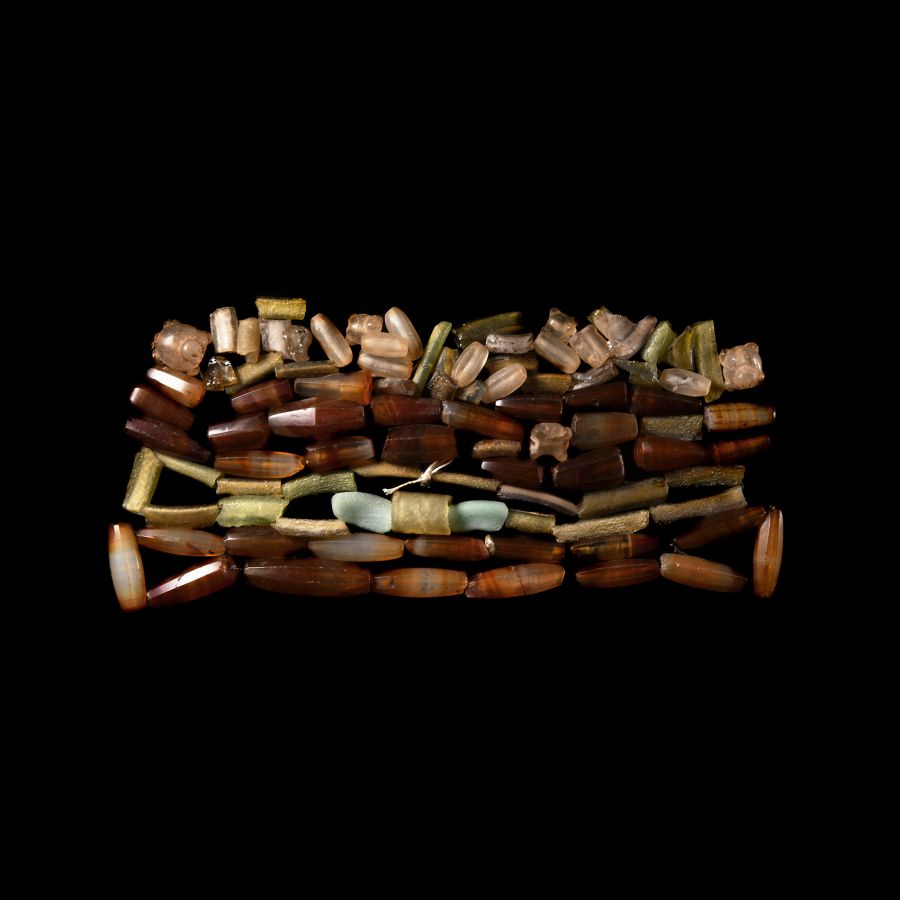
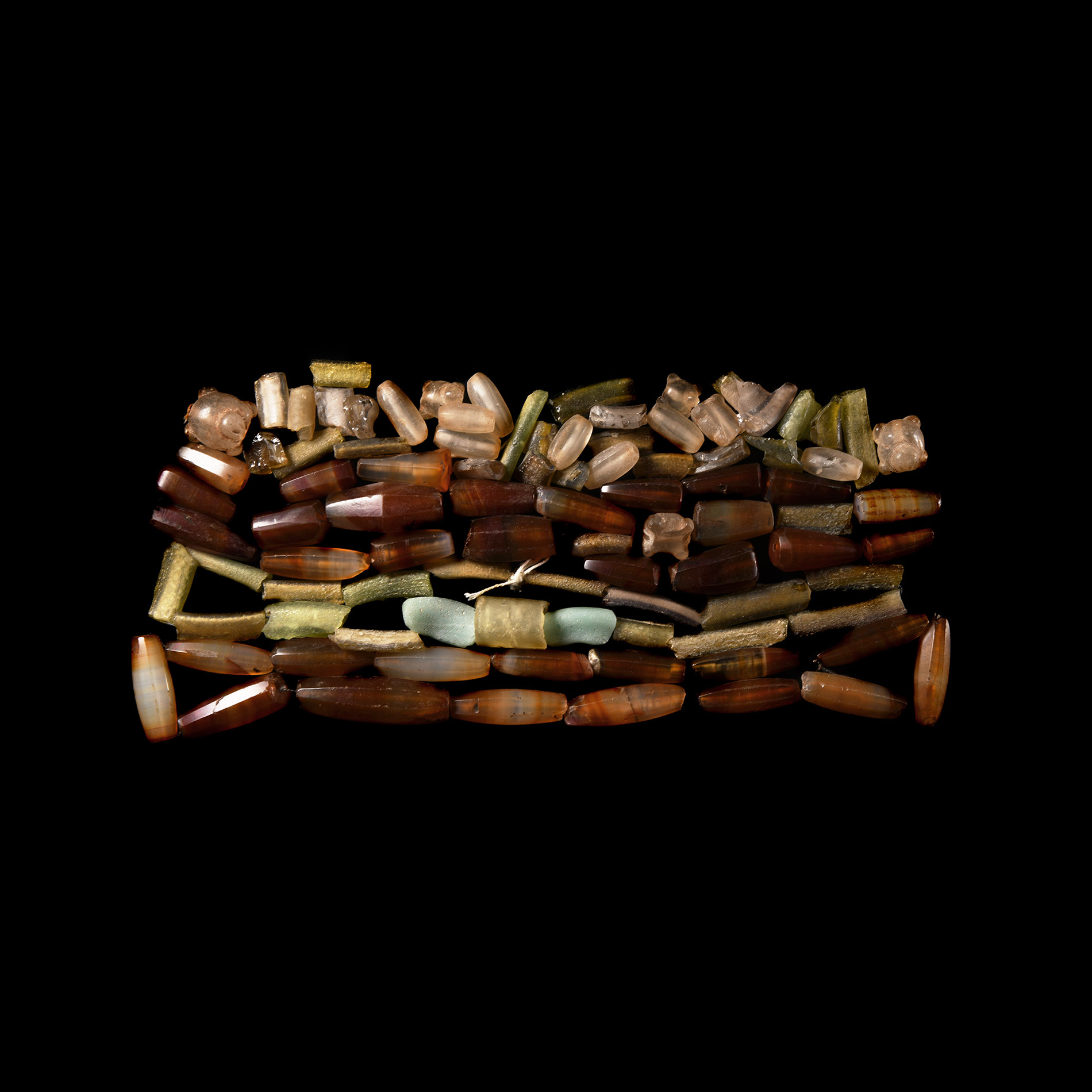
Medieval Agate and Other Bead Group
15TH CENTURY A.D. AND LATER
3/8 - 20 7/8 in. (330 grams total, 1.1-53 cm).
Composed mainly of facetted beads, together with glass and quartz examples, including beads of animal form. [64, No Reserve]
ProvenanceAcquired 1990s-early 2000s.
East Anglian private collection.
TimeLine Auctions follows a vetting process to ensure the authenticity and legality of all items, reinforcing our commitment to integrity and responsible trading. Each antiquity, antique, and coin lot undergoes thorough examination by a vetting committee of at least ten external specialists, professional trade association members, scientists, and archaeologists: Our Vetting Process
AUCTIONS:
TimeLine is a leading auction house specialising in antiquities, ancient art, collectables, natural history, coins, medals, and books. Our auctions offer museums, collectors, historians, and enthusiasts the opportunity to acquire unique and historically significant pieces.
-
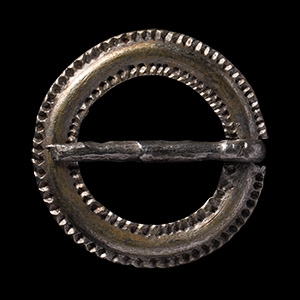
Medieval Silver Annular Brooch
13th-14th century A.D.Sold for (Inc. bp): £13
Featuring a domed upper face decorated with pecked marks; articulate tongue. 3.17 grams, 26 mm
From the collection of a North American gentleman, formed in the 1990s. -
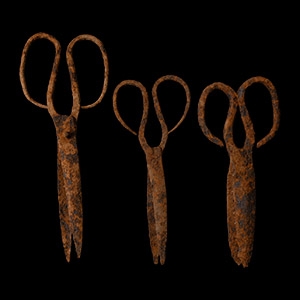
Medieval Iron Scissors Group
Circa 15th-16th century A.D.Sold for (Inc. bp): £20
Comprising three differently-sized pairs of scissors with looped handles and varying blade profiles; one pair partially articulate. 668 grams total, 22-27.5 cm
Acquired 1990s-early 2000s. East Anglian private collection. -
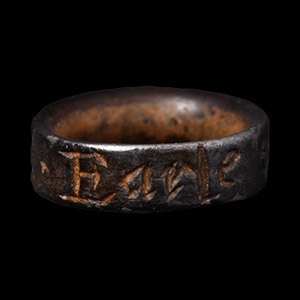
Medieval Silver 'Edmund Plantagenet, Earl of Rutland' Royal Hawking Vervel
Circa 1440-1460 A.D.Sold for (Inc. bp): £9,750
Or a leg ring inscribed '+Earle of Rutland' in derivative black letter script, for a female merlin or sparrow hawk (due to the youth of Edmund Plantagenet who died aged 17); the ring with a convex interior face. 0.56 grams, 8 mm
Acquired in the 1960s. Ex Bursnall collection, Leicestershire, UK. From the collection of a North American gentleman.
Unique and with links to royalty and the Wars of the Roses. Edmund Plantagenet, Earl of Rutland was executed after the Battle of Wakefield (probably by John Clifford) and was the son of Richard Plantagenet, 3rd Duke of York (a great-grandson of Edward III, father of Edward IV and one of the most powerful English magnates during the Wars of the Roses between the Yorkists and Lancastrians). The first Earl of Rutland was Edmund Plantagenet (grandson of Edward III and executed following the Southampton Plot against Henry V), uncle to Richard. The Earldom of Rutland has historically been closely linked to the Duchy and House of York.
