
Loading, please wait...
LOT 1111
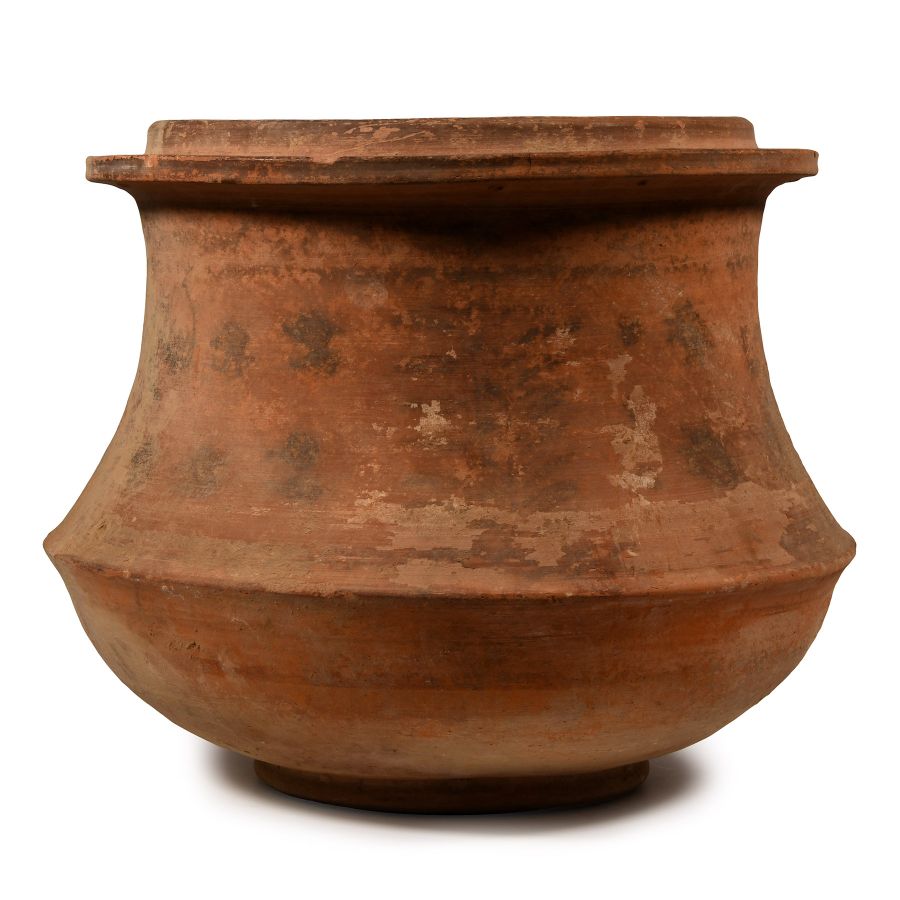
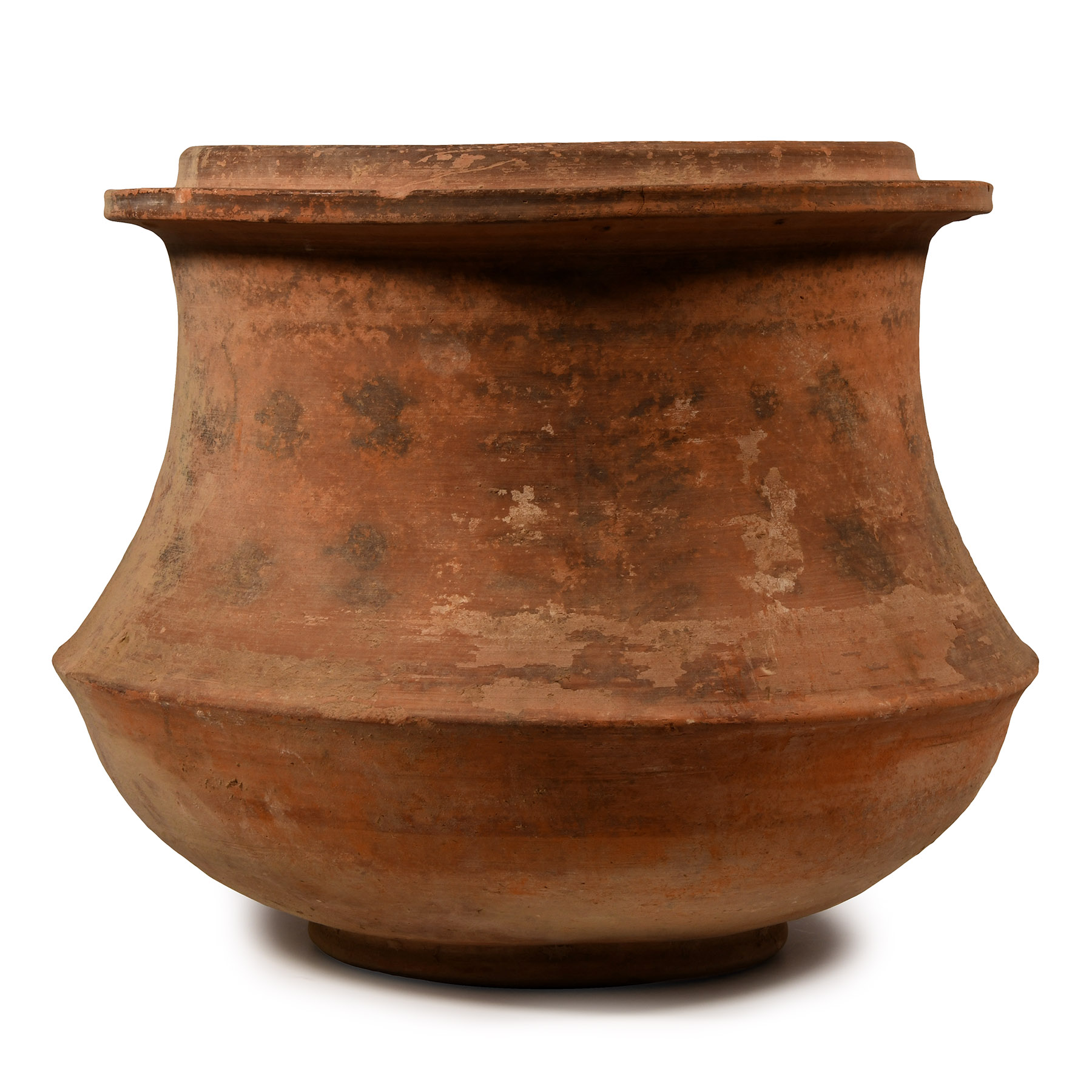
Massive Western Asiatic Terracotta Jar
2ND-1ST MILLENNIUM B.C.
15 1/4 in. (12.35 kg, 39 cm).
With carinated profile, rounded underside and basal ring; scooped shoulder and flared rim to the mouth with stepped contour, rim chipped.
ProvenanceAcquired 1980-2015.
Ex Abelita family collection.
TimeLine Auctions follows a vetting process to ensure the authenticity and legality of all items, reinforcing our commitment to integrity and responsible trading. Each antiquity, antique, and coin lot undergoes thorough examination by a vetting committee of at least ten external specialists, professional trade association members, scientists, and archaeologists: Our Vetting Process
AUCTIONS:
TimeLine is a leading auction house specialising in antiquities, ancient art, collectables, natural history, coins, medals, and books. Our auctions offer museums, collectors, historians, and enthusiasts the opportunity to acquire unique and historically significant pieces.
-
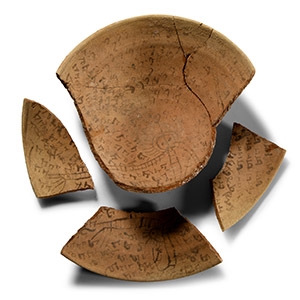
Fragmentary Jewish Magic Bowl with Aramaic Incantation Against Evil Spirits and Drawing of the Devil
Circa 4th-8th century A.D.Sold for (Inc. bp): £260
Broad terracotta bowl with extensive inked inscription and symbols to the inner face; repaired and partly disassembled. 382 grams total, 9-17 cm
From an important family collection, London and Geneva.
Aramaic incantation bowls are particular to the Sassanian period and have been found in regions of modern Iraq. These simple ceramic bowls, also known as magic bowls, each contain an Aramaic inscription, written in ink, which spirals from the centre. The bowls seem to have played an important part in domestic life. For example, during excavation in Nippur in 1889, one or more incantation bowls were found in each house together with domestic artefacts, most often in doorways or under floorboards in the corner of rooms. The bowls are predominantly apotropaic, and the inscriptions tend to protect their owners from misfortunes such as those faced in child-birth, illness and evil spirits. -
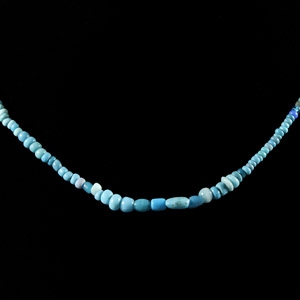
Western Asiatic Turquoise Blue Glass Bead Necklace String
1st millennium B.C. and laterSold for (Inc. bp): £59
Restrung using graduated oblate and other beads, central feature with larger oblate and barrel-shaped beads. 5.6 grams, 46 cm long
UK gallery, early 2000s.
Turquoise has been known since prehistoric times, and it is widely used in jewellery in the Middle East (Egypt and Persia), the Far East (Tibet, Mongolia and China) and even by native North Americans. Turquoise was very fashionable also in Europe, especially during the 18th and 19th centuries. -
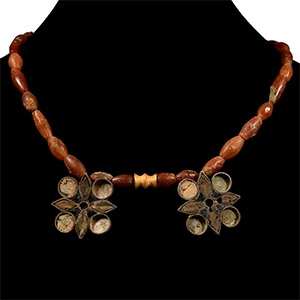
Elamite Silver Flower Pendant Necklace
1st millennium B.C.Estimate: £400 - 600 (+bp*)
Opening Bid: £215
A restrung necklace of fusiform and oval carnelian beads with centrepiece of waisted gold tubular bead; two silver inlaid pendants each a quatrefoil with discs in the spandrels, inset glass and haematite panels. 54 grams, 43 cm
Fine condition.
Acquired 1990s. With a London gallery. Property of a London collector; from her family's private collection.
