
Loading, please wait...
LOT 1061
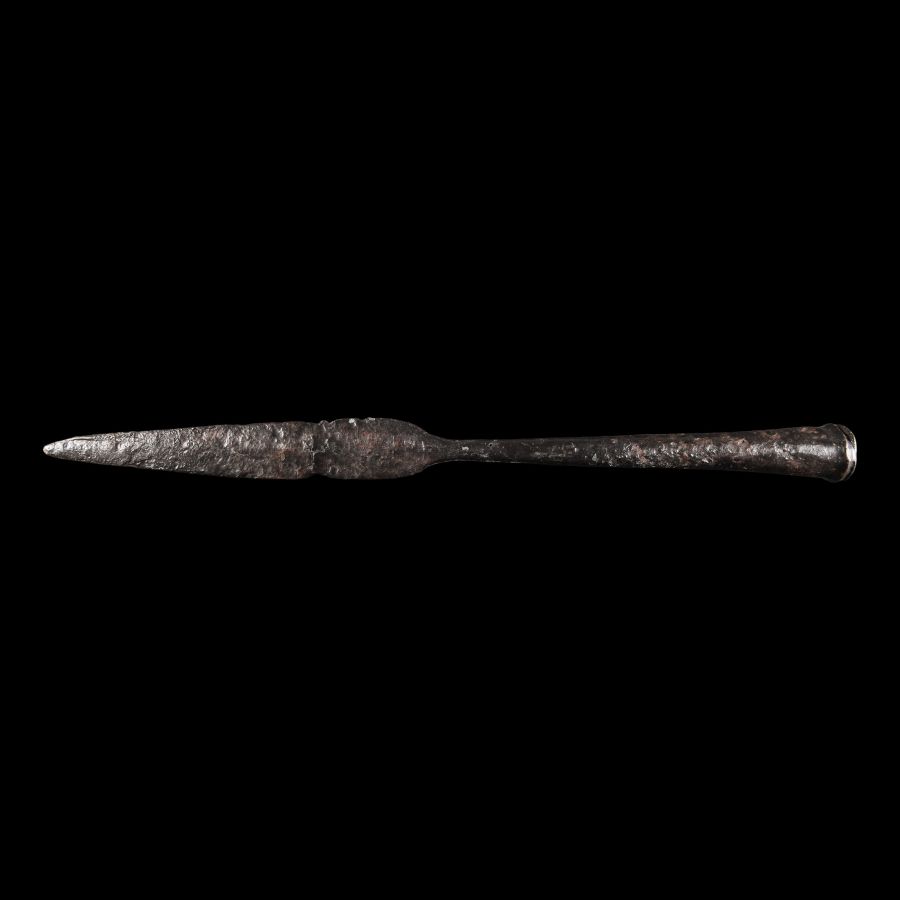
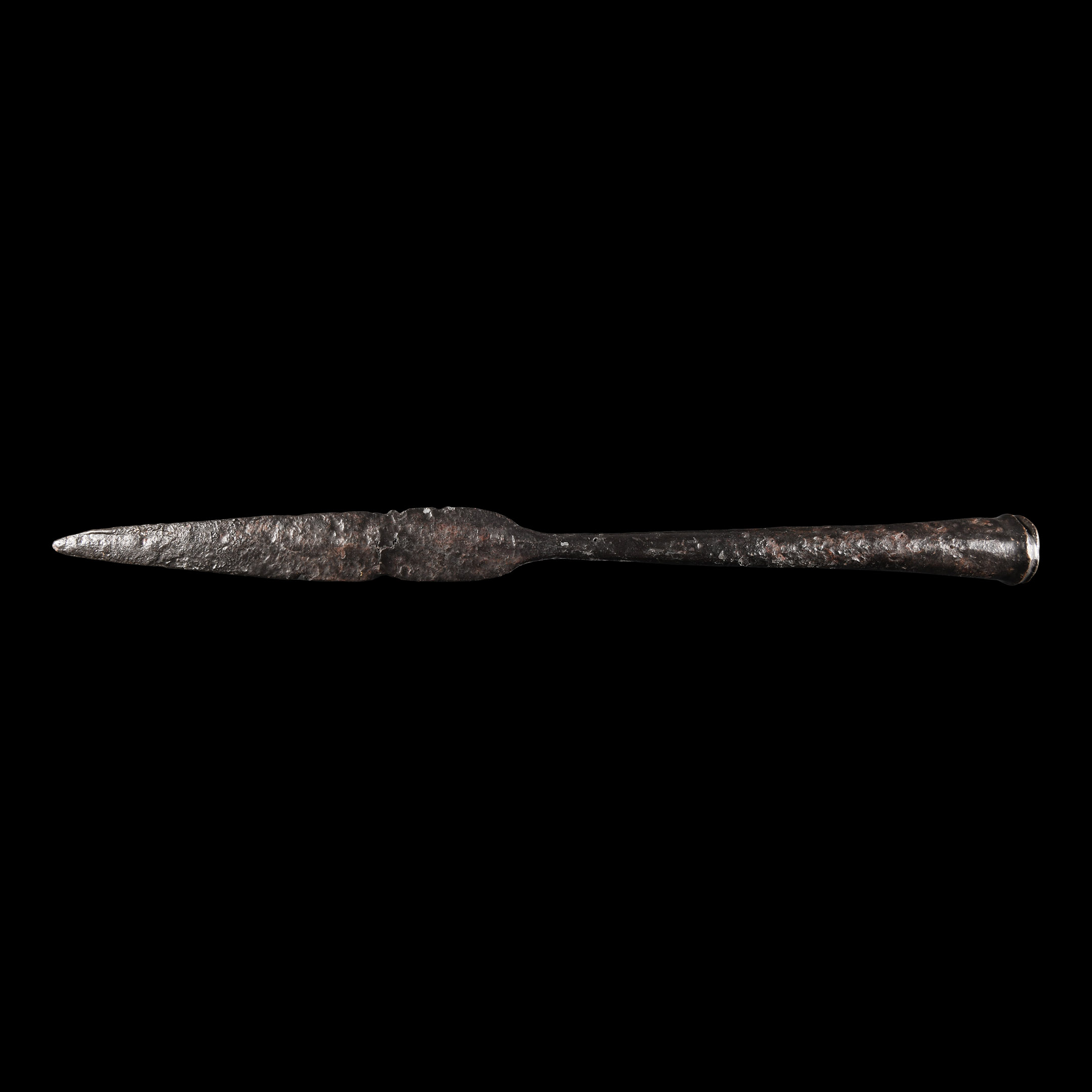
Massive Viking Age Finno-Ugrian Spearhead
CIRCA 12TH-13TH CENTURY A.D.
16 5/8 in. (388 grams, 42.2 cm).
Comprising a leaf-shaped blade and long tubular socket. [No Reserve]
ProvenanceUK collection since the 1990s.
Property of a Sussex, UK, teacher.
Cf. Sedov, B.B., Finno-Ugri i Balti v Epokhi Srednevekovija, Moscow, 1987, pl.XI no.11, for comparable example.
FootnotesThe more common weapons of Finno-Ugrian people were axes commonly found from all Finnic areas, as well as spears. Among Baltic-Finnic people, especially in Finland and Karelia, knives called 'puukko' were common, as well as axes, spears, flat bows and long bows, while swords were usually imported from Germanic areas, Sweden or from elsewhere Scandinavia, some having often typically Scandinavian animal ornaments, although there are some Finnish made finds too.
CONDITIONTimeLine Auctions follows a vetting process to ensure the authenticity and legality of all items, reinforcing our commitment to integrity and responsible trading. Each antiquity, antique, and coin lot undergoes thorough examination by a vetting committee of at least ten external specialists, professional trade association members, scientists, and archaeologists: Our Vetting Process
AUCTIONS:
TimeLine is a leading auction house specialising in antiquities, ancient art, collectables, natural history, coins, medals, and books. Our auctions offer museums, collectors, historians, and enthusiasts the opportunity to acquire unique and historically significant pieces.
-
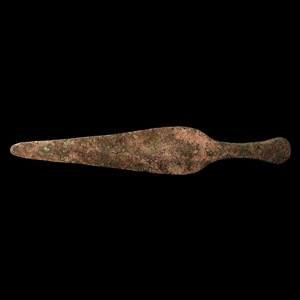
Western Asiatic Bronze Dagger with Integral Hilt
3rd-2nd millennium B.C.Estimate: £100 - 140 (+bp*)
Opening Bid: £50
Composed of a leaf-shaped blade, round-section grip with wide flat tang and lobe pommel. 740 grams, 40 cm
Fine condition.
Abelita family collection, 1980-2015. -
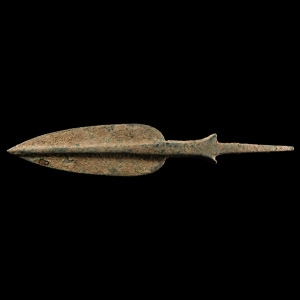
Amlash Bronze Spear Blade
12th-11th century B.C.Sold for (Inc. bp): £208
Leaf-shaped blade with pronounced midrib, square-section neck with flared ends and thick square-section tang. 299 grams, 26.7 cm
Ex German collection, Cologne, 1980-1990s.
The spearhead belongs to the type I of tripartite spears with broad mid-rib, reinforced shaft opening to reveal the tang and rounded shoulders. The blade with curved shoulders, a sharp point and a rectangular mid-rib. Stutzinger dated these pieces to 1200-1100 B.C. -
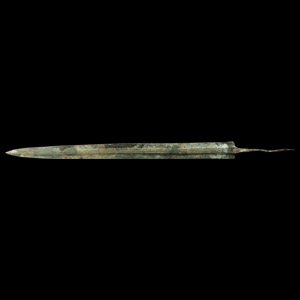
Amarlu Type Bronze Sword with Blood Channels
Late 2nd millenium B.C.Sold for (Inc. bp): £715
Formed with a long triangular blade, thick midrib with parallel fullers, rectangular guard, long tang with folded end. 668 grams, 73 cm
Acquired on the London art market, prior to 1980s. The Kusmirek Collection, UK.
This sword finds a good parallel with a bronze sword with bell-shaped pommel, today in the National Museum of Tehran. Originally these swords had separately made hilt which was then cast on the blade. These swords were more typical of the North-West Persian territory, especially in the Amlash and Gilan areas.
