
Loading, please wait...
_900x900.jpg "Massive Stone Age 'Happisburgh Type' Knapped Flint Handaxe")
_200x200.jpg "Massive Stone Age 'Happisburgh Type' Knapped Flint Handaxe")
.jpg "Massive Stone Age 'Happisburgh Type' Knapped Flint Handaxe")
LOT 0335
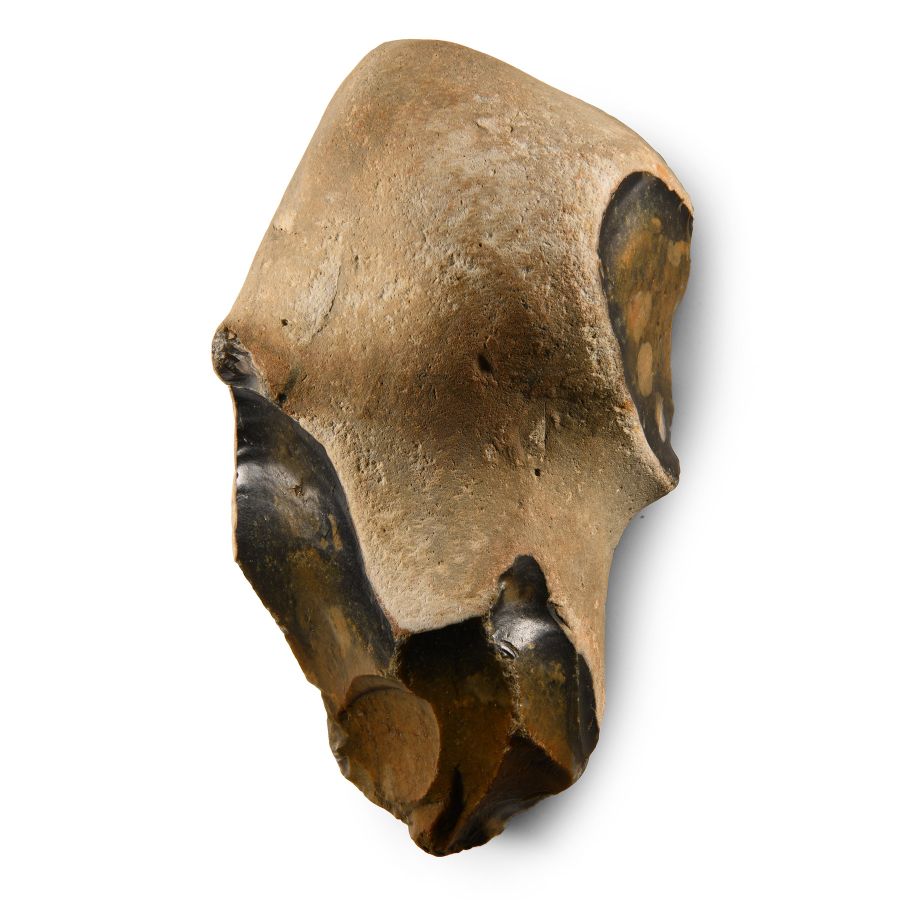
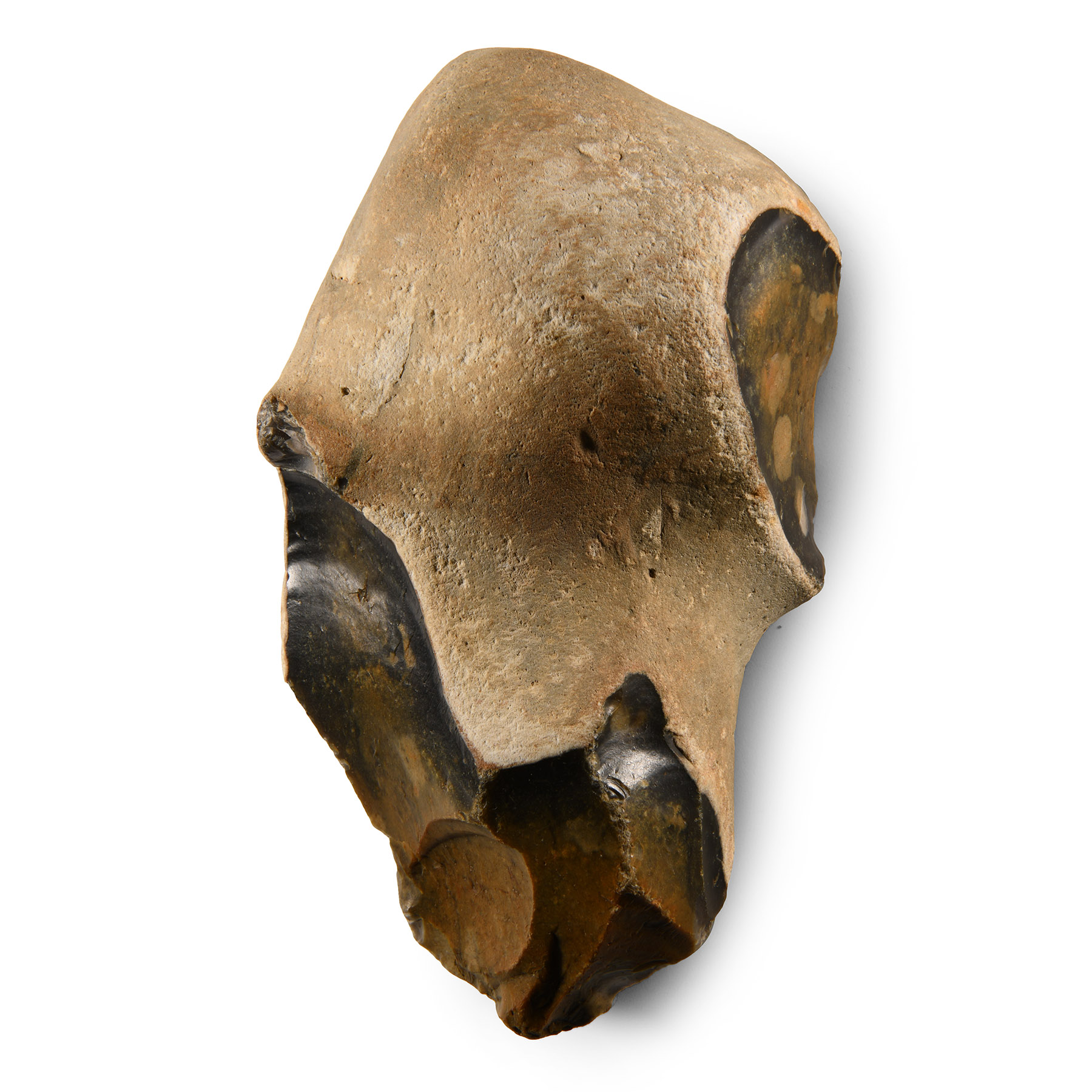
Massive Stone Age 'Happisburgh Type' Knapped Flint Handaxe
LOWER PALAEOLITHIC PERIOD, CIRCA 600,000-150,000 B.P.
6 in. (1 kg, 15.3 cm).
Reputedly one of the largest recorded Happisburgh-type handaxes ever found, a serious collector's piece from the site of the oldest known stone tools in the UK and North West Europe; a proto-handaxe of Wymer's Type C with a large amount of cortex in situ, tip crudely shaped with minimal removal. [No Reserve]
ProvenanceFound Walcott, near Happisburgh, Norfolk, UK, by John Craven in 2018.
Accompanied by a copy of the British Museum's Portable Antiquities Scheme (PAS) report no.NMS-6A4F0A.
See Wymer, J.J., The Lower Palaeolithic Occupation of Britain, Salisbury, 1999.
CONDITIONTimeLine Auctions follows a vetting process to ensure the authenticity and legality of all items, reinforcing our commitment to integrity and responsible trading. Each antiquity, antique, and coin lot undergoes thorough examination by a vetting committee of at least ten external specialists, professional trade association members, scientists, and archaeologists: Our Vetting Process
AUCTIONS:
TimeLine is a leading auction house specialising in antiquities, ancient art, collectables, natural history, coins, medals, and books. Our auctions offer museums, collectors, historians, and enthusiasts the opportunity to acquire unique and historically significant pieces.
LOT 0335
Massive Stone Age 'Happisburgh Type' Knapped Flint Handaxe
Sold for (Inc. bp): £975
-
Stone Age and Later Artefact Collection
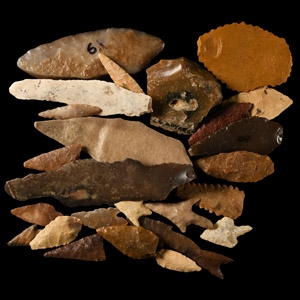
Neolithic Period, 4th millennium B.C. and laterSold for (Inc. bp): £46
Comprising a mixed group of American, north African and European stone arrowheads and other tools, some with inked reference numbers 120 grams total, 19.5-94 mm
Acquired on the UK art market. Property of a Shropshire private collector. -
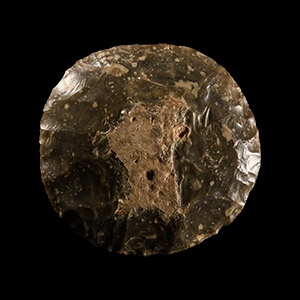
Stone Age Ovate Flint Handaxe
Neolithic Period, circa 6th-4th millennium B.C.Sold for (Inc. bp): £1,105
Biconvex in profile with some cortex remaining to both faces. 225 grams, 90 mm
From a collection acquired on the UK art market from various auction houses and collections mostly before 2000. From an important Cambridgeshire estate; thence by descent. -
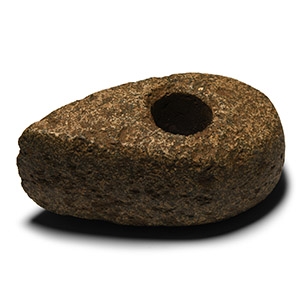
Stone Age Pierced Boat-Shaped Axehead
Neolithic Period, circa 4th-3rd millennium B.C.Sold for (Inc. bp): £111
With rounded butt and convex convergent sides, straight vertical cutting edge and central mounting socket. 775 grams, 12.8 cm
From a collection acquired on the UK art market from various auction houses and collections mostly before 2000. From an important Cambridgeshire estate; thence by descent.
