
Loading, please wait...

LOT 2140
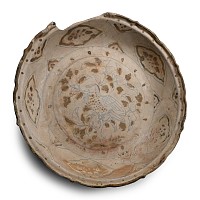
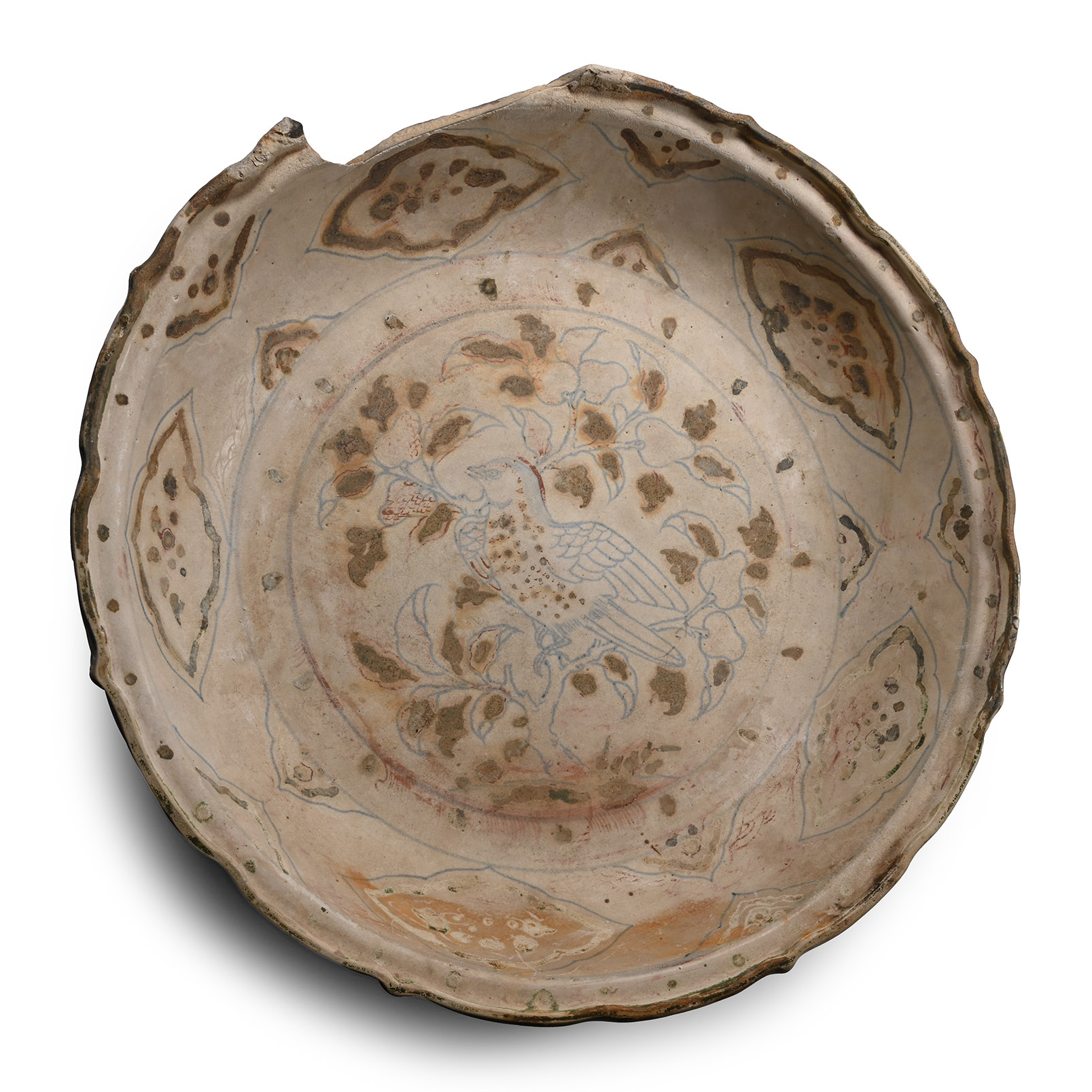
Massive Hoi An Cargo Shipwreck Glazed Blue and White Plate with Song Bird
15TH CENTURY A.D.
14 in. (2.24 kg, 35.5 cm).
A wide plate with scalloped rim, the inner face with a singing bird seated on a flowering branch, petals to the outer face. [No Reserve]
ProvenanceEx Butterfield and Butterfield auction with official Hoi An Hoard labels.
Accompanied by an illustrated information sheet about the Hoi An shipwreck.
This lot is accompanied by an illustrated lot declaration signed by the Head of the Antiquities Department, Dr Raffaele D'Amato.
Cf. Colomban, PH., Sagon. G., Huy, L.Q., Liem, N.Q.. Mazerolles, L., 'Vietnamite (15th century) blue-and-white Tam Thai and Lustre Porcelains/Stonewares: glaze composition and decoration techniques' in Archaeometry 46,1 (2004), pp.125-136, fig.1 lett.i, for a dish with the same decorative scheme.
FootnotesIn the mid 15th century, a freighting junk loaded with fine Vietnamese pottery sank in an area of the South China Sea called the 'Dragon’s Embrace.' This vessel is part of the shipwreck cargo recovered off the coast of Vietnam at Hoi An. The ceramics themselves were probably made in the area of Chu Dau.
CONDITIONTimeLine Auctions follows a vetting process to ensure the authenticity and legality of all items, reinforcing our commitment to integrity and responsible trading. Each antiquity, antique, and coin lot undergoes thorough examination by a vetting committee of at least ten external specialists, professional trade association members, scientists, and archaeologists: Our Vetting Process
AUCTIONS:
TimeLine is a leading auction house specialising in antiquities, ancient art, collectables, natural history, coins, medals, and books. Our auctions offer museums, collectors, historians, and enthusiasts the opportunity to acquire unique and historically significant pieces.
LOT 2140
Massive Hoi An Cargo Shipwreck Glazed Blue and White Plate with Song Bird
Sold for (Inc. bp): £546
-
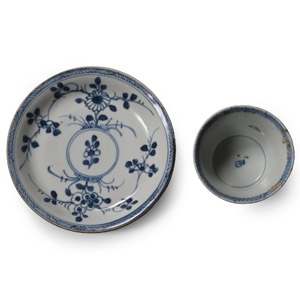
Ca Mau Cargo Shipwreck Glazed Blue and White Tea Cup and Saucer
Early 18th century A.D.Sold for (Inc. bp): £52
Comprising a shallow saucer with flowers and tendrils, brown glaze to the outer face; a bell-shaped cup with a lake scenery showing a fisherman to the outer face and painted border to the inner face. 100 grams total, 6.5-11.3 cm
Ex Sotheby's, Amsterdam, 29-31 January 2007. Accompanied by an illustrated information sheet about the Ca Mau shipwreck. This lot is accompanied by an illustrated lot declaration signed by the Head of the Antiquities Department, Dr Raffaele D'Amato.
The Ca Mau shipwreck refers to a cargo of Chinese porcelain sunk between 1723 and 1735 off the coast of Vietnam. The wreck was discovered by Vietnamese fishermen in 1998. It is believed the wreck was a merchant’s junk on its way from Canton (Guangzhou) to Batavia when it caught fire and sank. The ship was carrying goods destined for Dutch traders who had limited access to China and its ports. -
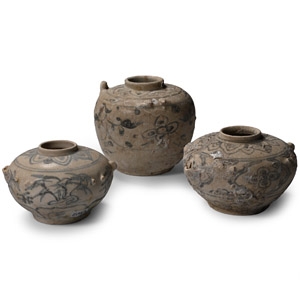
Hoi An Cargo Shipwreck Glazed Blue and White Vessel Group
15th century A.D.Sold for (Inc. bp): £91
Comprising three vessels with remains of loop handles above the shoulder, each with painted floral decoration. 490 grams total, 82-90 mm
Ex Butterfield and Butterfield auction with official Hoi An Hoard labels. Accompanied by an illustrated information sheet about the Hoi An shipwreck. This lot is accompanied by an illustrated lot declaration signed by the Head of the Antiquities Department, Dr Raffaele D'Amato.
In the mid 15th century a freighting junk loaded with fine Vietnamese pottery sank in an area of the South China Sea called the 'Dragon’s Embrace.' This vessel is part of the shipwreck cargo recovered off the coast of Vietnam at Hoi An. The ceramics themselves were probably made in the area of Chu Dau. -
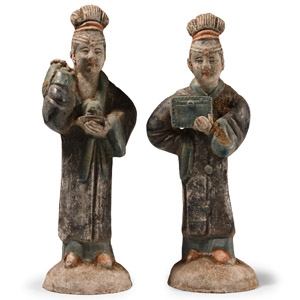
Chinese Qing Pair of Female Attendants
Qing Dynasty, 1644-1912 A.D.Sold for (Inc. bp): £143
Modelled standing and dressed in dark robes, hair worn on a tall to-knot held in place with a band, one holding a box in her hand, and the other a plate with a pig head in her left hand a bag over her right shoulder. 966 grams total, 22-23 cm
From a West Country collection, UK, 1990s. This lot is accompanied by an illustrated lot declaration signed by the Head of the Antiquities Department, Dr Raffaele D'Amato.
