
Loading, please wait...
LOT 0654
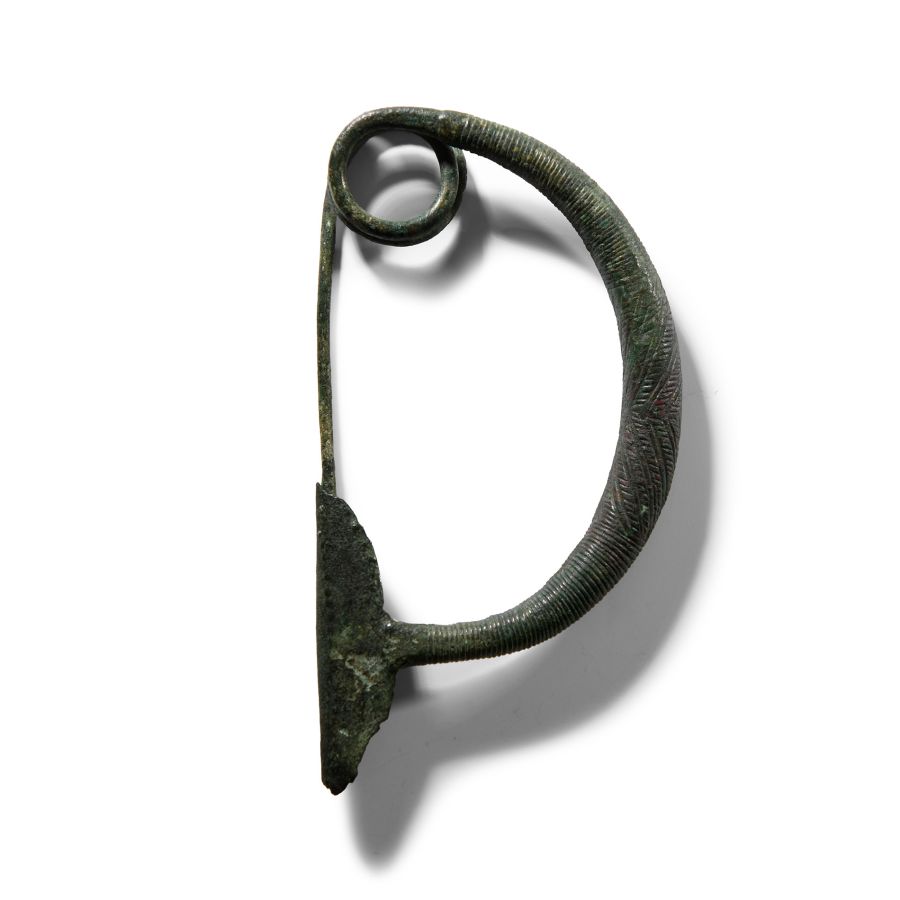
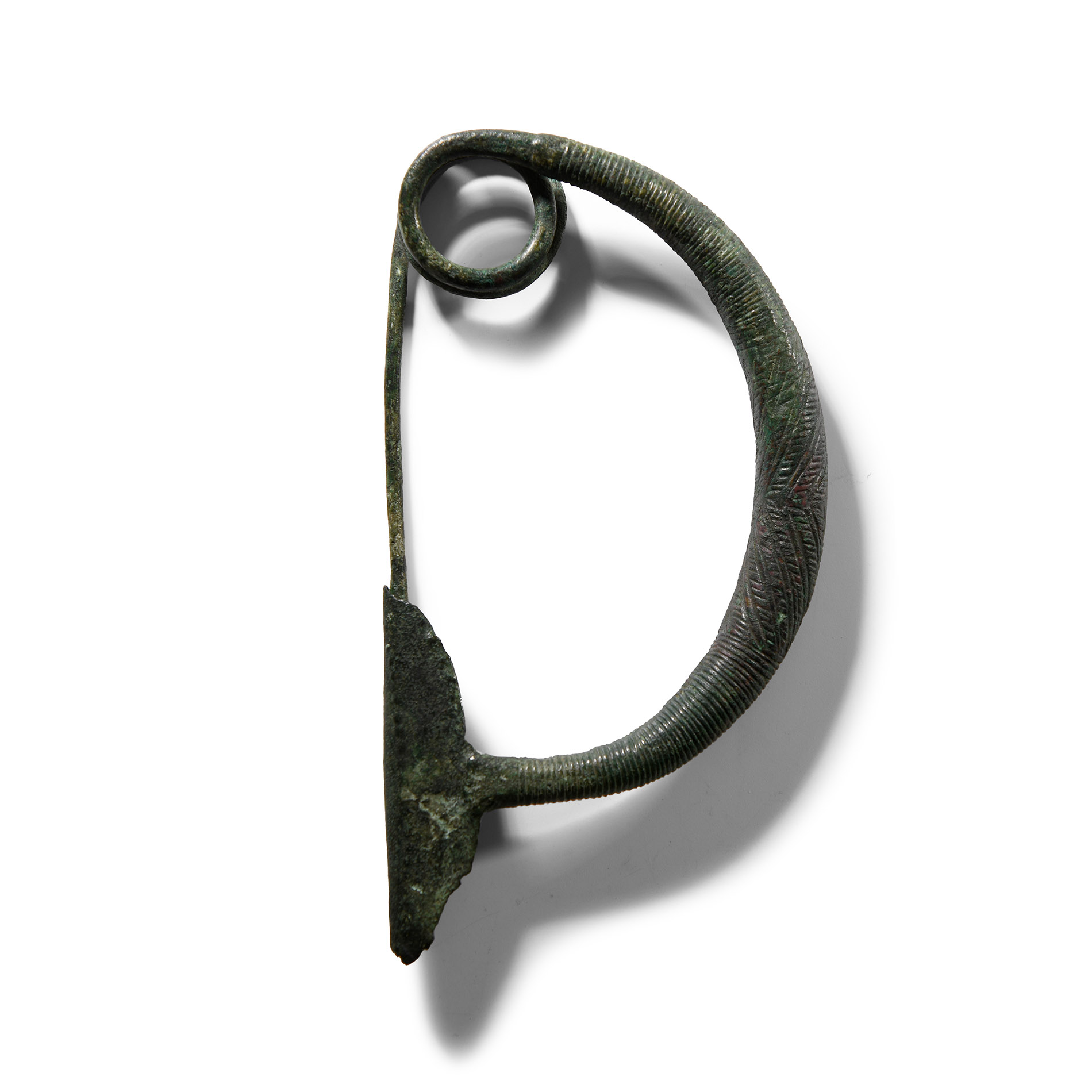
Massive Archaic Greek Bronze Bow Brooch
8TH-6TH CENTURY B.C.
6 1/4 in. (227 grams, 16 cm).
Single-piece fibula comprising a thick bow with integral coiled spring to one end developing to a sturdy pin; to the other end, a U-section catchplate; with hatched bands to the bow, lines of pointillé detailing to the outer face of the catch.
ProvenancePrivate collection, England.
LiteratureCf. Beck, H. et al., Fibel und Fibeltracht, Berlin, 2000, abb.86, for type.
FootnotesThis form of fibula developed into the Hallstatt Bogen-Fibel in Central Europe and influenced later Bronze and Iron Age brooch design.
CONDITIONTimeLine Auctions follows a vetting process to ensure the authenticity and legality of all items, reinforcing our commitment to integrity and responsible trading. Each antiquity, antique, and coin lot undergoes thorough examination by a vetting committee of at least ten external specialists, professional trade association members, scientists, and archaeologists: Our Vetting Process
AUCTIONS:
TimeLine is a leading auction house specialising in antiquities, ancient art, collectables, natural history, coins, medals, and books. Our auctions offer museums, collectors, historians, and enthusiasts the opportunity to acquire unique and historically significant pieces.
-
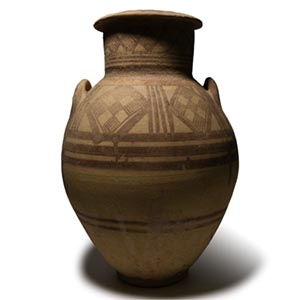
Large Cypriot Terracotta Amphora
Iron Age, Cypro-Geometric, circa 950-850 B.C.Sold for (Inc. bp): £975
With narrow base, oblate profile, two lateral loop handles to the shoulder, broad neck and flared rim to the mouth; painted bands of circumferential geometric ornament, linear with hatched lozenge motifs, radiating bars to the mouth. 3.05 kg, 40.5 cm
From a collection acquired on the UK art market from various auction houses and collections mostly before 2000. From an important Cambridgeshire estate; thence by descent. -
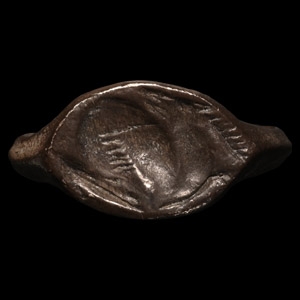
Greek Silver Ring with Animal
Circa 4th-3rd century B.C.Sold for (Inc. bp): £117
With keeled hoop, almond-shaped bezel with crouching ibex facing back. 3.72 grams, 20.89 mm overall, 16.35 mm internal diameter (approximate size British L 1/2, USA 6, Europe 11.87, Japan 11)
Acquired 1980-2015. Ex Abelita family collection. -
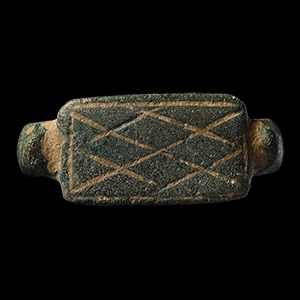
Greek Bronze Ring with Pattern
4th-3rd century B.C.Sold for (Inc. bp): £72
Comprising a plain hoop and rectangular plaque with incised hatching. 3.33 grams, 22.36 mm overall, 18.88 mm internal diameter (approximate size British O, USA 7, Europe 14.98, Japan 14)
Acquired 1980-2015. Ex Abelita family collection.
