
Loading, please wait...
LOT 1385
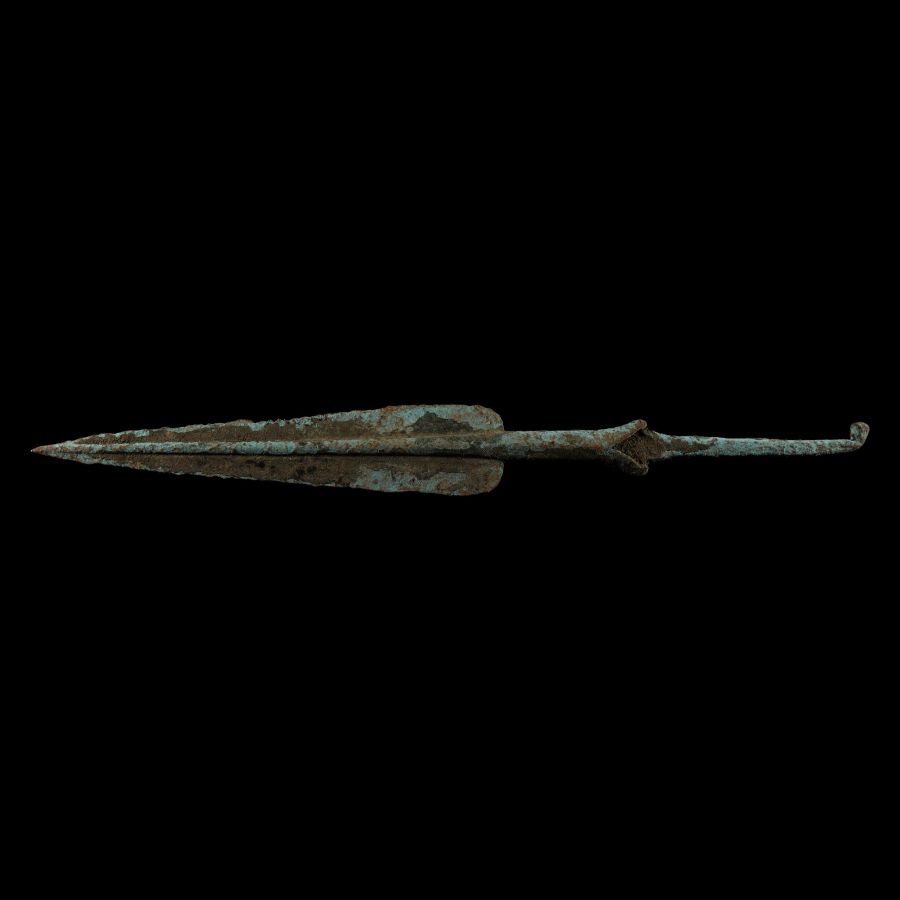
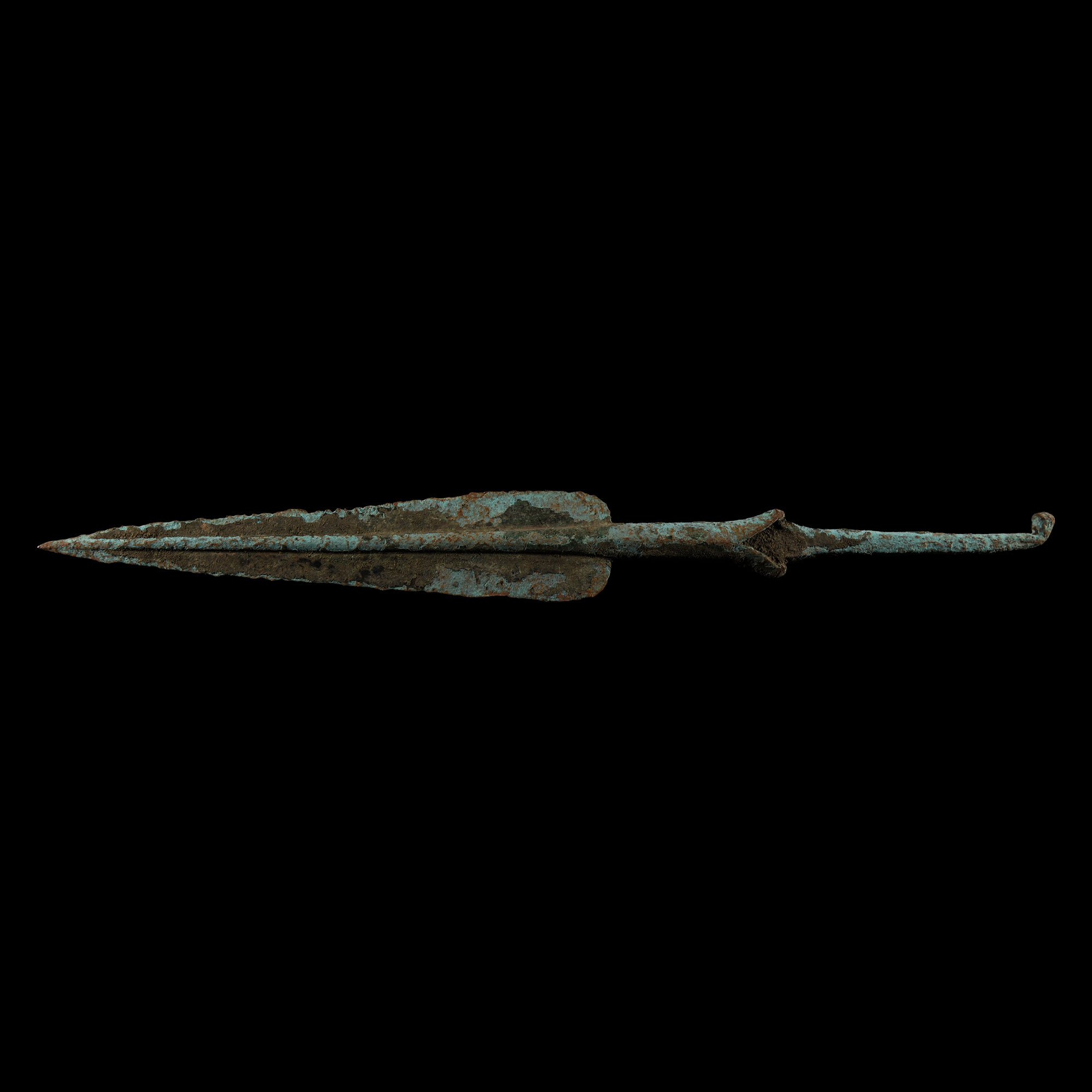
Marlik Type Bronze Tanged Spearhead
12TH-11TH CENTURY B.C.
12 3/8 in. (159 grams, 31.5 cm).
With heavily ridged and tapering blade, short collared shaft and a square-section tapering tang bent at the tip.
ProvenanceAcquired 1980-2015.
Ex Abelita family collection.
Cf. Khorasani, M.M., Arms and Armour from Iran. The Bronze Age to the End of the Qajar Period, Tübingen, 2006, item 279.
FootnotesThe weapon belongs to type I of the Khorasani classification. Similar weapons have been excavated in Marlilk by Professor Negahban and dated by Stutzinger to the late 13th-early 12th century B.C.
CONDITIONTimeLine Auctions follows a vetting process to ensure the authenticity and legality of all items, reinforcing our commitment to integrity and responsible trading. Each antiquity, antique, and coin lot undergoes thorough examination by a vetting committee of at least ten external specialists, professional trade association members, scientists, and archaeologists: Our Vetting Process
AUCTIONS:
TimeLine is a leading auction house specialising in antiquities, ancient art, collectables, natural history, coins, medals, and books. Our auctions offer museums, collectors, historians, and enthusiasts the opportunity to acquire unique and historically significant pieces.
LOT 1385
Marlik Type Bronze Tanged Spearhead
Estimate £100 - 140€120 - 160 (for guidance only)$140 - 190 (for guidance only)
-
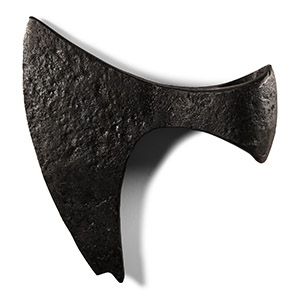
Viking Age Iron Long Bearded Axehead
Circa 10th-12th century A.D.Sold for (Inc. bp): £715
With broad curved blade and short spur beneath the chin, narrow neck, deep socket with extended edge to the reverse. 740 grams, 18 cm
From the collection of a Californian, USA, gentleman, dating back to the late 1960s.
The axe seems to be a variation of type IV of the Kirpichnikov classification of the Eastern Rus Axes typology. These axes appeared in the 10th century, and continued in the 10th-11th century. -
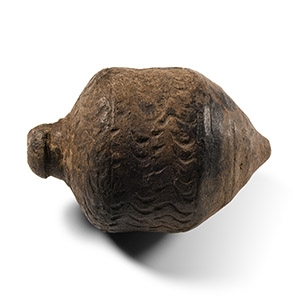
Byzantine 'Greek Fire' Ceramic Fire Bomb or Hand Grenade
9th-11th century A.D.Sold for (Inc. bp): £286
With domed filler-hole, broad shoulder, alternating bands of crescent impressed detailing; intended to be filled with explosive liquid and wick, used as a hand grenade. 242 grams, 10.1 cm
From a collection acquired on the UK art market from various auction houses and collections mostly before 2000. From an important Cambridgeshire estate; thence by descent. Accompanied by an academic paper by military specialist Dr Raffaele D'Amato, dated 15 July 2019 and titled 'Eastern Roman Empire - Greek Fire Bomb or Hand Grenade (μεσαίον kακάβιον) 9th-11th century AD'.
Apart from the use of siphons or manual flame-throwers called cheirosiphona, special corps of Roman soldiers employed terracotta grenades, in the form of small jars, abundantly evidenced in archaeological excavations. Such were the γανωτα, vessels (sometimes also of bronze) used for Greek fire. They were called μεσαία kακαβιά or κυτροκακάβια where the former had a bulbous shape and the latter a more cylindrical form. -
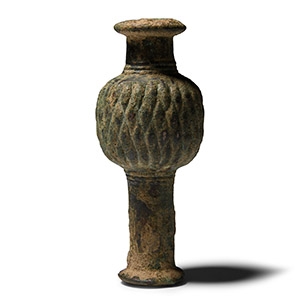
Luristan Bronze 'Pineapple' Macehead
13th-7th century B.C.Estimate: £400 - 600 (+bp*)
Opening Bid: £200
Of Sara Gorz type with cylindrical shaft extended over the top, rounded knobs around the swollen head, flanked by horizontal grooved bands. 272 grams, 12.5 cm high
Fine condition.
Acquired mid 1980s to early 1990s. Private family collection formed in London, UK.
