
Loading, please wait...
LOT 0961
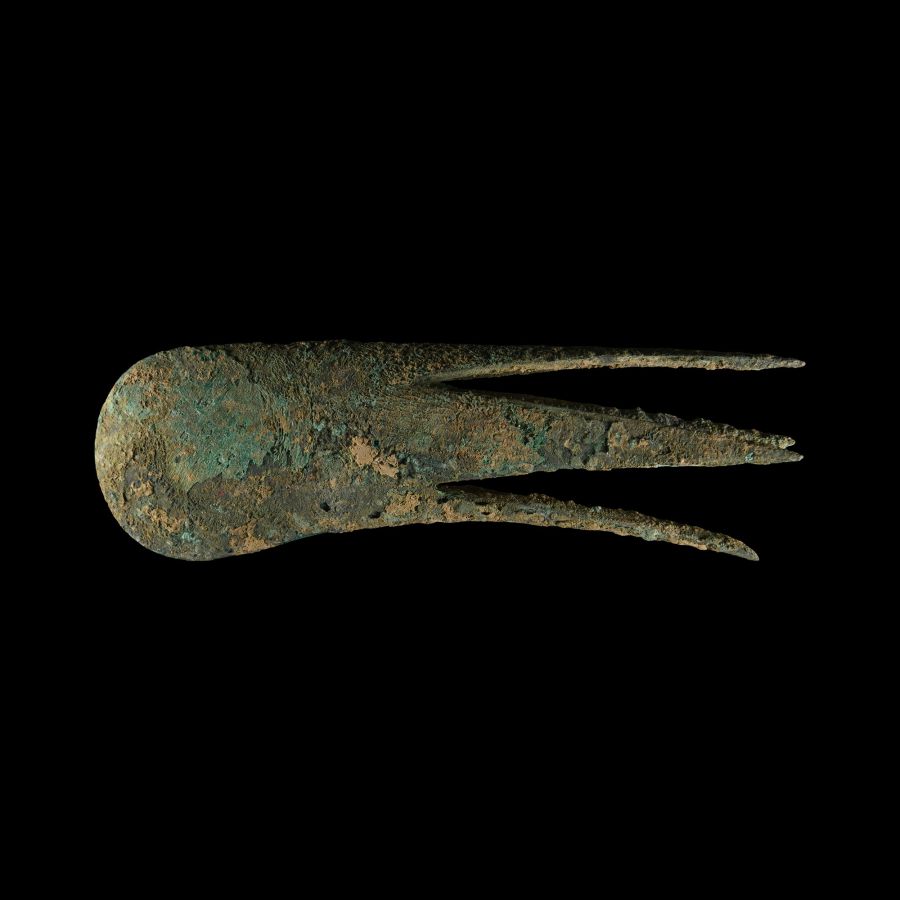
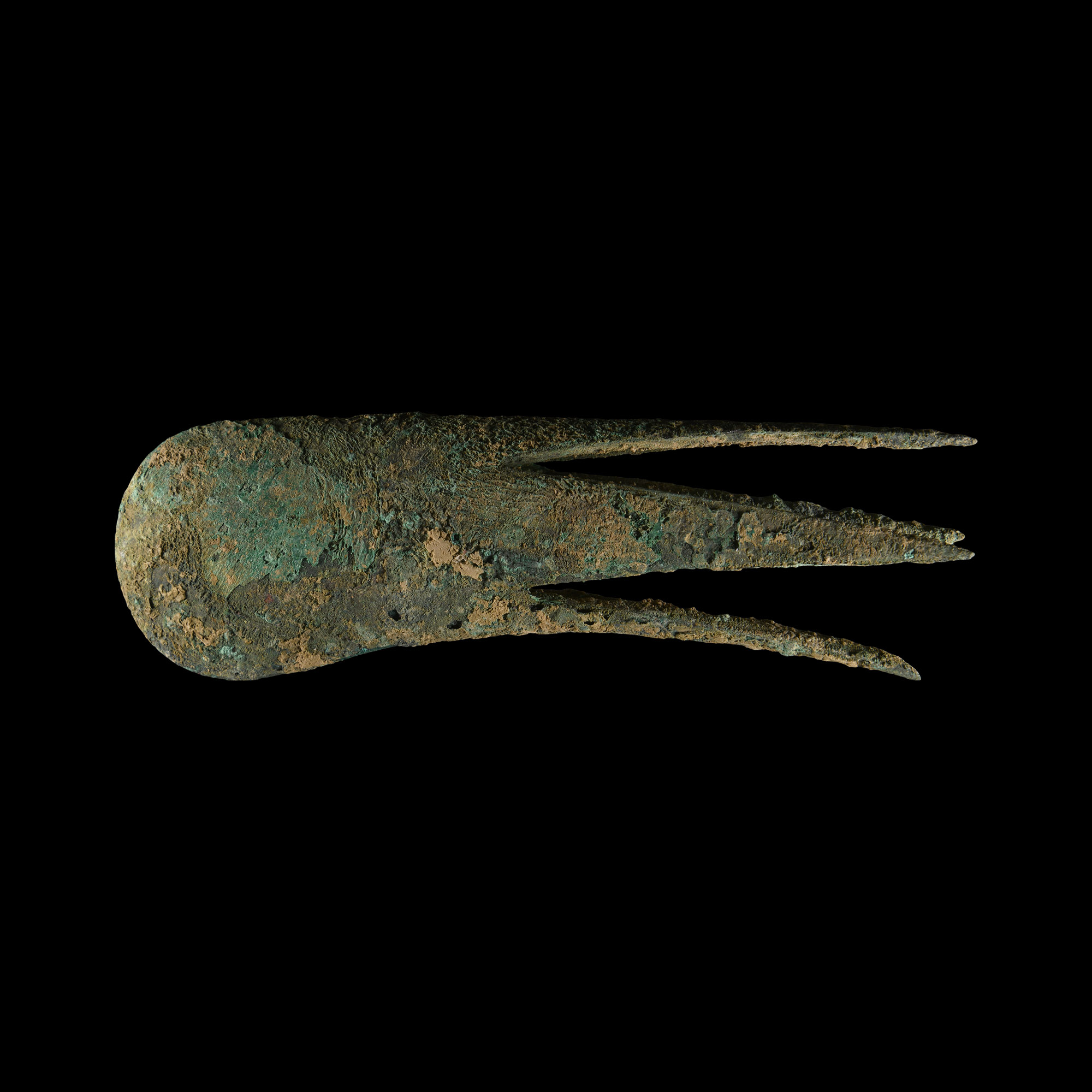
Margiana Bronze Ceremonial Axehead
2ND MILLENNIUM B.C.
5 1/4 in. (180 grams, 13.3 cm).
Featuring a lentoid-section head with rounded cutting edge and four tapering prongs, the lower edge with a scooped profile.
ProvenanceAcquired 1980-2015.
Ex Abelita family collection.
TimeLine Auctions follows a vetting process to ensure the authenticity and legality of all items, reinforcing our commitment to integrity and responsible trading. Each antiquity, antique, and coin lot undergoes thorough examination by a vetting committee of at least ten external specialists, professional trade association members, scientists, and archaeologists: Our Vetting Process
AUCTIONS:
TimeLine is a leading auction house specialising in antiquities, ancient art, collectables, natural history, coins, medals, and books. Our auctions offer museums, collectors, historians, and enthusiasts the opportunity to acquire unique and historically significant pieces.
-
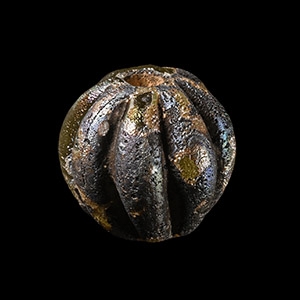
Western Asiatic Iridescent Glass Bead
Circa 10th century A.D.Sold for (Inc. bp): £26
Melon-shaped with hole for suspension. 1.79 grams, 26 mm
London private collection, 1979-1983. -
.jpg)
Babylonian Nebuchadnezzar II Period Glazed Clay Brick Fragment
Circa 6th century B.C.Sold for (Inc. bp): £143
Comprising a polychrome surface to one side forming a corner; an old inked inscription 'BABYLON' to the reverse. 52 grams, 58 mm
Acquired 1970-1990. Ex collection of a deceased gentleman by descent to his family.
A tablet dated to the kingdom of Nebuchadnezzar II and recently published by Prof. Osama Shukir Muhammed Amin, gives detailed measurements for the inner city wall of Babylon, called Imgur-Enlil, naming landmarks like Zababa and Urash gates. Nebuchadnezzar II conquered Jerusalem in 586 B.C. and renewed his imperial city, building majestic new walls. -
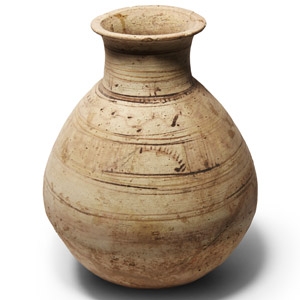
Western Asiatic Geometric Ceramic Vessel
2nd millennium B.C.Sold for (Inc. bp): £169
Of piriform shape with rounded base; painted with circumferential bands populated with dashes, waves and other geometric compositions. 1.9 kg, 28 cm high
Ex Rabi Gallery, Mayfair, London, UK. Ex private collection.
