
Loading, please wait...
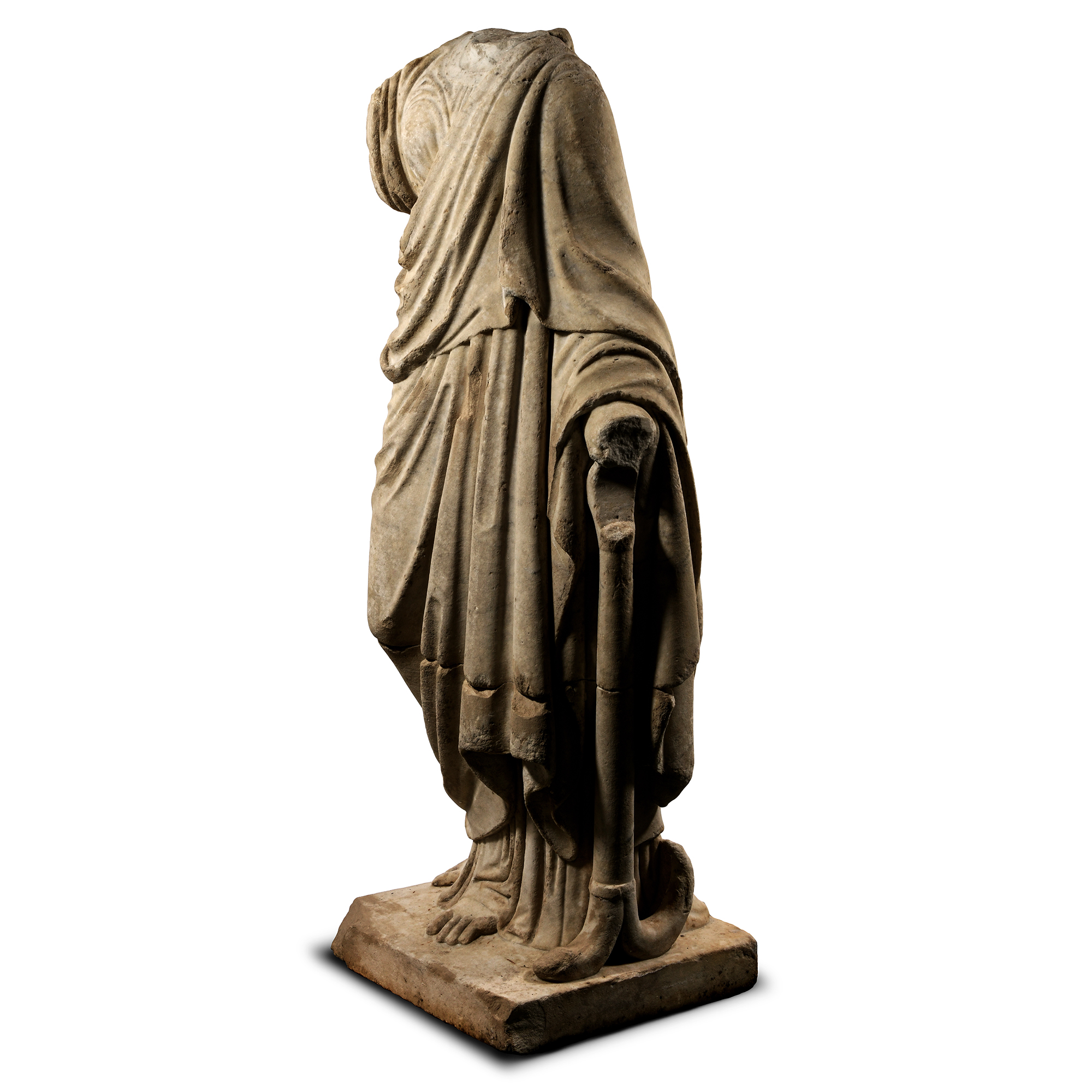
LOT 0127
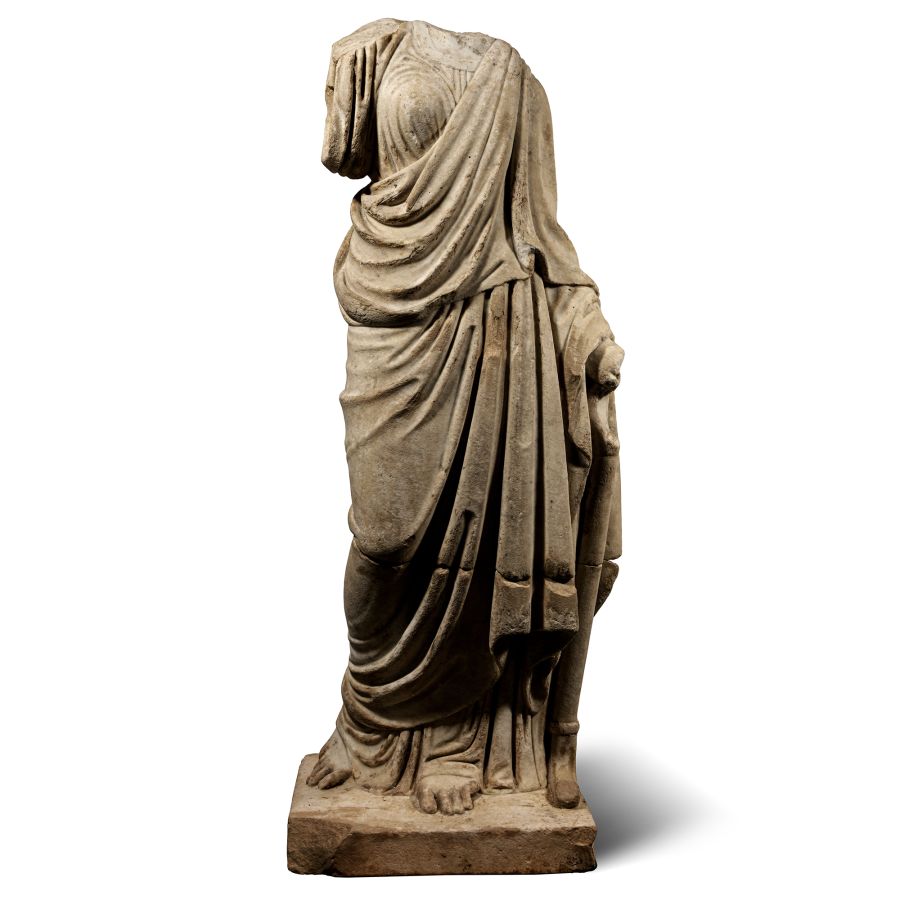
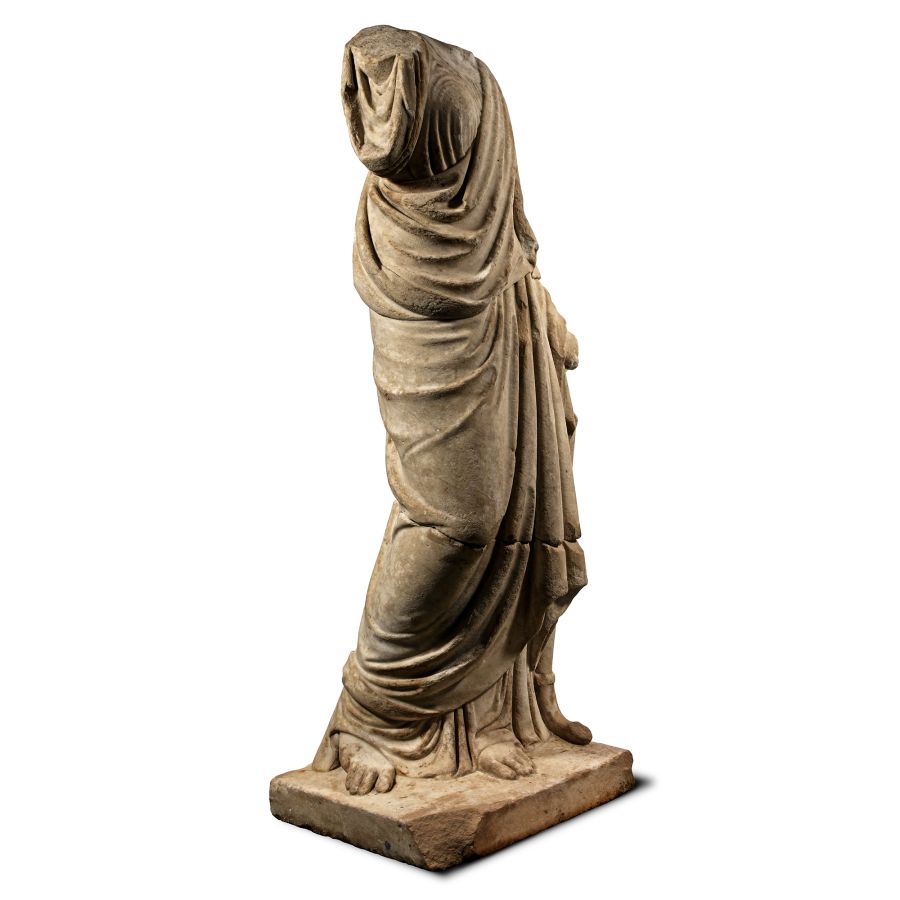
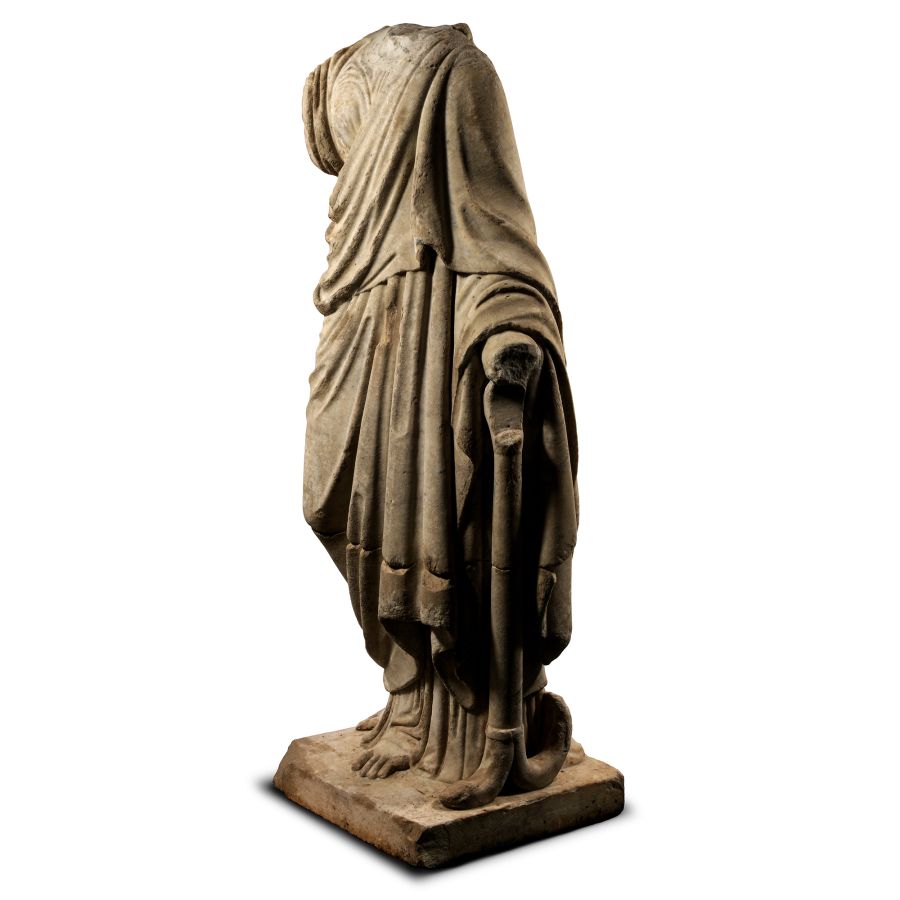
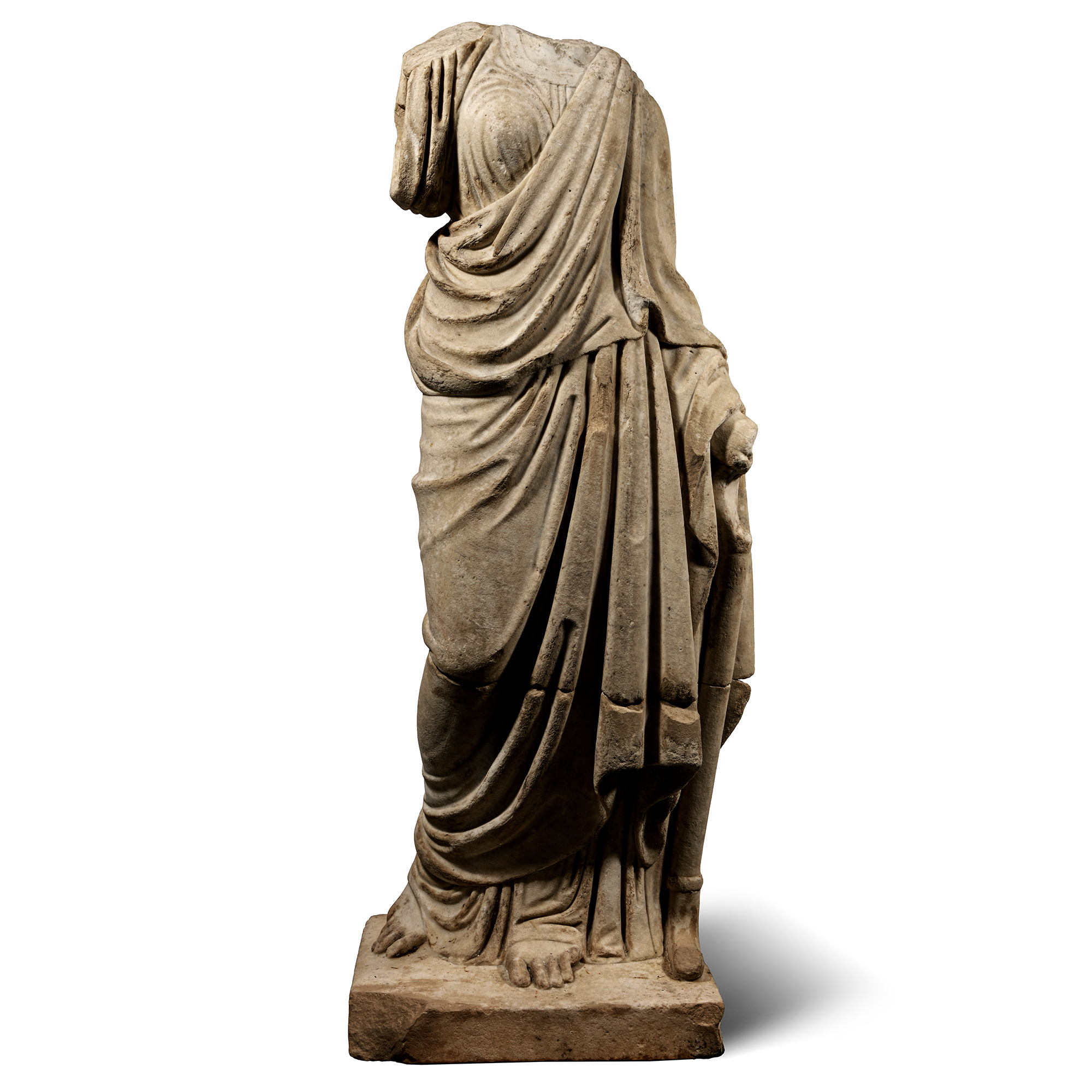
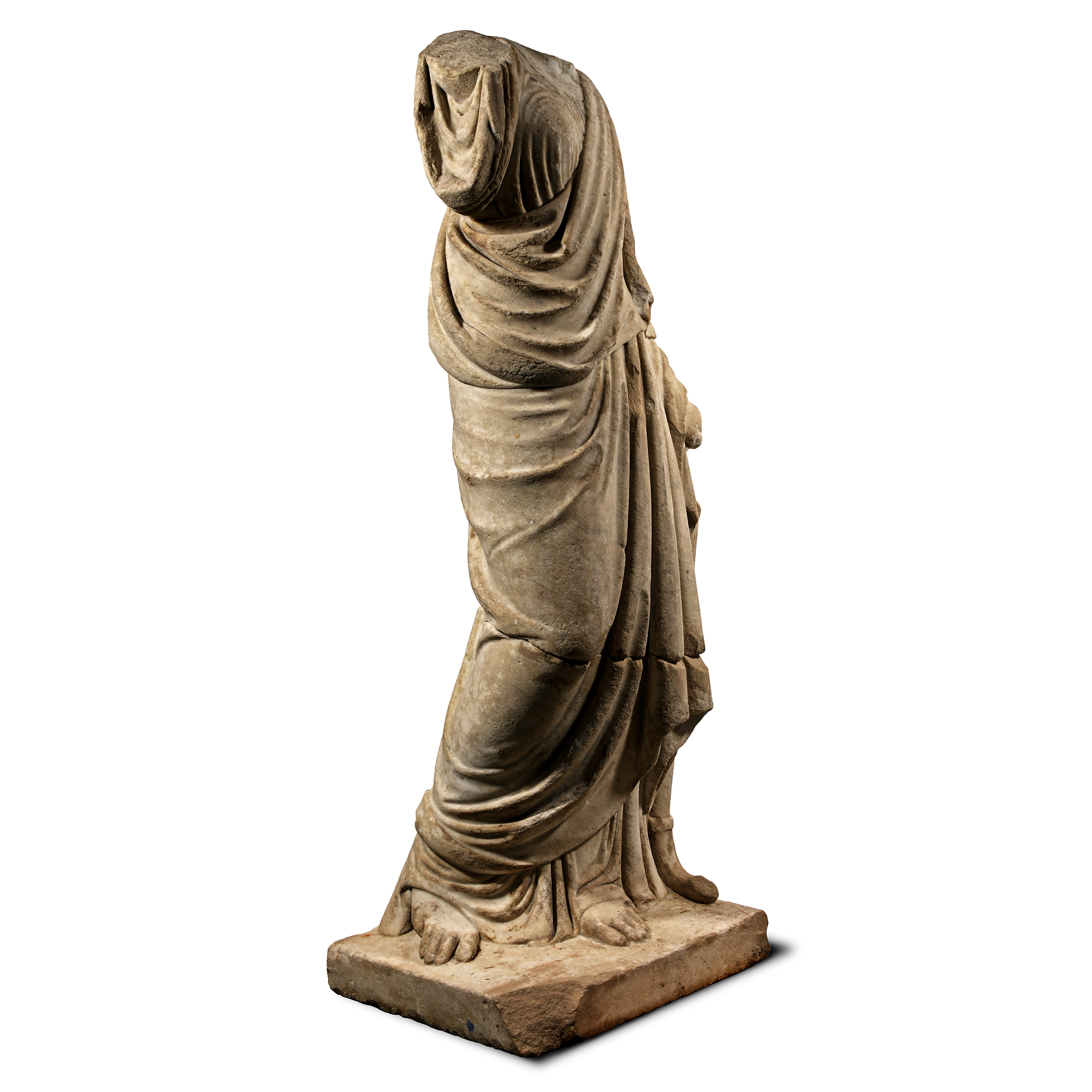
Marble Statue of a Goddess
ROMAN, 3RD CENTURY A.D. OR LATER
41 in. (146 kg, 104 cm).
Possibly depicting Laetitia, the goddess of joy, standing in a contrapposto pose with left arm resting on an anchor, right arm aloft; wearing a chiton and himation, feet emerging from underneath the hem; lower part of a chignon visible on the back; repaired.
ProvenanceFrom a private French collection.
Acquired in France before 1993.
From the personal collection of Gordon Gridley.
Gordon Gridley was a founding member of the Camden Passage antique dealers’ association. Trading in antiques from the late 1960s, he opened his first shop in 1971 and remained a well-known and respected figure in the antiques world until his retirement.
This lot has been checked against the Interpol Database of stolen works of art and is accompanied by search certificate no.12087-214012.
Cf. Burnett, A., ‘The coinage of Allectus: Chronology and Interpretation’ in British Numismatic Journal (54), 1984, pp.21-40, pp.32ff. for legend and figures of the goddess on Roman coins; for Laetitia holding an anchor, see coin types for: Gordian III RIC 300b, Cohen 123; Valerian I RIC 216, Cohen 101, Sear 9944; Tacitus RIC V-1 144; Allectus RIC 22, Sear 13811; Carausius RIC V-2; Gallienus RIC 79, Cohen 420, Goebl 46p, Sear 10124; Victorinus Calico 3825, cf Elmer 706 a; Florian Rome 34 var; Estiot 2475-2487, ric.mom.fr, 4220; Carinus RIC V-2, 261, Sear 12349; Quintillus Sear 11444.
CONDITIONTimeLine Auctions follows a vetting process to ensure the authenticity and legality of all items, reinforcing our commitment to integrity and responsible trading. Each antiquity, antique, and coin lot undergoes thorough examination by a vetting committee of at least ten external specialists, professional trade association members, scientists, and archaeologists: Our Vetting Process
AUCTIONS:
TimeLine is a leading auction house specialising in antiquities, ancient art, collectables, natural history, coins, medals, and books. Our auctions offer museums, collectors, historians, and enthusiasts the opportunity to acquire unique and historically significant pieces.
-
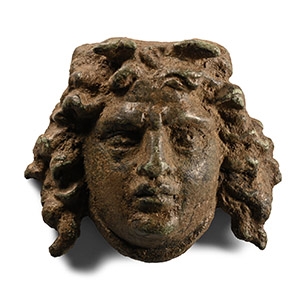
Roman Mask of Medusa
3rd century A.D.Estimate: £1,000 - 1,400 (‡+bp*)
Opening Bid: £500
Modelled in the half-round, facing mask with lateral hanks of curly hair, two small wings above the brow, farme beneath the chin; slot to the reverse for attachment. 179 grams, 59 mm
Acquired on the German art market, 2002. European private collection. -
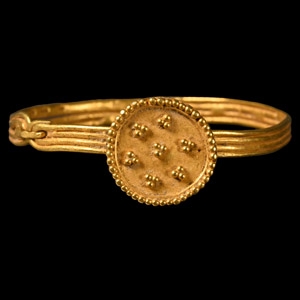
Late Roman Gold Bracelet for a Baby
Circa 4th-6th century A.D.Sold for (Inc. bp): £572
Comprising a penannular band formed of four wires soldered together, the rounded ends joined together with a simple loop; raised conical bezel with discoid face, set with seven granule clusters; Eastern Empire. 4.58 grams, 37 mm
From a private family collection formed in the 1970s. -
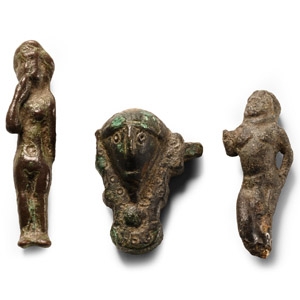
Roman Bronze Statuette Group
3rd century A.D.Sold for (Inc. bp): £195
Group of three votives comprising: standing female (Venus?) with right hand drawn up to the lips; bearded male (Hercules?) with one hand on his buttock; triangular mount with human mask, annulet detailing. 43.6 grams total, 30-43 mm
From a collection acquired on the UK art market from various auction houses and collections mostly before 2000. From an important Cambridgeshire estate; thence by descent.
