
Loading, please wait...
LOT 2002
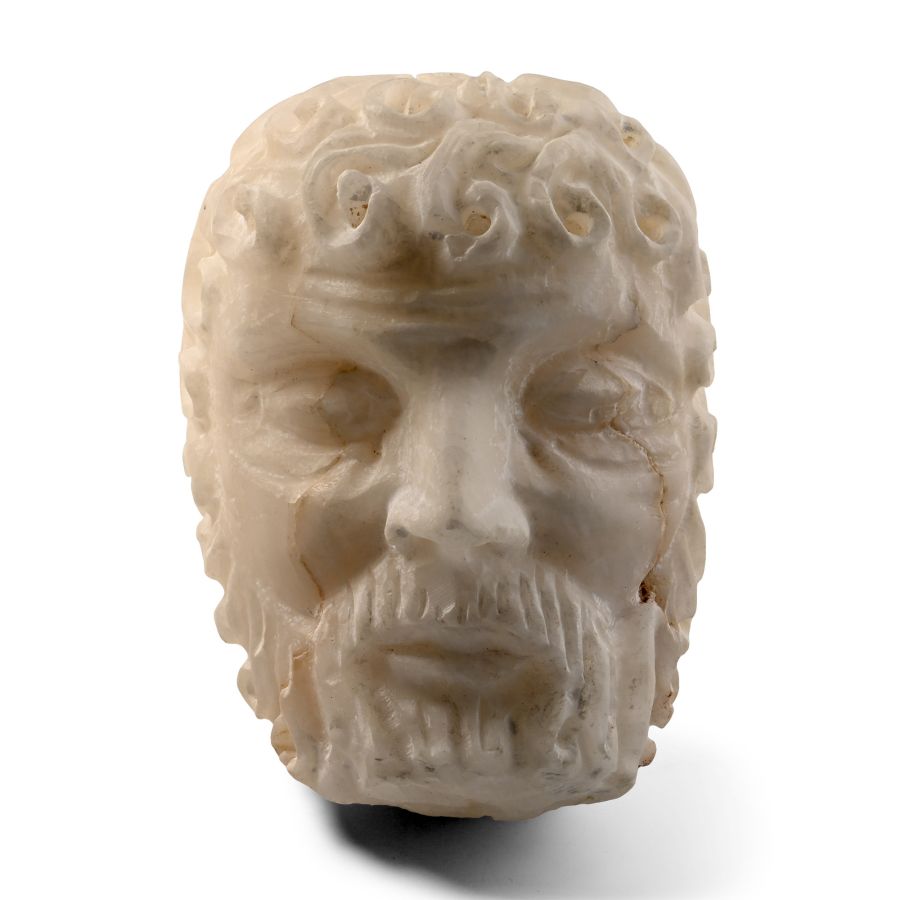
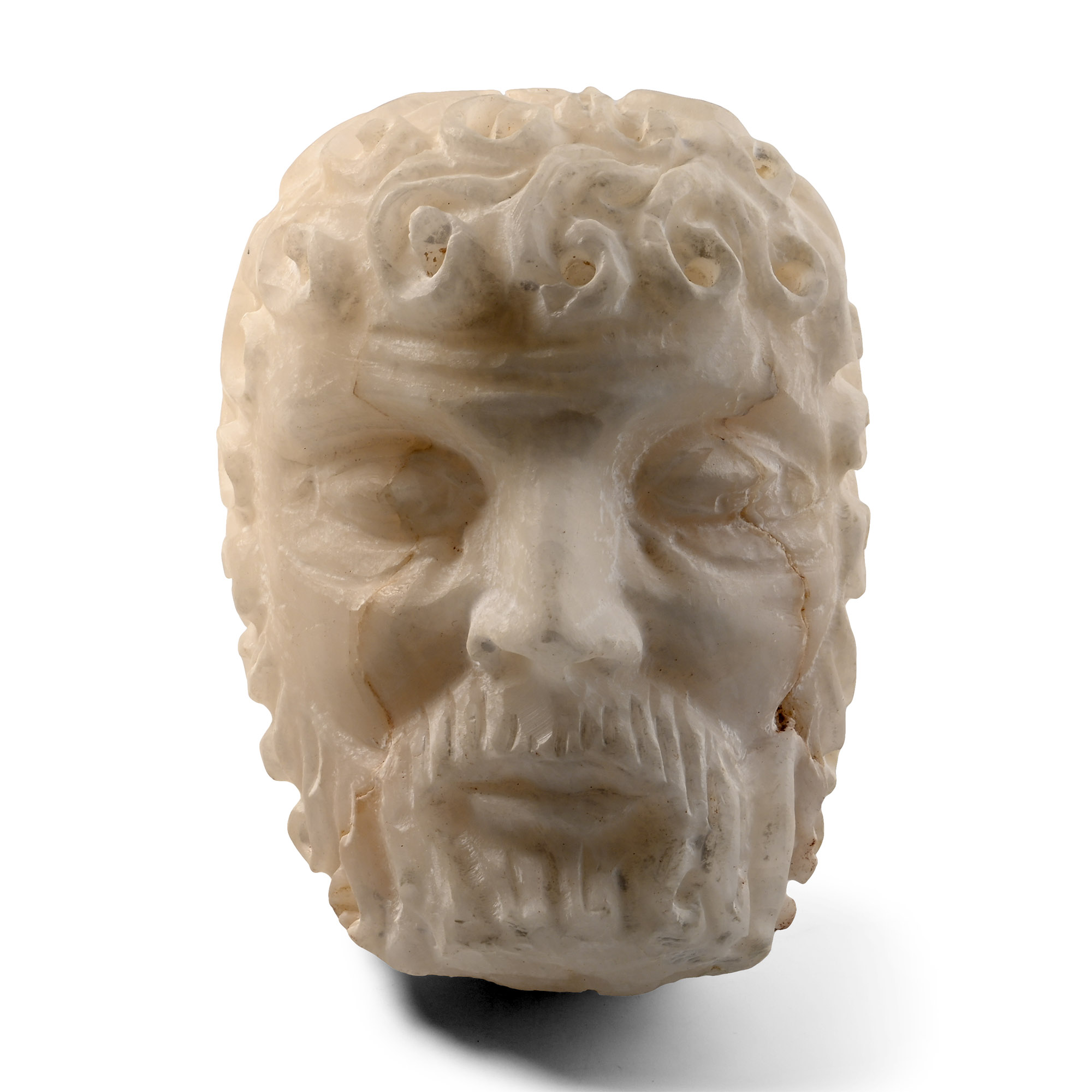
Marble Head of a Bearded Man
20TH CENTURY A.D.
6 in. (2.05 kg, 15.3 cm).
Carved in the round with deeply undercut curls, carinated eyes, aquiline nose and small mouth in a neat beard. [No Reserve]
ProvenanceFrom a private Tyneside collection, formed since the early 2000s.
CONDITIONTimeLine Auctions follows a vetting process to ensure the authenticity and legality of all items, reinforcing our commitment to integrity and responsible trading. Each antiquity, antique, and coin lot undergoes thorough examination by a vetting committee of at least ten external specialists, professional trade association members, scientists, and archaeologists: Our Vetting Process
AUCTIONS:
TimeLine is a leading auction house specialising in antiquities, ancient art, collectables, natural history, coins, medals, and books. Our auctions offer museums, collectors, historians, and enthusiasts the opportunity to acquire unique and historically significant pieces.
-
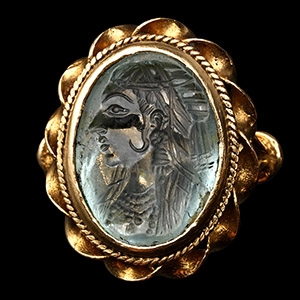
Aquamarine Gemstone with Mughal Princess in Gold Ring
Circa 17th century A.D. and laterSold for (Inc. bp): £2,860
Ellipsoid in plan intaglio showing a profile female bust with elaborate tiered headdress and collars; set in a later gold ring. 8.26 grams, 25.37 mm overall, 17.74 mm internal diameter (approximate size British O 1/2, USA 7 1/4, Europe 15.61, Japan 15)
From the private collection of Rev. Nathaniel Evans, Worthing, Sussex, UK, thence by descent. This lot has been checked against the Interpol Database of stolen works of art and is accompanied by search certificate number no.12934-245934.
These portraits, realised on objects of minor art like glyptics, give a glimpse of the type of jewels and gems realised during the Mughal era. They illustrated the gem connoisseurship of the Mughal Era at its pinnacle. -
.jpg)
Victorian and Later Gemstone Collection
19th-20th century A.D.Sold for (Inc. bp): £59
Comprising: a circular intaglio with leaping Pegasus on a baseline; a rectangular intaglio with a female bust; an oval intaglio with letter 'M'; an oval intaglio with a male head in profile. 8 grams total, 11-20 mm
Norfolk family collection, 1940s-1960s; thence by descent. -
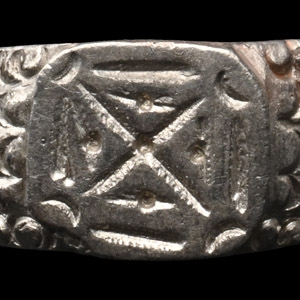
Post Medieval Silver Ring with Saltire Cross
Circa 17th-18th century A.D.Estimate: £100 - 140 (+bp*)
Opening Bid: £50
Substantial hoop with decorative panels flanking the square bezel, the bezel with incuse saltire cross. 7.80 grams, 24.15 mm overall, 19.95 mm internal diameter (approximate size British T, USA 9 1/2, Europe 21.26, Japan 20)
Ex German art market, 2000s. Acquired from an EU collector living in London. From the collection of a Surrey, UK, gentleman.
