
Loading, please wait...
LOT 0410
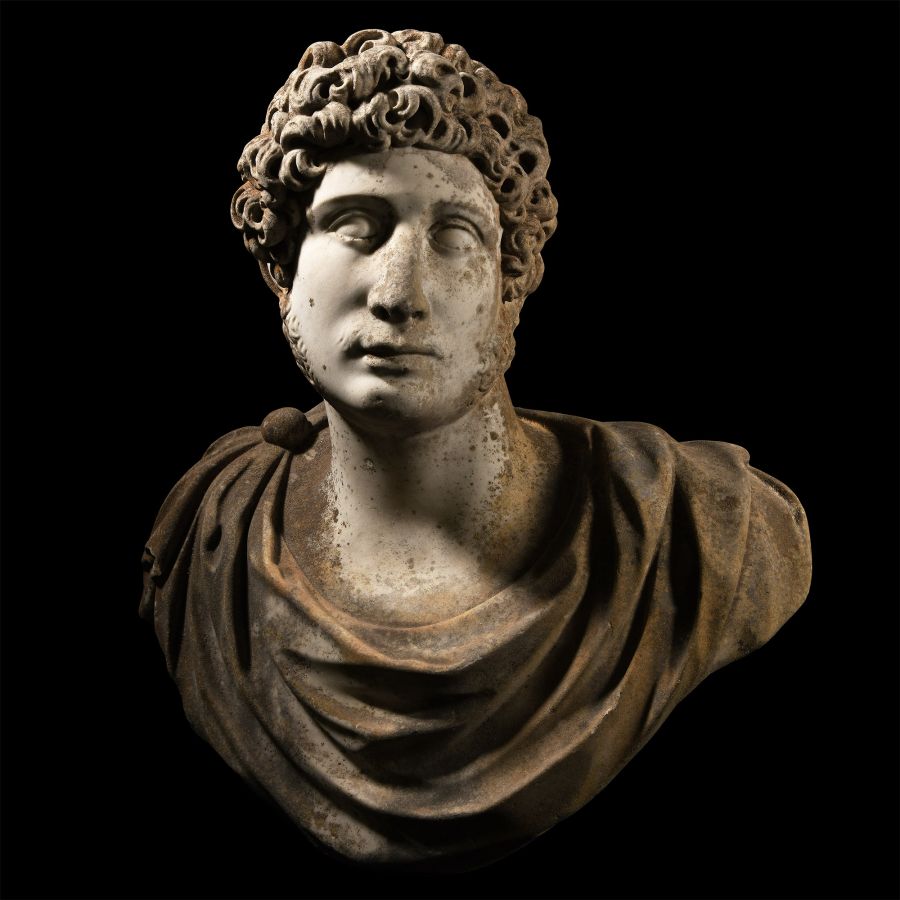
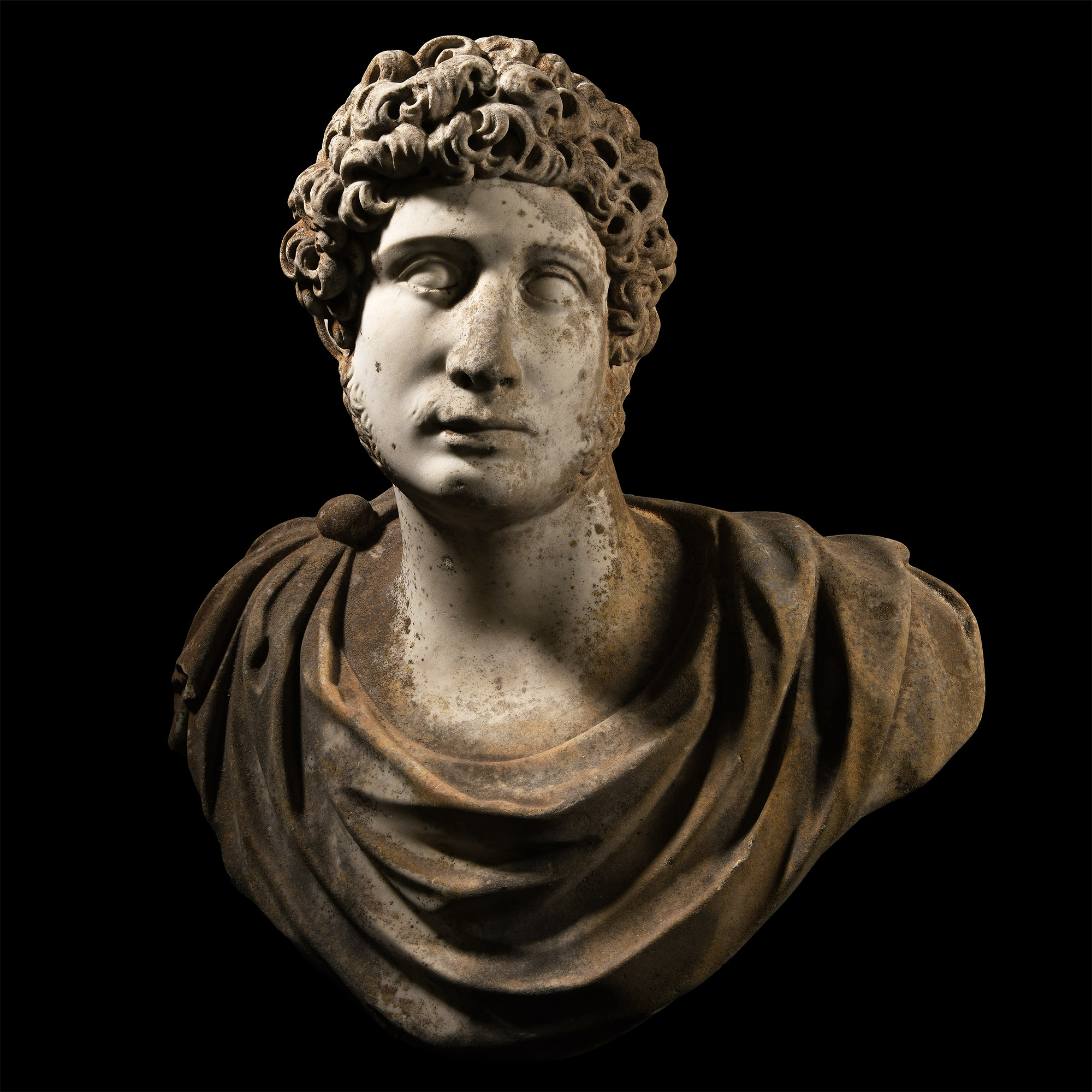
Marble Bust of Young Hadrian
19TH CENTURY A.D.
21 1/4 in. (40.9 kg, 54 cm).
Tastefully carved bust of a youthful male with abundant curly hair, broad brow and high cheekbones, mutton-chop whiskers, long sturdy neck; dressed in classical style with a loose mantle covering the broad shoulders and secured at the right shoulder by a knopped fastener.
ProvenanceAcquired on the North American art market.
Private collection, England.
TimeLine Auctions follows a vetting process to ensure the authenticity and legality of all items, reinforcing our commitment to integrity and responsible trading. Each antiquity, antique, and coin lot undergoes thorough examination by a vetting committee of at least ten external specialists, professional trade association members, scientists, and archaeologists: Our Vetting Process
AUCTIONS:
TimeLine is a leading auction house specialising in antiquities, ancient art, collectables, natural history, coins, medals, and books. Our auctions offer museums, collectors, historians, and enthusiasts the opportunity to acquire unique and historically significant pieces.
-
.jpg)
Georgian Silver 'Born to Die' Ring
Circa 18th century A.D.Sold for (Inc. bp): £1,040
Substantial hoop with segmented profile, low-relief inscription 'MORTI NATUS EST' to the underside, flowers in the following open field, ellipsoid plaques to the shoulders with facing skull motifs, owl with spread wings on the bezel. 7.28 grams, 23.96 mm overall, 20.39 mm internal diameter (approximate size British R 1/2, USA 8 3/4, Europe 19.38, Japan 18)
Private collection, Arundel, West Sussex, UK, 1975-late 1990s.
The ring belongs to the memento mori (remember you shall die) ring type. Upon the bezel is engraved an owl, an animal symbol for the Other World. The inscription Morti Natus Est, means 'born to die' a reminder of fragility of life. -
.jpg)
Tibetan Style Glass Eye Bead Group
20th century A.D.Sold for (Inc. bp): £1,560
Mainly comprising differently sized beads imitating traditional 'etched' agate Zi beads. 137 grams total, 34-41 mm
UK gallery, early 2000s. -
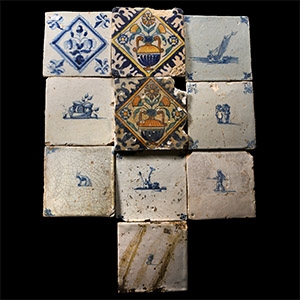
Post Medieval Dutch Glazed Ceramic Tile Group
Circa 17th-18th century A.D.Sold for (Inc. bp): £78
Composed mainly of blue and white glazed tiles displaying sailing vessels, still life scenes, figural vignettes, animals, polychrome floral motifs and others. 3.4 kg total, 12.5 x 13 - 13 x 13.3 cm
Acquired 1990s-early 2000s. East Anglian private collection.
