
Loading, please wait...
LOT 1949
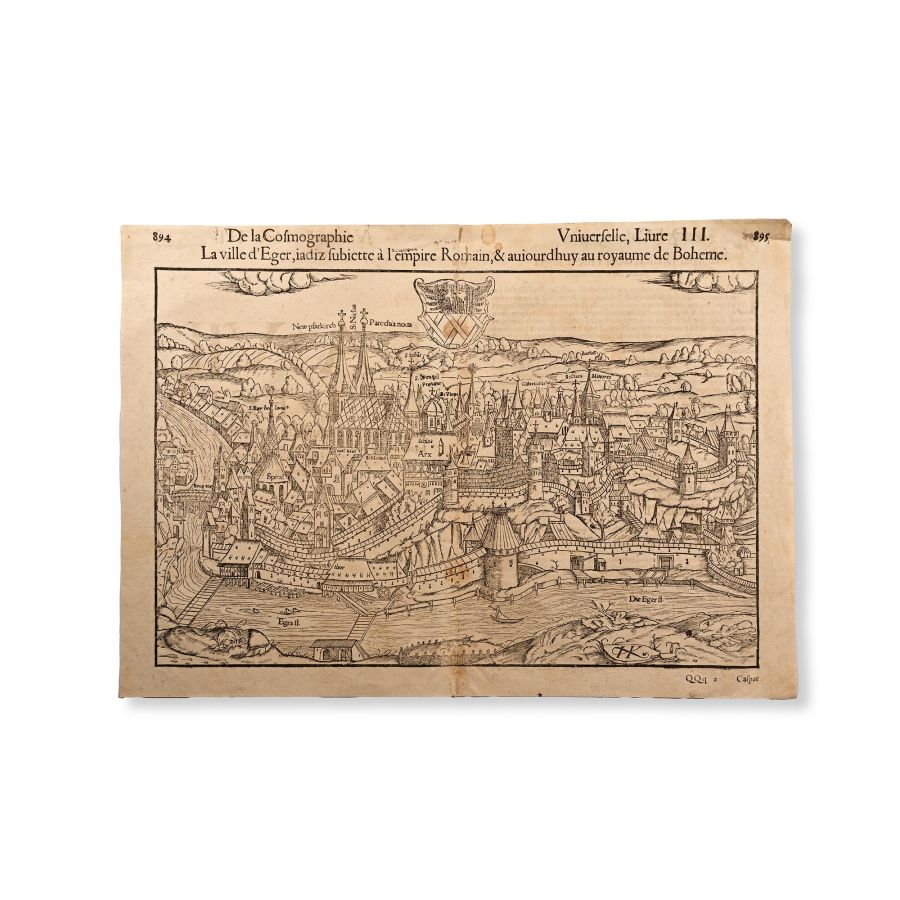
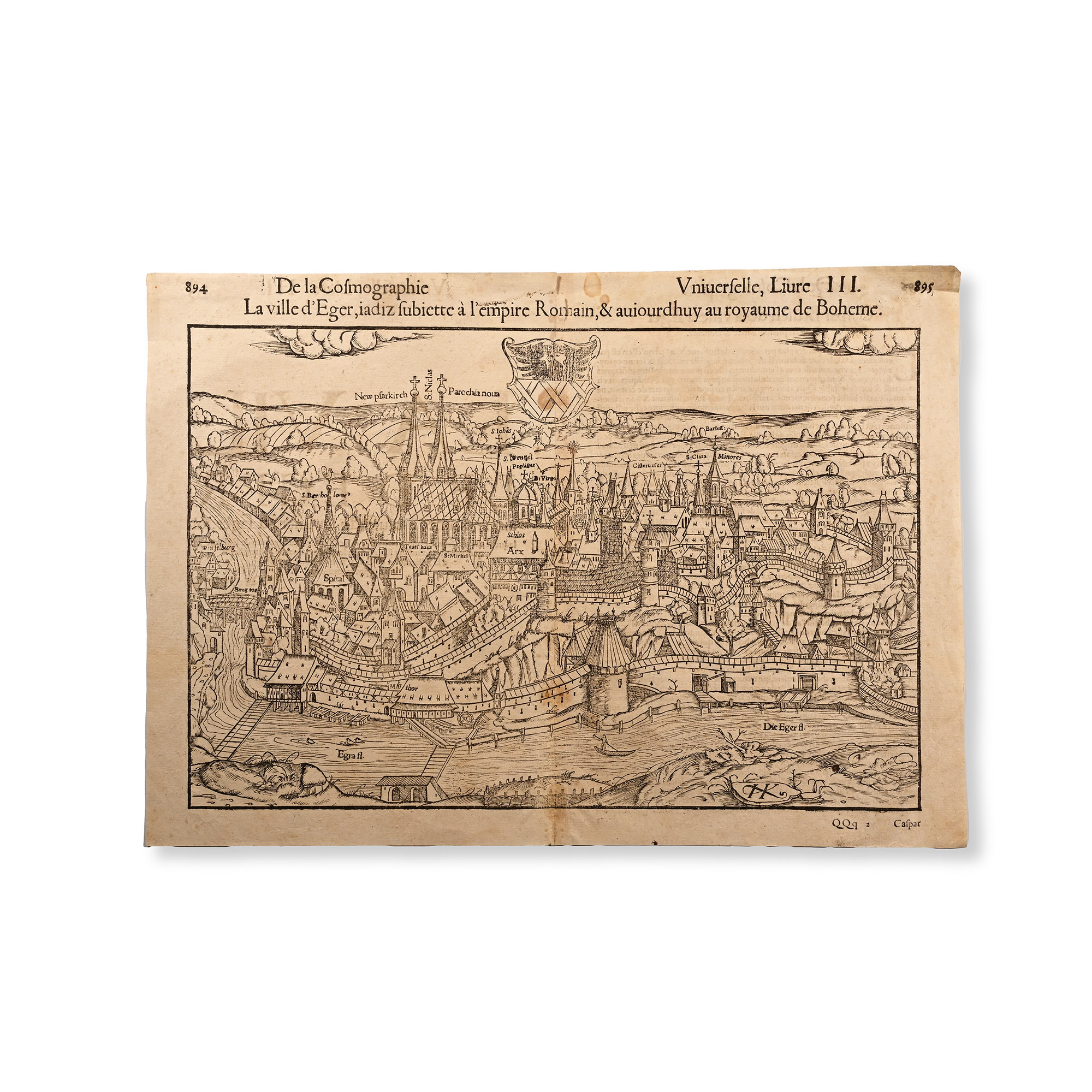
Map of La ville d'Eger (Eger in Hungary) by Sebastian Munster
1575 A.D.
14 3/4 x 10 1/2 in. (7.3 grams, 37.5 x 26.7 cm).
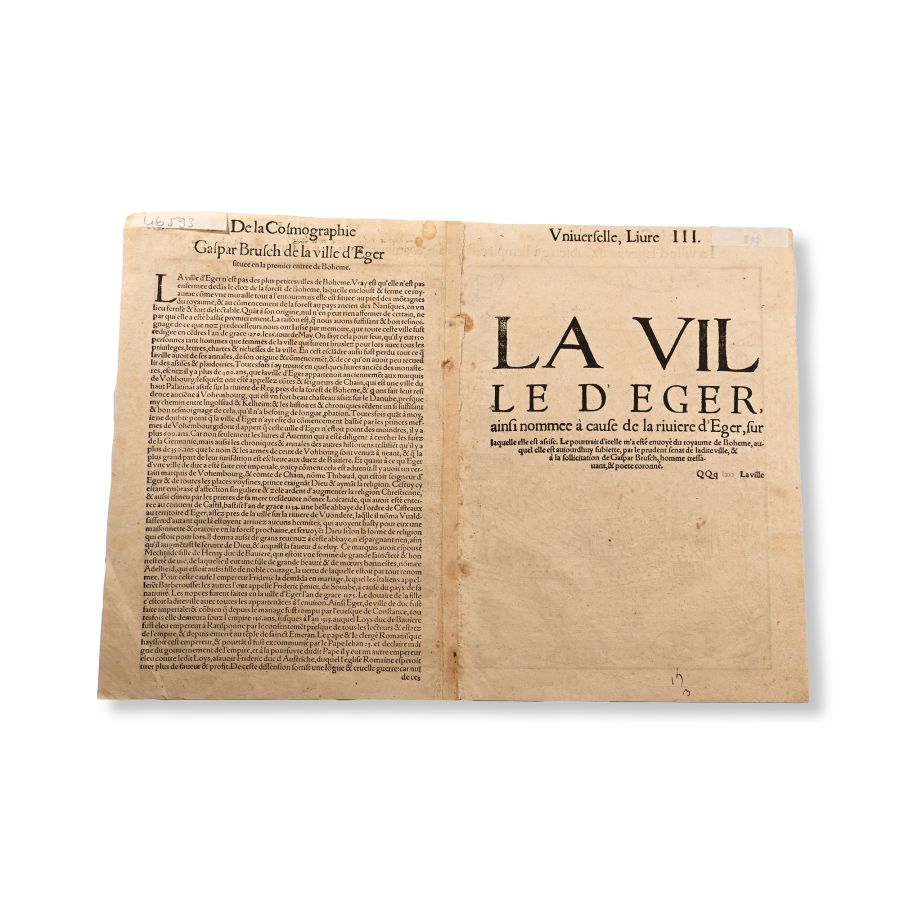
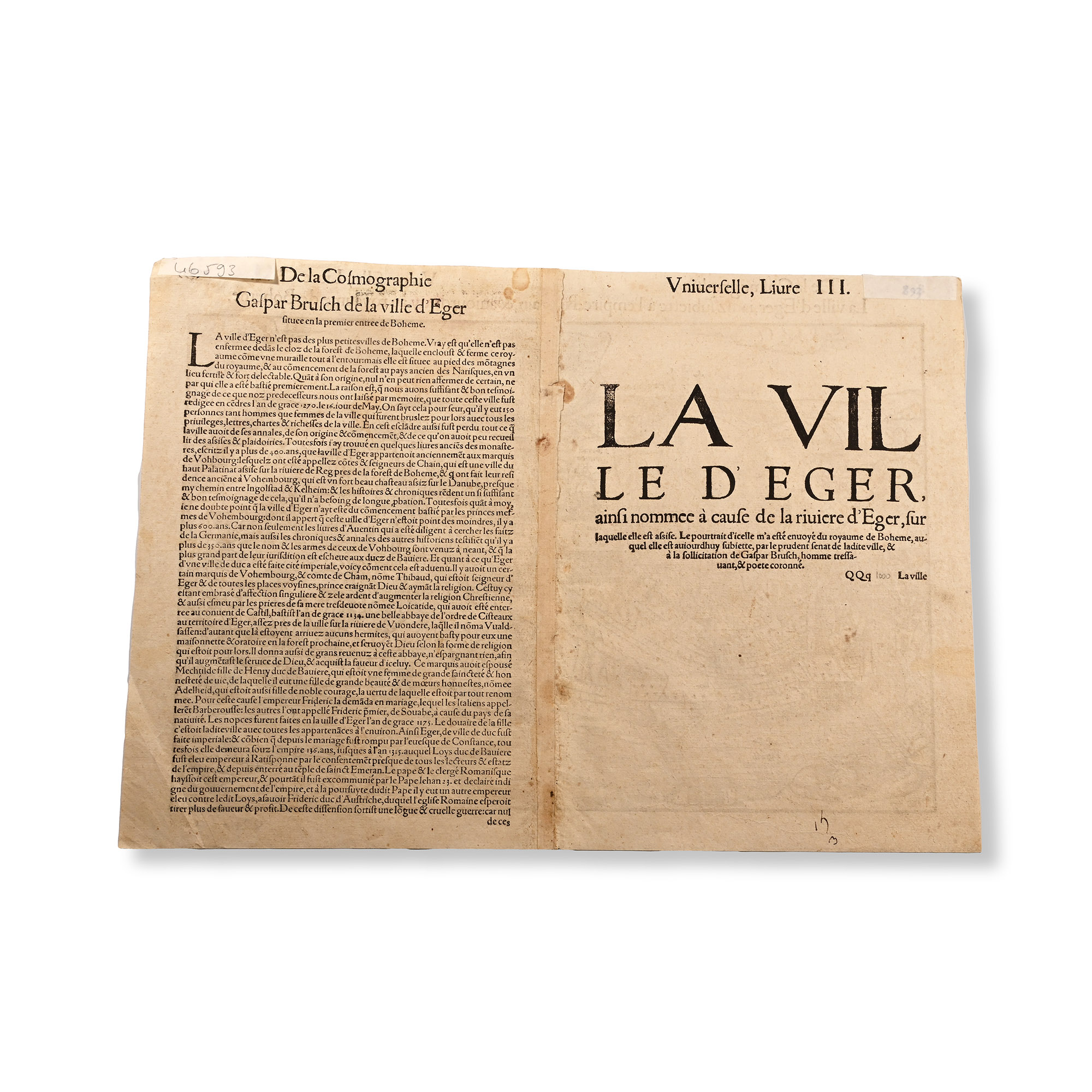
Woodcut panoramic view of the city with river in the foreground, woodland to the rear and heraldic shield with eagle and fret device; title above 'La ville d'Eger, iadiz subiette a l'empire Romain, & auiordhuy au royaume de Boheme'; title page to reverse. [No Reserve]
ProvenanceProperty of a Cheshire, UK, gentleman.
This lot is accompanied by an illustrated lot declaration signed by the Head of the Antiquities Department, Dr Raffaele D'Amato.
From a French edition of Munster's Cormographia.
CONDITIONTimeLine Auctions follows a vetting process to ensure the authenticity and legality of all items, reinforcing our commitment to integrity and responsible trading. Each antiquity, antique, and coin lot undergoes thorough examination by a vetting committee of at least ten external specialists, professional trade association members, scientists, and archaeologists: Our Vetting Process
AUCTIONS:
TimeLine is a leading auction house specialising in antiquities, ancient art, collectables, natural history, coins, medals, and books. Our auctions offer museums, collectors, historians, and enthusiasts the opportunity to acquire unique and historically significant pieces.
LOT 1949
Map of La ville d'Eger (Eger in Hungary) by Sebastian Munster
Sold for (Inc. bp): £338
-
Russian Orthodox Wooden Icon with Christ Pantocrator
20th century A.D.Sold for (Inc. bp): £52
Dressed in blue mantle and embroidered red undergarment, wearing a jewelled crown and holding an open Gospel in his left hand, right hand making the gesture of blessing; inscriptions 'IHS' and 'XPS' flanking the halo. 218 grams, 18 x 14.7 cm
Ian Wilkinson collection, Nottinghamshire, UK, formed since 1985. This lot is accompanied by an illustrated lot declaration signed by the Head of the Antiquities Department, Dr Raffaele D'Amato. -
Intaglio Gemstone Collection
20th century A.D.Sold for (Inc. bp): £130
Comprising: an agate intaglio with a lion facing back; a red agate intaglio with a leaping gazelle; a carnelian intaglio with standing eagle; an octagonal intaglio with a bearded profile bust; a dark agate intaglio with resting lion; a dark agate intaglio with profile bust; a large brown intaglio with profile bust, star before. 9.80 grams total, 12-23 mm
From a West London, UK, collection, 1990s. This lot is accompanied by an illustrated lot declaration signed by the Head of the Antiquities Department, Dr Raffaele D'Amato. -
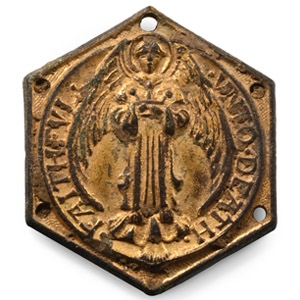
Post Medieval Gilt Bronze Religious Mount
18th-19th century A.D.Sold for (Inc. bp): £39
Hexagonal with a central roundel, a standing nimbate saint to the centre surrounded by an inscription 'Faithful unto death' from book of Revelations: 2:8-11; pierced through the angles. 7.05 grams, 27 mm
Found at Winterbourne, Berkshire, UK, in 1987. Property of a Berkshire, UK, gentleman collector. This lot is accompanied by an illustrated lot declaration signed by the Head of the Antiquities Department, Dr Raffaele D'Amato.
