
Loading, please wait...
LOT 0546
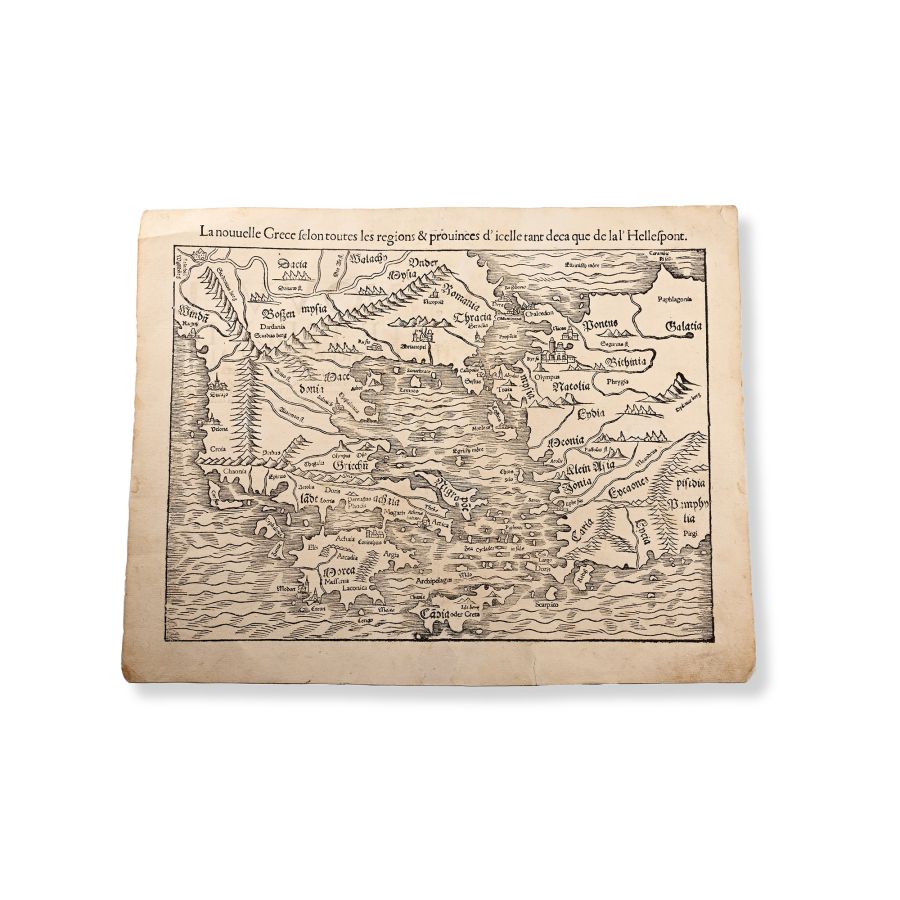
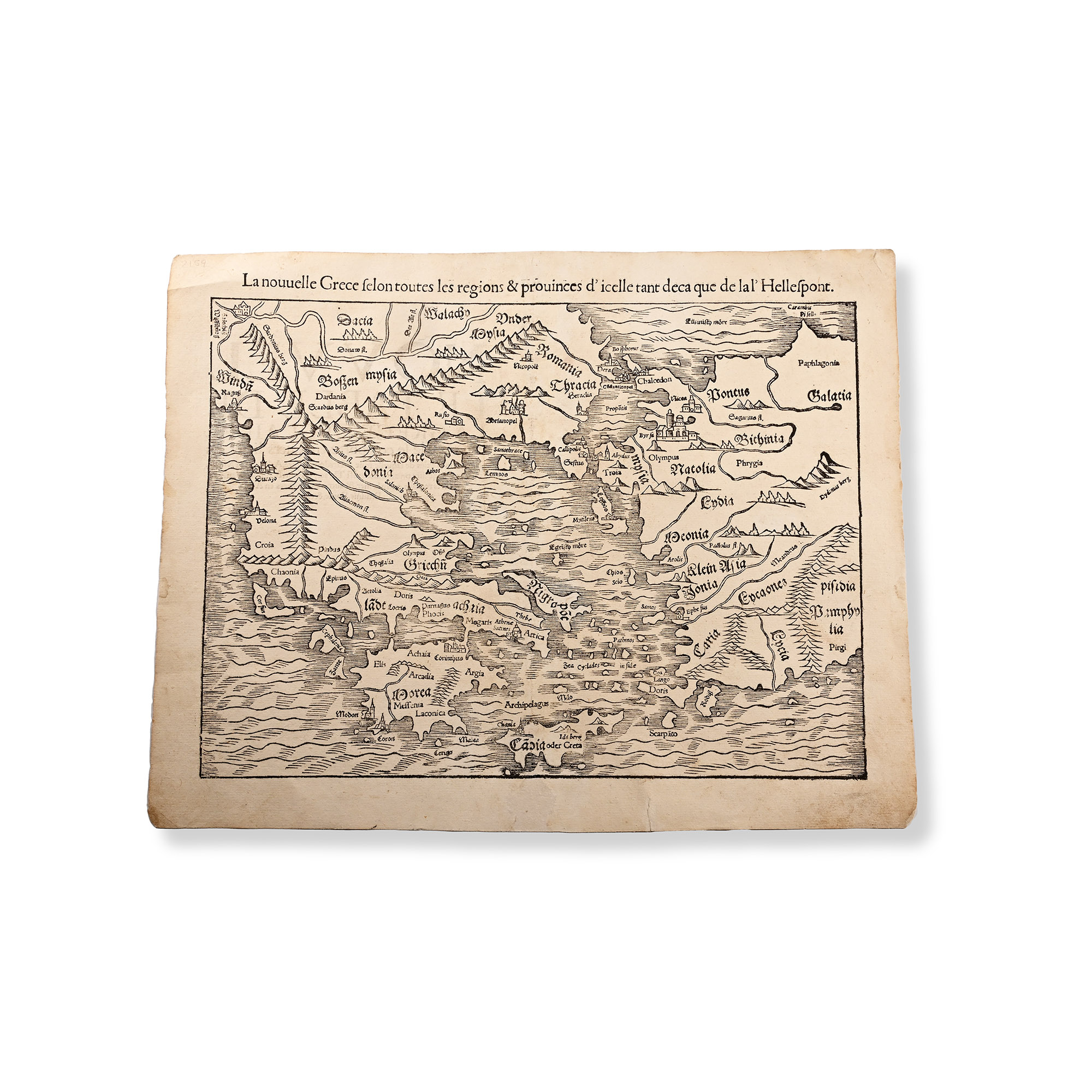
Map of La Nouvelle Grece Selon Toutes les Regions & Provinces, in Greece by Sebastian Munster
1552 A.D.
15 1/2 x 12 3/8 in. (9 grams, 39.6 x 31.5 cm).
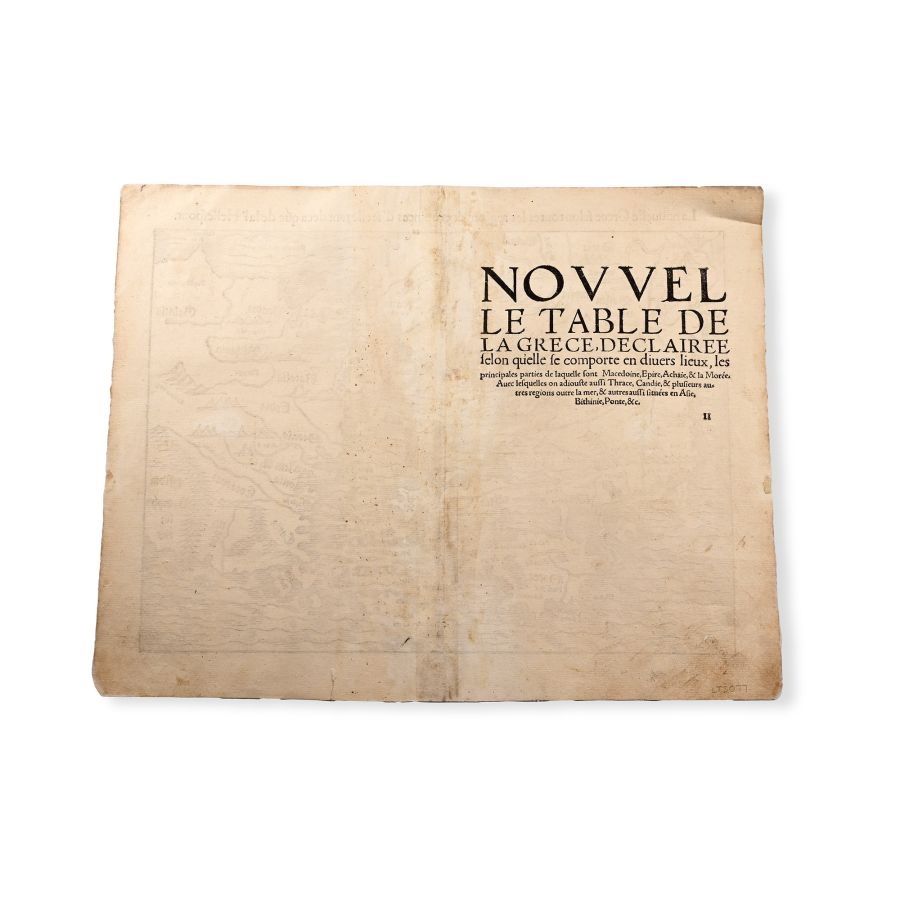
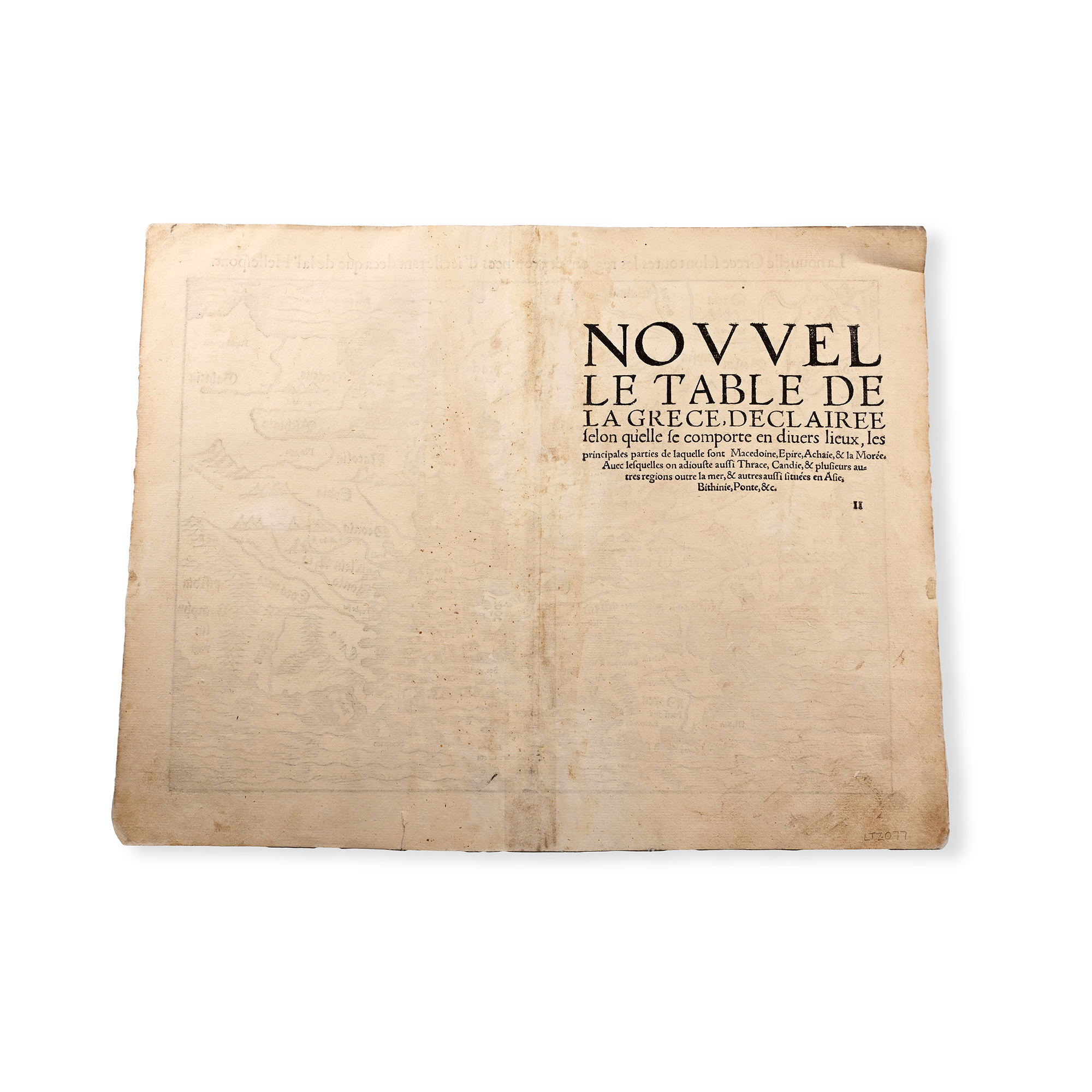
Map of Greece and adjacent portion of the coast of Asia Minor with regional names in blackletter script; with title 'La Nouvelle Grece Selon Toutes les Regions & Provinces d'icelle tant de ca que de la 'Hellespont'; title page to reverse. [No Reserve]
ProvenanceProperty of a Cheshire, UK, gentleman.
This lot is accompanied by an illustrated lot declaration signed by the Head of the Antiquities Department, Dr Raffaele D'Amato.
TimeLine Auctions follows a vetting process to ensure the authenticity and legality of all items, reinforcing our commitment to integrity and responsible trading. Each antiquity, antique, and coin lot undergoes thorough examination by a vetting committee of at least ten external specialists, professional trade association members, scientists, and archaeologists: Our Vetting Process
AUCTIONS:
TimeLine is a leading auction house specialising in antiquities, ancient art, collectables, natural history, coins, medals, and books. Our auctions offer museums, collectors, historians, and enthusiasts the opportunity to acquire unique and historically significant pieces.
LOT 0546
Map of La Nouvelle Grece Selon Toutes les Regions & Provinces, in Greece by Sebastian Munster
Sold for (Inc. bp): £117
-
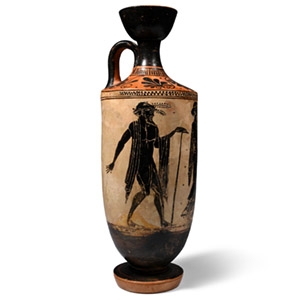
Greek Attic Terracotta Black Figure Painted Lekythos Attributed to the Athena Painter
Circa 490 B.C.Estimate: £8,000 - 10,000 (‡+bp*)
Opening Bid: £4,000
Nearly cylindrical body with a slightly sloping shoulder with five palmettes and eight dots in between; main image showing a Dionysian procession with two advancing nude satyrs facing a young male playing a double pipe, each of the satyrs leaning on a walking stick and having a long garment draped over their shoulders and wearing a fillet and a large wreath on their heads. 649 grams, 29.2 cm
Münzen und Medaillen A.G., H. Cahn, Basel, 24 April 1989. Private collection, Bern, Switzerland. This lot has been checked against the Interpol Database of stolen works of art and is accompanied by a search certificate number no.12641-236375. This lot has been cleared against the Art Loss Register database, and is accompanied by an illustrated lot declaration signed by the Head of the Antiquities Department, Dr Raffaele D'Amato. -
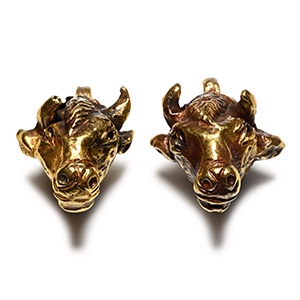
Cypriot Gold Bull-Headed Pendant Pair
7th century B.C.Sold for (Inc. bp): £6,500
Matched pair of hollow-formed pendants, each a bull's head modelled in the round with a rosette to the rear beneath the loop. 5.39 grams total, 23-24 mm
Acquired in 1986. with Taisei Gallery, Gold & Silver Auction, Part II, Ancient to Renaissance, 5 November 1992, The Conrad Salon, The Waldorf-Astoria, New York, no.165. This lot has been checked against the Interpol Database of stolen works of art and is accompanied by search certificate no.11969-210472. This lot has been cleared against the Art Loss Register database, and is accompanied by an illustrated lot declaration signed by the Head of the Antiquities Department, Dr Raffaele D'Amato.
In Cyprus, the cult of the bull developed from the 3rd millennium B.C. until the 6th century B.C. The bull was a 'frequently invoked manifestation of divinity', and its cult was widespread since the Minoan Age. The appearance of gold bull-head pendants in tombs had an aesthetic and social value, but at the same time it also had a deeper symbolic and religious meaning. -
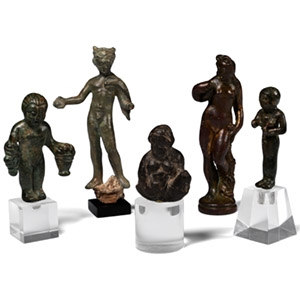
Greek and Roman Bronze Statue Collection
4th century B.C.-4th century A.D.Estimate: £4,000 - 6,000 (‡+bp*)
Opening Bid: £2,000
Comprising: an Etruscan figure of Turms (Greek Hermes), standing and holding a patera in his right hand, original lead mounting beneath; a standing figure of nude Aphrodite, possibly later; figure of a Baubo with her legs bent and right hand touching her genitals; two standing bronze figures holding offerings. 352 grams total, 63-96 mm
Hermes from the estate of a Swiss gentleman, Ticino, before 1970. Sardinian figure ex private collection of Prof. Dr Hans (1918-1984) and Dr Ines (1922-2013) Jucker, classical archaeologists, Bern, Switzerland. with Galerie Rhéa, Zurich, Switzerland. This lot has been checked against the Interpol Database of stolen works of art and is accompanied by a search certificate number no.12669-236450. This lot has been cleared against the Art Loss Register database, and is accompanied by an illustrated lot declaration signed by the Head of the Antiquities Department, Dr Raffaele D'Amato.
