
LOT 3134
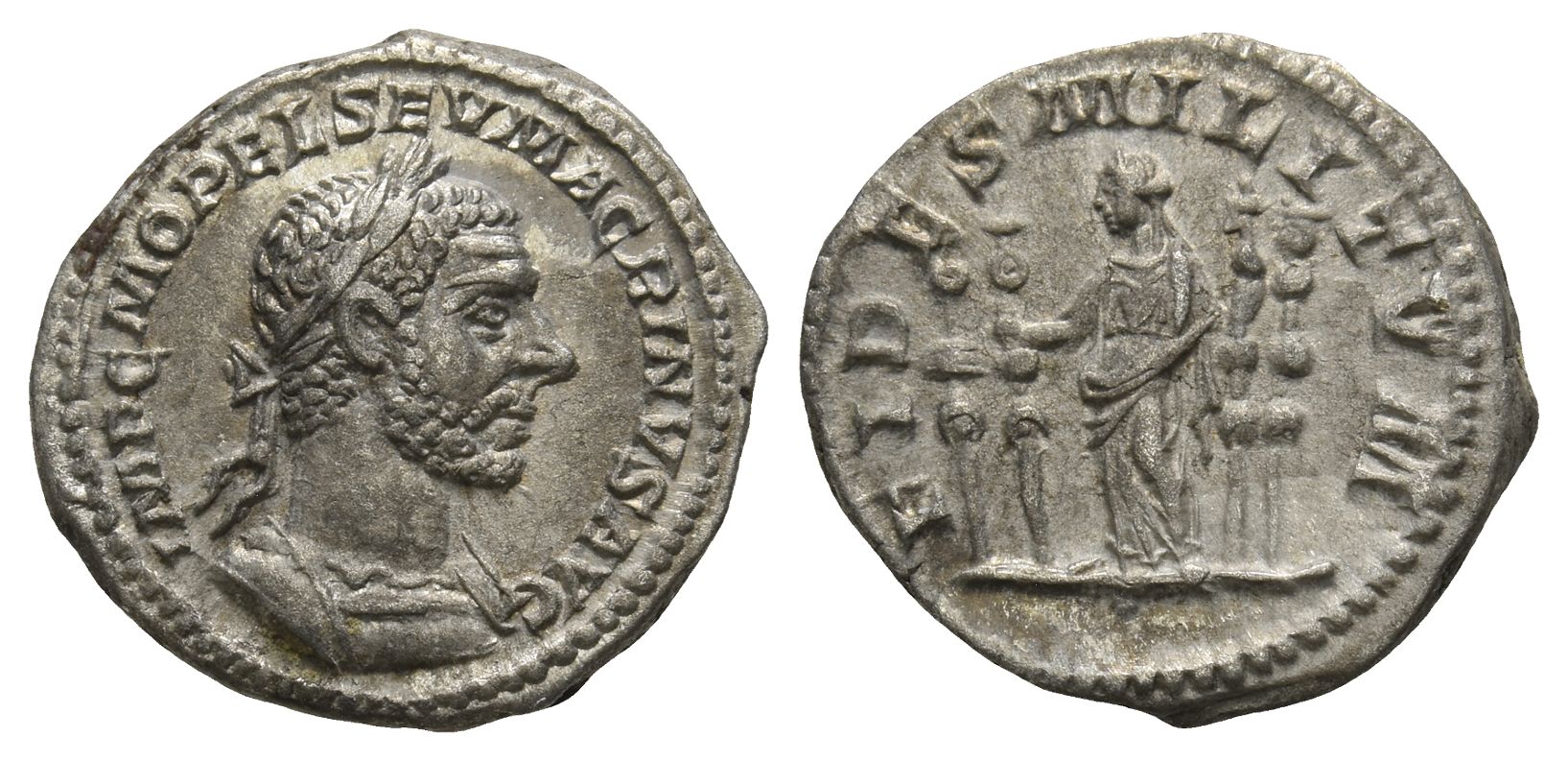
Macrinus AR Denarius. AD 217-218.
Rome mint; struck spring-summer AD 217. IMP C M OPEL SEV MACRINVS AVG, laureate and cuirassed bust to right, seen from front, with younger features and cropped beard / FIDES MILITVM, Fides standing facing, head to left, holding standard in each hand; additional standard on each side. RIC IV.2 68; Cohen 26; BMC 14; Clay Issue 1. Extremely Fine.(3.58gr, 19mm, 6h.).
ProvenancePrivate collection, acquired 1980–1985.
TimeLine Auctions follows a vetting process to ensure the authenticity and legality of all items, reinforcing our commitment to integrity and responsible trading. Each antiquity, antique, and coin lot undergoes thorough examination by a vetting committee of at least ten external specialists, professional trade association members, scientists, and archaeologists: Our Vetting Process
AUCTIONS:
TimeLine is a leading auction house specialising in antiquities, ancient art, collectables, natural history, coins, medals, and books. Our auctions offer museums, collectors, historians, and enthusiasts the opportunity to acquire unique and historically significant pieces.
-
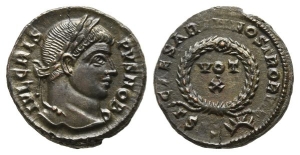
Crispus, as Caesar BI Nummus. AD 316-326.
Sold for (Inc. bp): £26
Siscia mint; struck AD 321-324. 3rd officina. IVL CRISPVS NOB C, laureate head to right / CAESARVM NOSTRORVM, wreath enclosing VOT • X in two lines; ΓS[IS](sunburst) below. RIC VII 181. 3.54gr, 18mm, 6h.
Extremely Fine.
Property of a North London, UK, gentleman. -
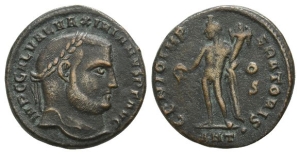
Galerius BI Nummus. AD 305-311.
Estimate: £30 - 40 (‡+bp*)
Opening Bid: £14
Antioch mint; struck AD 309. 6th officina. IMP C GAL VAL MAXIMIANVS P F AVG, laureate head to right / GENIO IMPERATORIS, Genius standing to left, holding patera, from which liquid pours, and cornucopia; O above S in right field, ANT• in exergue. RIC VI 112a. 6.60gr, 23mm, 11h.
Near Very Fine.
Private collection, acquired 1980–1985. -
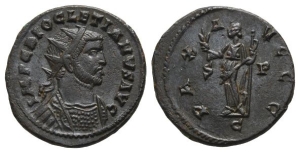
Diocletian BI Antoninianus. AD 284-305.
Sold for (Inc. bp): £442
'C' (Camulodunum?) mint. Struck under Carausius, circa AD 286-circa 293. IMP C DIOCLETIANVS AVG, radiate and cuirassed bust to right / PAX AVGGG, Pax standing to left, holding olive branch and transverse sceptre; S P across field; C below. Cf. RIC V 20. 5.10gr, 22mm, 7h.
Extremely Fine.
Property of a North London, UK, gentleman.
