
.jpg "Lydia, Maeonia AE 19mm.")
LOT 2910
Lydia, Maeonia AE 19mm. Time of Trajan Decius, AD 249-251.
Pseudo-autonomous issue. Branching vine with large trunk and two grape bunches / MAIO-NΩN, Hercules standing facing, head to right, holding cornucopia and lion skin with his right hand, and leaning his left on club. RPC IX -; GRPC Lydia, 72; SNG Hunterian 1989. Very Fine. Very rare. Dark brown patina with orange-sandy highlights. Pierced.(3.49gr, 19mm, 6h.).
ProvenanceFrom the collection of a gentleman, acquired on the London art market in the 1990s.
TimeLine Auctions follows a vetting process to ensure the authenticity and legality of all items, reinforcing our commitment to integrity and responsible trading. Each antiquity, antique, and coin lot undergoes thorough examination by a vetting committee of at least ten external specialists, professional trade association members, scientists, and archaeologists: Our Vetting Process
AUCTIONS:
TimeLine is a leading auction house specialising in antiquities, ancient art, collectables, natural history, coins, medals, and books. Our auctions offer museums, collectors, historians, and enthusiasts the opportunity to acquire unique and historically significant pieces.
-
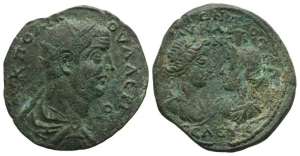
Valerian I AE 34mm of Seleucia ad Calycadnum, Cilicia. AD 253-260.
Estimate: £40 - 60 (‡+bp*)
Opening Bid: £18
ΑΥ Κ ΠΟ ΛΙΚ ΟΥΑΛΕΡΙΑΝ-ΟC, radiate, draped and cuirassed bust to right / ϹЄΛЄΥΚ below, ΤΩΝ ΠΡΟϹ ΚΑ- around, -ΛΥΚΑΔ-ΝΩ in two lines above, draped busts of Artemis-Tyche wearing kalathos, cornucopia over shoulder on right and laureate Apollo on left, facing each other; branch between. RPC X Online unassigned ID 60507. 14.49gr, 34mm, 6h.
Very Fine.
Private collection, acquired 1980–1985. -
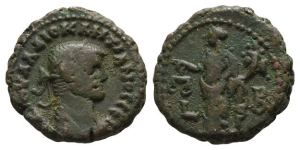
Diocletian BI Tetradrachm of Alexandria, Egypt. AD 284-305.
Sold for (Inc. bp): £13
Dated RY 2 (AD 285/6). Α Κ Γ ΟΥΑΛ ΔΙΟΚΛΗΤΙΑΝΟϹ ϹЄΒ, laureate and cuirassed bust to right / Dikaiosyne standing facing, head to left, holding scales and cornucopia; L B (date) across fields. RPC X Online Unassigned ID 75911; Dattari (Savio) 5645; Emmett 4033. 6.55gr, 20mm, 12h.
Near Very Fine.
From the collection of a gentleman, acquired on the London art market in the 1990s. -
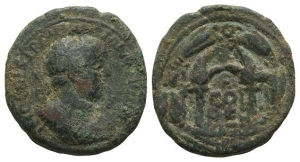
Hadrian AE 26mm of Berytus, Phoenicia. AD 117-138.
Sold for (Inc. bp): £42
IMP CAES TRAI HADRIANVS AVG, laureate, draped and cuirassed bust to right / COL BER in two lines between legionary eagles. RPC III 3856; Rouvier 532; SNG Copenhagen 99-100. 10.31gr, 26mm, 12h.
Near Very Fine.
Private collection, acquired 1980–1985.
