
Loading, please wait...
LOT 0842
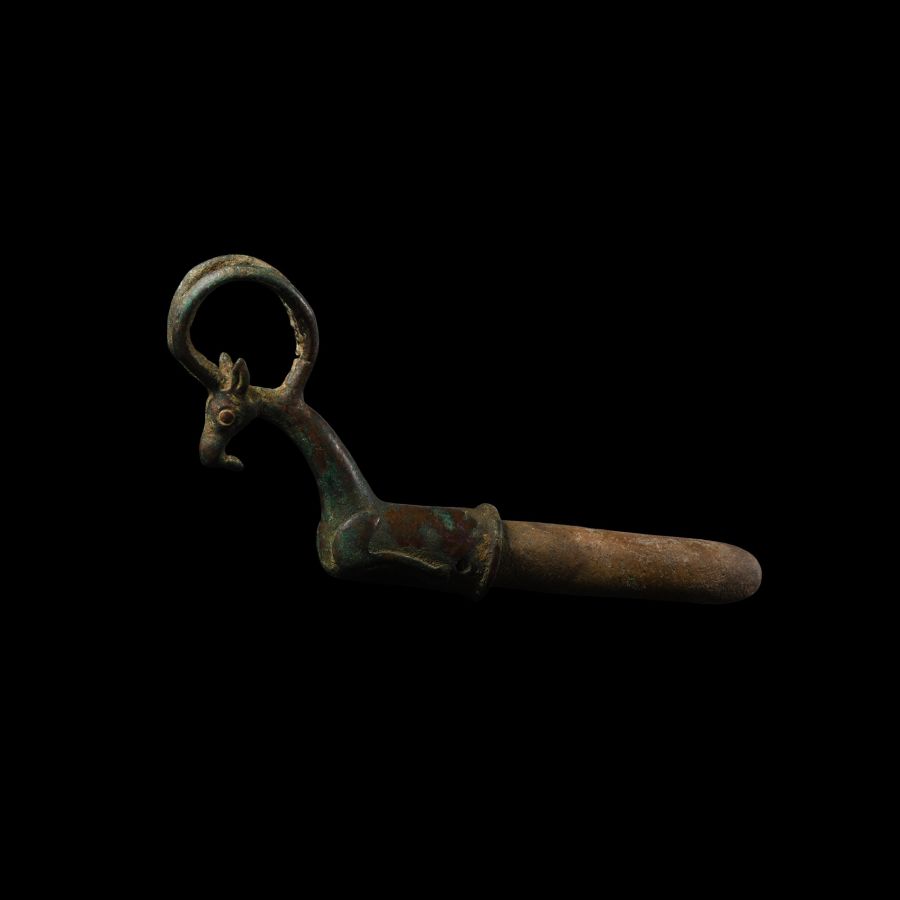
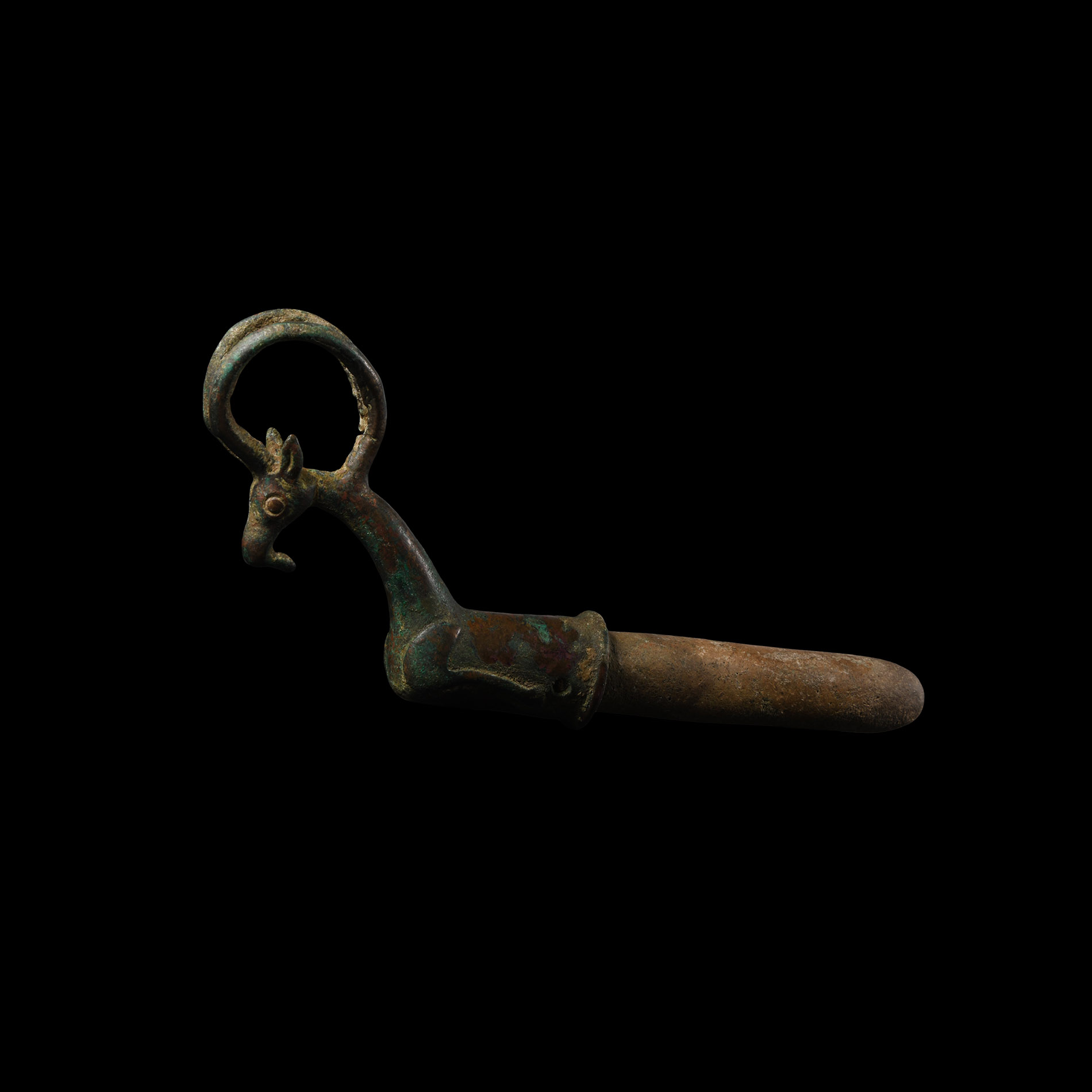
Luristan Whetstone with Bronze Ibex Handle
13TH-7TH CENTURY B.C.
7 in. (147 grams, 17.8 cm).
Roughly cylindrical in shape; the ibex with stylised detailing. [No Reserve]
ProvenanceFrom an old German collection, Cologne, Germany.
From the collection of a North American gentleman.
Cf. The Metropolitan Museum, accession number 1988.102.10, for similar.
CONDITIONTimeLine Auctions follows a vetting process to ensure the authenticity and legality of all items, reinforcing our commitment to integrity and responsible trading. Each antiquity, antique, and coin lot undergoes thorough examination by a vetting committee of at least ten external specialists, professional trade association members, scientists, and archaeologists: Our Vetting Process
AUCTIONS:
TimeLine is a leading auction house specialising in antiquities, ancient art, collectables, natural history, coins, medals, and books. Our auctions offer museums, collectors, historians, and enthusiasts the opportunity to acquire unique and historically significant pieces.
-
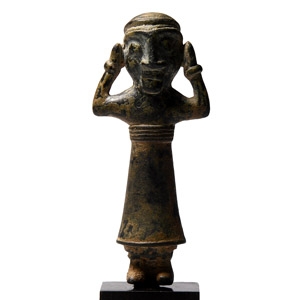
Elamite Bronze Worshipper Figure
2nd millennium B.C.Sold for (Inc. bp): £1,300
Modelled in the round standing facing, hands raised to temples, wearing a shin-length garment and bangles at the wrist, the face with stylised detailing and dressed hair; attachment to lug base; Elamite or Mesopotamian; accompanied by a custom-made display stand. 144 grams total, 11.7 cm high including stand
European private collection. Ex Alexander Gallery, New York, USA, 1993. Acquired on the UK art market, 2000s. -
.jpg)
South Arabian Inscribed Ceramic Female Statuette
1st century B.C.-1st century A.D.Estimate: £800 - 1,000 (+bp*)
Opening Bid: £320
Modelled seated and nude, arms outstretched before the body; polychrome facial and anatomical detailing and depiction of a necklace and arm bangles; lettering to legs; repaired. 618 grams, 15.8 cm
London art market, 2000. Accompanied by thermoluminescence analysis report no.C142647A-1 from Re.S.Artes. Accompanied by an Art Loss Register search certificate dated 10 January 2017 and IADAA search certificate dated 15 April 2020. -
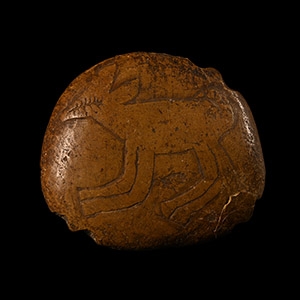
Western Asiatic Stone Weight with Dog
1st millennium B.C. or laterSold for (Inc. bp): £182
Sub-oval in shape with incised dog or other quadruped to one face; incised geometric or figurative animal form to the other, possibly an aquatic animal. 50 grams, 54 mm
Gabby family collection since the late 1960s; thence by descent.
