
Loading, please wait...
LOT 1297
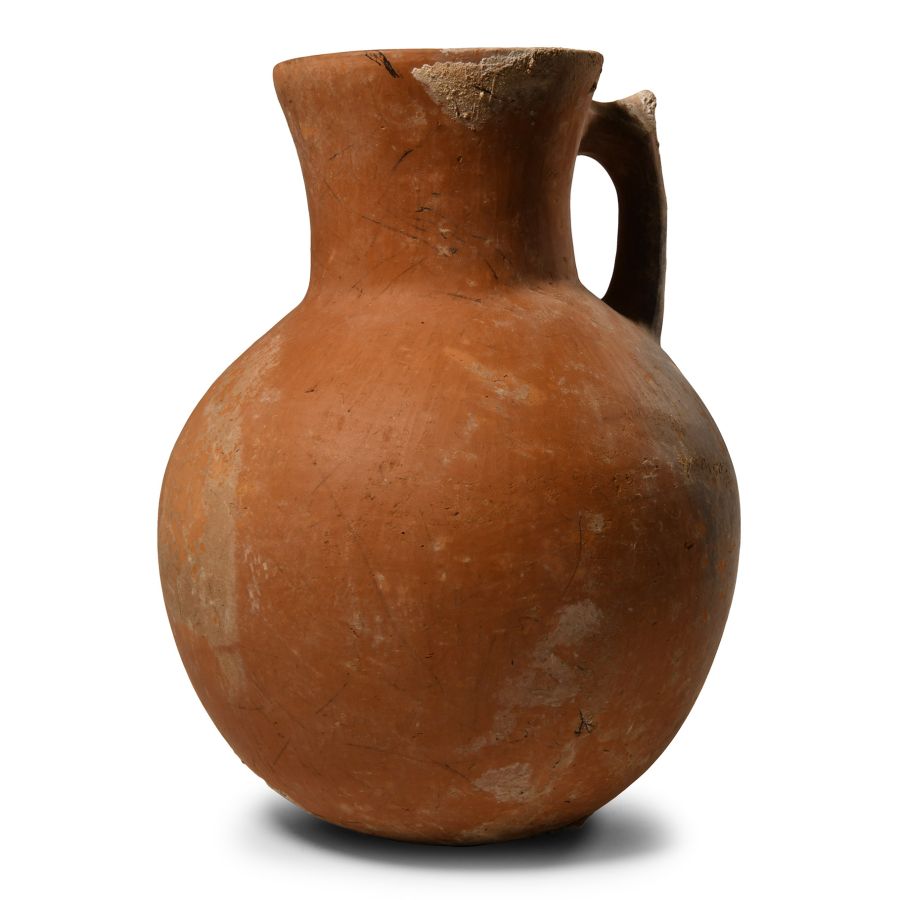
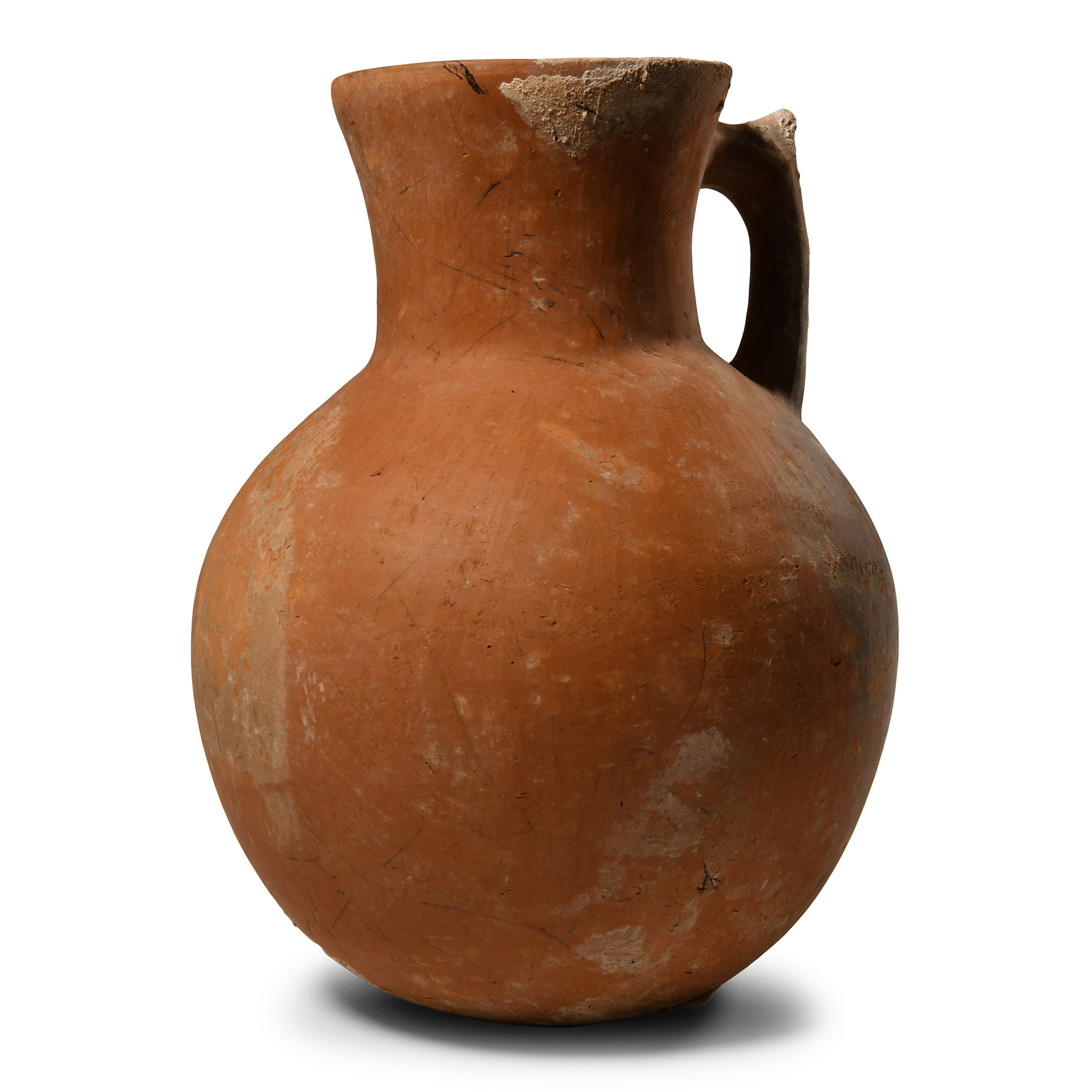
Luristan Terracotta Jug with Animal-Headed Handle
1ST MILLENNIUM B.C.
10 1/2 in. (990 grams, 24.5 cm).
With bulbous body and tall tubular neck, slightly flared rim to the mouth, single strap handle with zoomorphic thumb-pad. [No Reserve]
ProvenanceEx London, UK, gallery, 1980s.
From a UK private collection.
TimeLine Auctions follows a vetting process to ensure the authenticity and legality of all items, reinforcing our commitment to integrity and responsible trading. Each antiquity, antique, and coin lot undergoes thorough examination by a vetting committee of at least ten external specialists, professional trade association members, scientists, and archaeologists: Our Vetting Process
AUCTIONS:
TimeLine is a leading auction house specialising in antiquities, ancient art, collectables, natural history, coins, medals, and books. Our auctions offer museums, collectors, historians, and enthusiasts the opportunity to acquire unique and historically significant pieces.
-
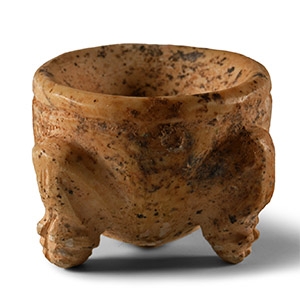
Western Asiatic Alabaster Cosmetic Dish
Mid-2nd millennium B.C.Estimate: £500 - 700 (+bp*)
Opening Bid: £250
Comprising a shallow rounded bowl supported by three feet modelled as reclining lions; old inked collection number 88.349 to the bottom. 34 grams, 33 mm wide
Ex Symes gallery, Mayfair, London, UK, before 1999, with stock reference number. Accompanied by a previous catalogue information slip. -
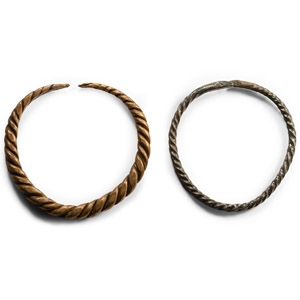
Western Asiatic Bronze Twisted Bracelet Group
1st millennium B.C.Sold for (Inc. bp): £85
Comprising two penannular bracelets, one with beast head terminals the other formed of two rods twisted about each other. 68.8 grams total, 66-73 mm
UK private collection before 2000. On the UK art market. Property of a London gentleman. -
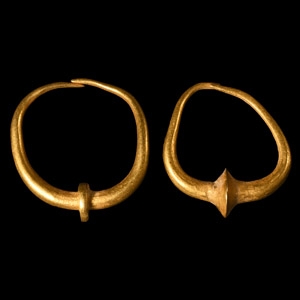
Western Asiatic Gold Earrings
1500-1000 B.C.Estimate: £200 - 300 (+bp*)
Opening Bid: £100
Each with a tapering penannular hoop and discoid ornament. 1.73 grams total, 13 mm ech
Ex property of a late Japanese collector, 1970-2000s.
