
Loading, please wait...
LOT 1339
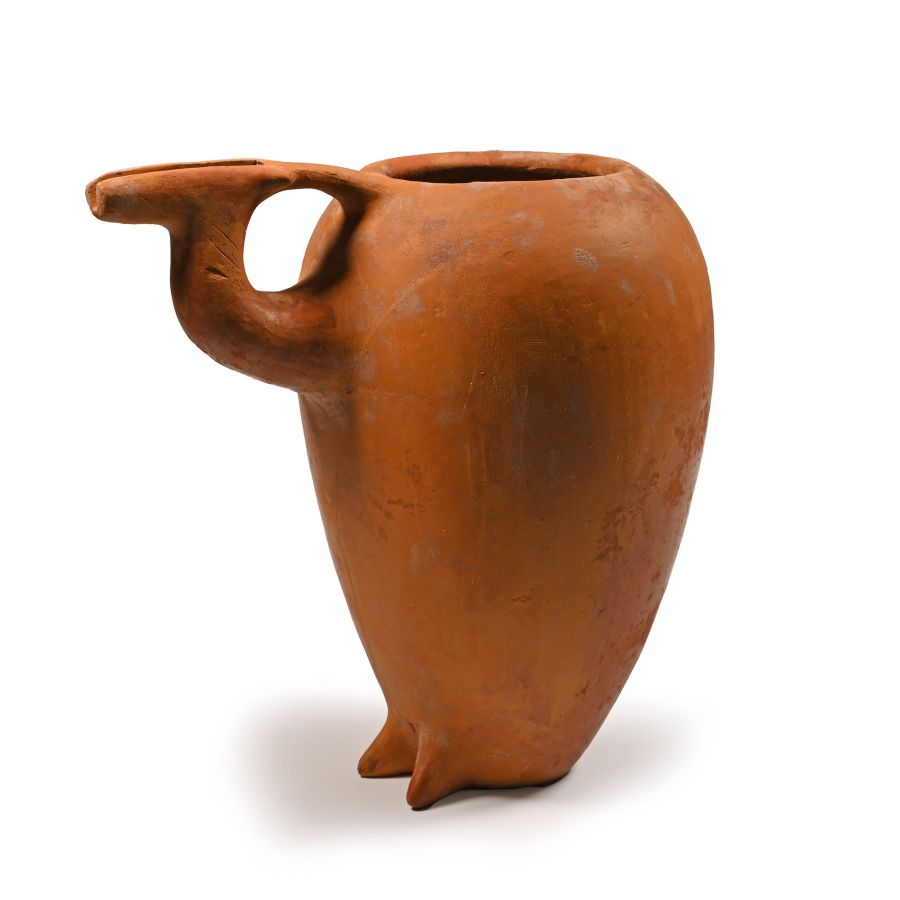
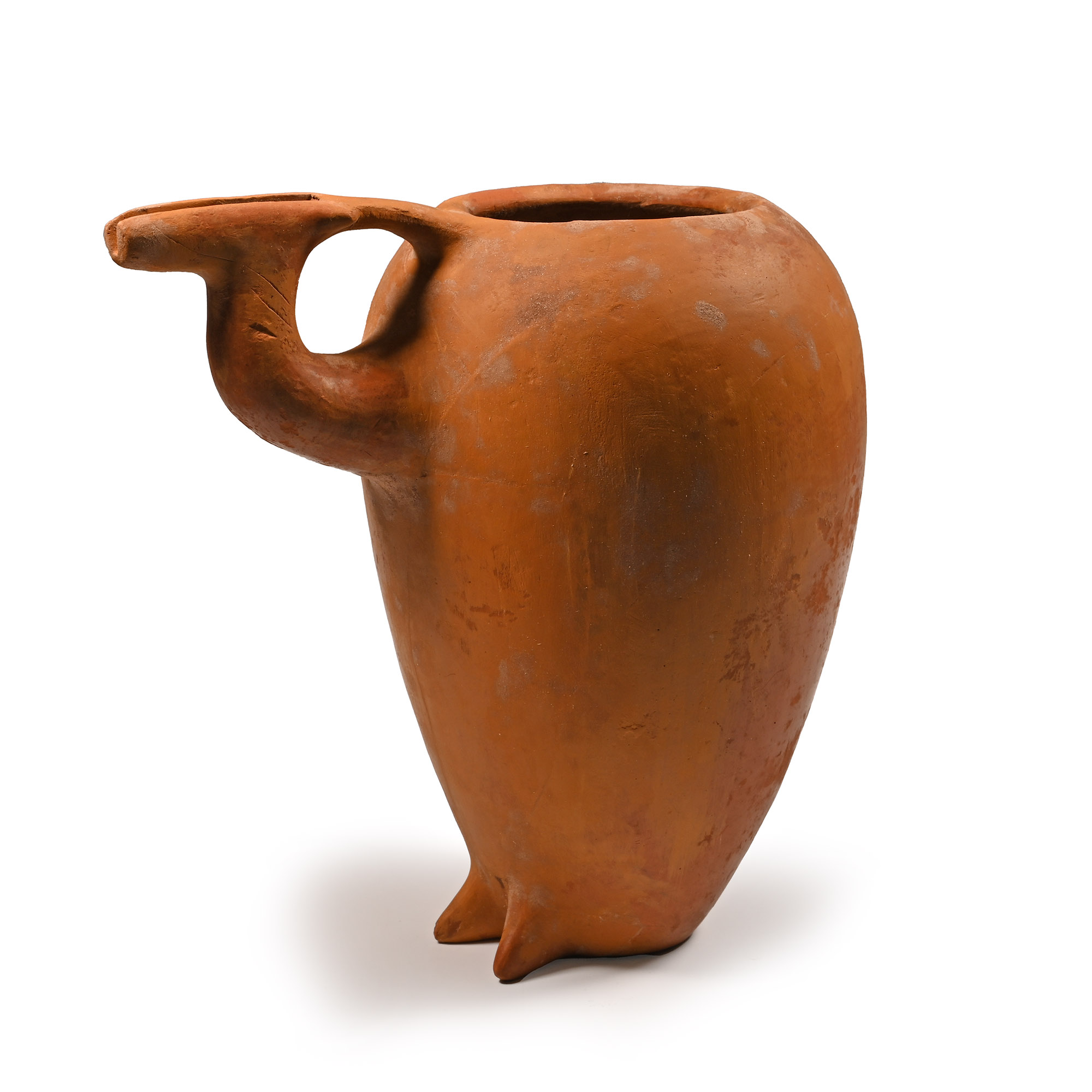
Luristan Terracotta Jar with Bird Feet and Spout
1ST MILLENNIUM B.C.
7 5/8 in. (626 grams, 19.5 cm high).
Comprising a tall piriform body with small feet radiating from the base, narrow u-section spout representative of a bird's head. [No Reserve]
ProvenanceEx London, UK, collection, 1990s onwards.
This lot has been cleared against the Art Loss Register database, and is accompanied by an illustrated lot declaration signed by the Head of the Antiquities Department, Dr Raffaele D'Amato.
TimeLine Auctions follows a vetting process to ensure the authenticity and legality of all items, reinforcing our commitment to integrity and responsible trading. Each antiquity, antique, and coin lot undergoes thorough examination by a vetting committee of at least ten external specialists, professional trade association members, scientists, and archaeologists: Our Vetting Process
AUCTIONS:
TimeLine is a leading auction house specialising in antiquities, ancient art, collectables, natural history, coins, medals, and books. Our auctions offer museums, collectors, historians, and enthusiasts the opportunity to acquire unique and historically significant pieces.
-

Neo-Assyrian Stone Relief with Standing Figure
9th-8th century B.C.Estimate: £4,000 - 6,000 (‡+bp*)
Opening Bid: £1,800
Corner fragment from a high-relief pictorial panel with raised border; domed dais with low-relief scaled detailing; lower legs and sandaled feet in advancing pose with ankle-length open-fronted robe, horizontal woven texture and curled fleece; high-relief stele with flared base, bulbous upper and sugar-loaf finial; pitted surface, with tooling to reverse. 2.81 kg, 24.3 cm
Ex German collection, c.1980. with Toufic Arakji, Hamburg, 1997. Private collection, Europe. Accompanied by an academic report by Dr Raffaele D'Amato. This lot has been checked against the Interpol Database of stolen works of art and is accompanied by search certificate no.12579-232134. This lot has been cleared against the Art Loss Register database, and is accompanied by an illustrated lot declaration signed by the Head of the Antiquities Department, Dr Raffaele D'Amato.
Stylistically, the figure seems to be linked to the kingdom of Ashurnasirpal II (883-859 B.C.) or his son Shalmaneser III (858-824 B.C.). The exposed lower leg with exaggerated musculature is seen in many Assyrian and Babylonian depictions of divine and heroic figures. The position of the figure, corresponding to some reliefs kept in the Louvre, where a spirit is worshipping a poppy flower (Houston, 1954, pl.V.1), and the high-relief carving strongly refer to a cult scene. -

Old Babylonian Cylinder Seal with Two Standing Figures
2nd millennium B.C.Estimate: £1,500 - 2,000 (‡+bp*)
Opening Bid: £675
Representing a god in short mantle and round cap with upturned brim, holding a mace in his left hand, before him a goddess standing in a horned crown and kaunakes, her hands raised in supplication; accompanied by a museum-quality impression. 8.96 grams, 27 mm
Ex Mr J.K. collection, USA. Acquired from the above, 1997. This lot has been checked against the Interpol Database of stolen works of art and is accompanied by a search certificate number no.12581-232131. This lot has been cleared against the Art Loss Register database, and is accompanied by an illustrated lot declaration signed by the Head of the Antiquities Department, Dr Raffaele D'Amato.
The seals of the First Isin Dynasty were much more varied than those just preceding the Third Dynasty of Ur. Often the chief god - probably Shamash - is standing, and the 'introducing' goddess is facing him, while the worshipper is not pictured. The seals are a mine for the understanding of the old Babylonian costume. The tunic of the female goddess here is made of tufted material that the Greeks called kaunakes, the weave of which imitated the effect of the earlier sheepskin costumes. -
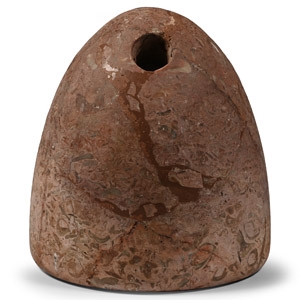
Bactrian Stone Weight
2nd millennium B.C. or laterSold for (Inc. bp): £416
Conical in profile with flat base and U-shaped channel through the apex. 7.25 kg, 17 cm
Ex Mayfair gallery, London, UK, 1990s. This lot has been cleared against the Art Loss Register database, and is accompanied by an illustrated lot declaration signed by the Head of the Antiquities Department, Dr Raffaele D'Amato.
