
Loading, please wait...
LOT 1402
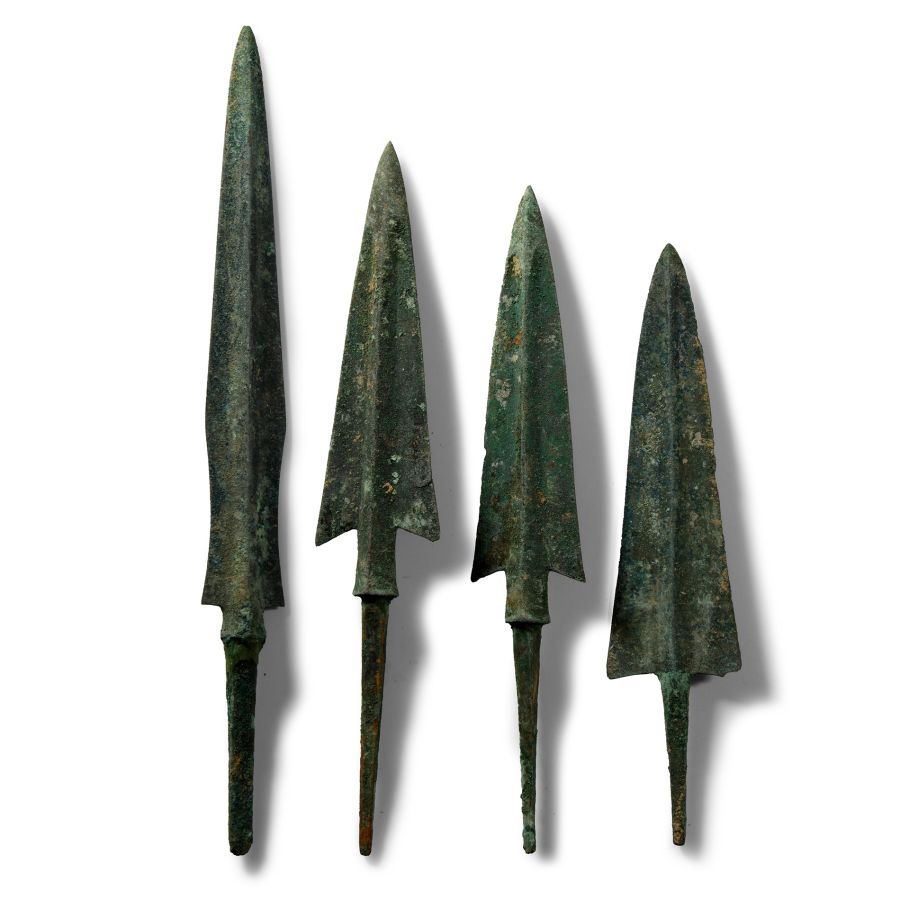
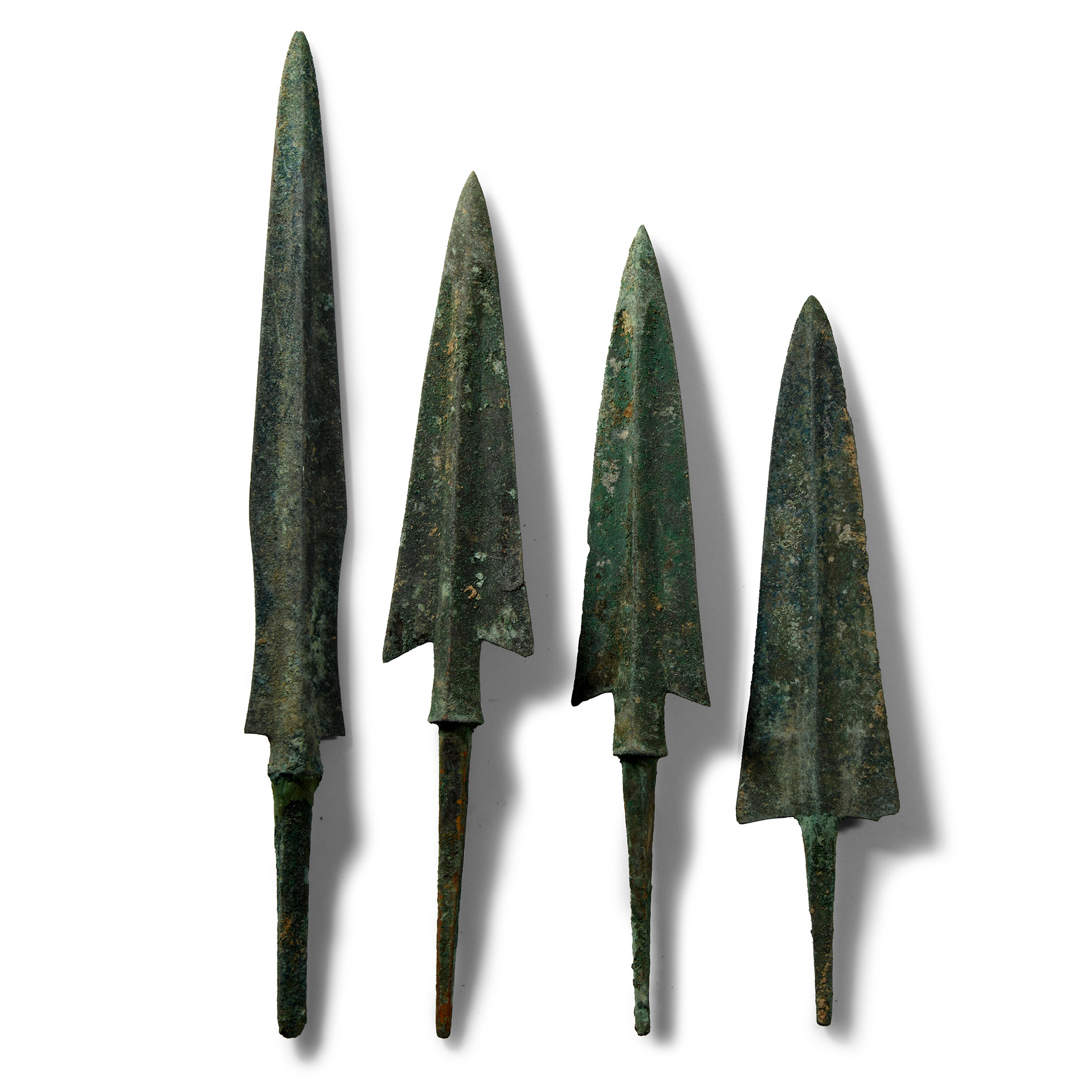
Luristan Spear Tip Group
13TH-6TH CENTURY B.C.
5 1/4 - 7 1/8 in. (143 grams total, 13.5-18.2 cm).
Comprising four tips with triangular blades; each with a raised midrib and a long tang. [4]
ProvenanceAcquired 1980-2015.
Ex Abelita family collection.
See Muscarella, O.W., Bronze and Iron Ancient Near Eastern Artifacts in the Metropolitan Museum of Art, New York, 1988, pp.289ff, for similar arrowheads.
FootnotesAlthough some of them are different in shape, these arrowheads are apparently related types of a polythetic group. Two basic deltoid forms are represented: one has a sharp, flat blade, the ends of which extend to form wings or barbs, and a prominent midrib extending into a long tang that often has a stop; the blade shape varies from deltoid to more manifestly triangular. The other form has no barbs, but it has a prominent midrib extending to the tang, and a narrow leaf-shaped blade.
CONDITIONTimeLine Auctions follows a vetting process to ensure the authenticity and legality of all items, reinforcing our commitment to integrity and responsible trading. Each antiquity, antique, and coin lot undergoes thorough examination by a vetting committee of at least ten external specialists, professional trade association members, scientists, and archaeologists: Our Vetting Process
AUCTIONS:
TimeLine is a leading auction house specialising in antiquities, ancient art, collectables, natural history, coins, medals, and books. Our auctions offer museums, collectors, historians, and enthusiasts the opportunity to acquire unique and historically significant pieces.
-
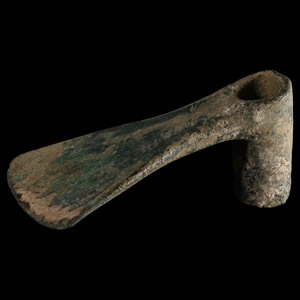
Luristan Bronze Socketted Adze
13th-7th century B.C.Sold for (Inc. bp): £117
With short tubular socket and flared cutting edge perpendicular to the socket. 590 grams, 14.5 cm
From an old English collection formed in the 1980s. Property of an Essex gentleman; acquired on the UK art market. -
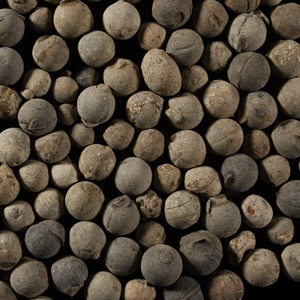
100 Civil War Period Lead Musket Balls
Circa 17th-18th century A.D.Sold for (Inc. bp): £78
Mixed group of lead-alloy musket and carbine balls,some with casting seam and sprue nipple. 1.57 kg total, 9-19 mm
Found Hertfordshire, UK. -
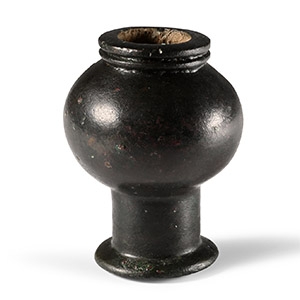
Luristan Sar-e Gorz Bronze Macehead
14th-13th century B.C.Sold for (Inc. bp): £208
With plain globular body, extended to a small raised ring encircling the top of the mace-head, circular short shaft expanding to a circular flat base. 279 grams, 70 mm high
Acquired 1980-2015. Ex Abelita family collection.
Caucasian stone and bronze maces were distinguished by modestly finished, clean processed and predominantly close-to-ball shapes (with a variety of surface finishing, ranging from the smooth, ribbed, lobular forms to the rounded with protrusions and spikes), and the Western Iranian maces, especially the Luristan ones, notable for the variety of different forms. Similar mace-heads, probably realised in Luristan, decorated the head of the sceptres of Assyrian kings like Tukulti-Ninurta I (1243-1207 B.C.).
