
Loading, please wait...
LOT 1401
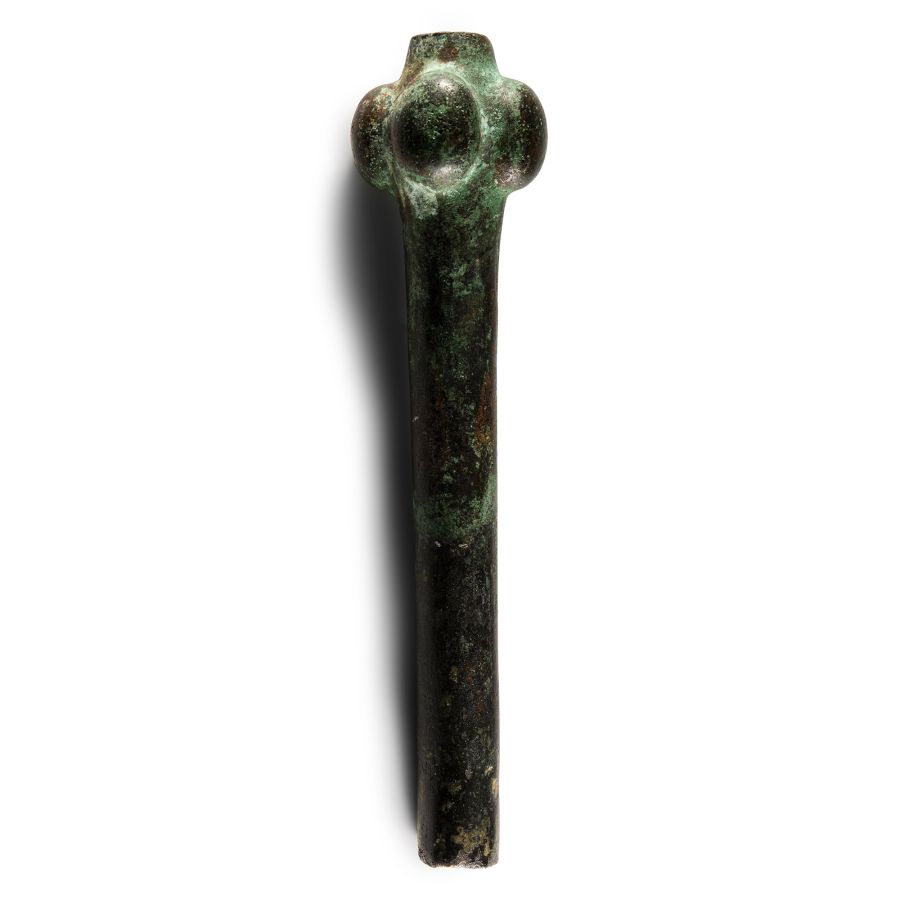
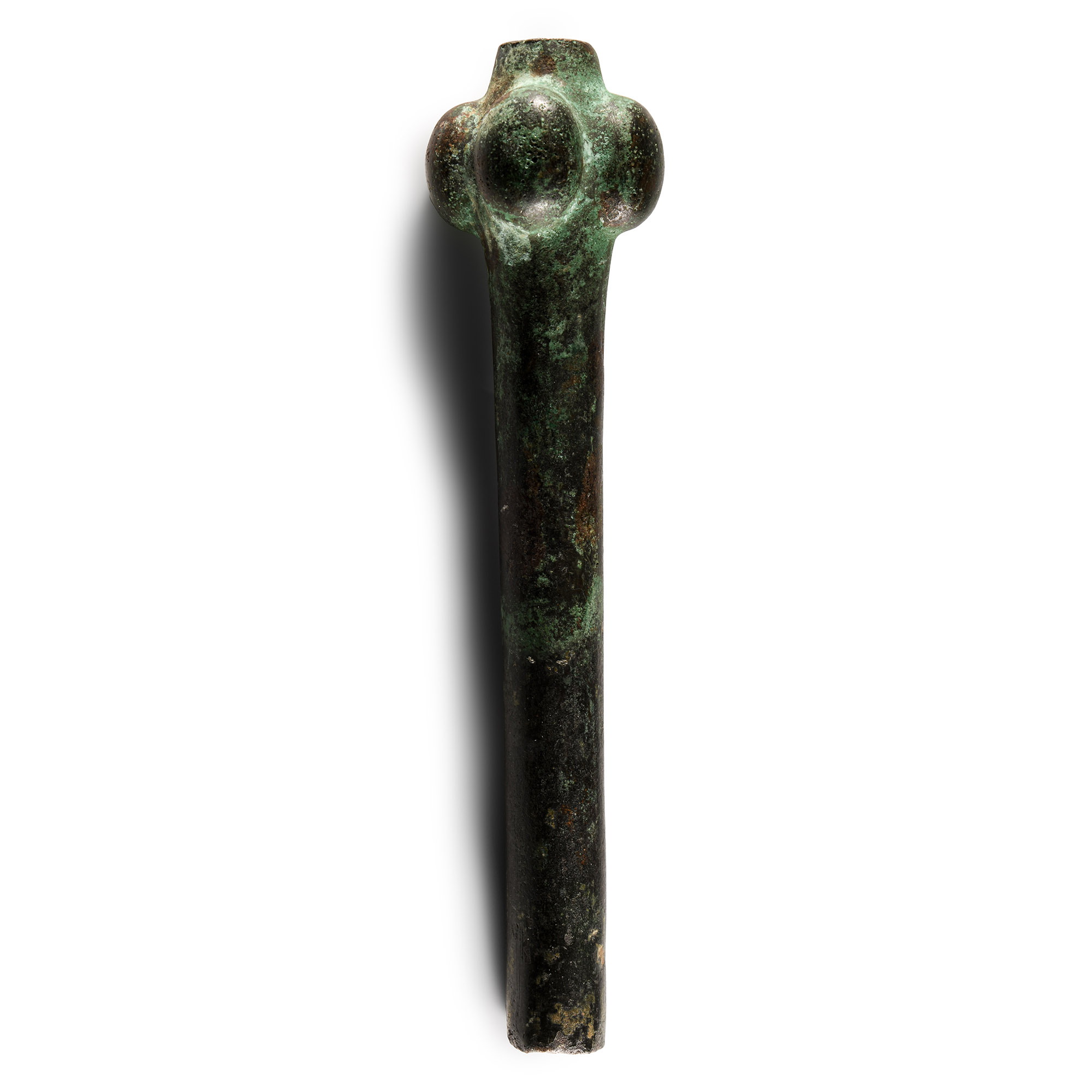
Luristan Sara-Gorz Bronze Macehead
CIRCA 2000-1300 B.C.
8 3/4 in. (456 grams, 22.5 cm).
With long tubular shank and four hefty bulbs surrounding the shaft.
ProvenanceAcquired 1980-2015.
Ex Abelita family collection.
Accompanied by an earlier catalogue identification card.
See Khorasani, M.M., Arms and Armour from Iran. The Bronze Age to the End of the Qajar Period, Tübingen, 2006, item 333, for a similar example in polished heamatite.
FootnotesThis rare and unusual mace finds parallels with similar pieces published by Slotta, Vatandust, and Moorey. The dating varies between 21st and 14th century B.C. Western Iranian maces, especially the Luristan ones, were notable for the variety of different forms. According to Dr D. Nicolle the gorz or mace was primarily used as an armour breaking weapon since ancient times, and was very common on the Iranian plateau.
CONDITIONTimeLine Auctions follows a vetting process to ensure the authenticity and legality of all items, reinforcing our commitment to integrity and responsible trading. Each antiquity, antique, and coin lot undergoes thorough examination by a vetting committee of at least ten external specialists, professional trade association members, scientists, and archaeologists: Our Vetting Process
AUCTIONS:
TimeLine is a leading auction house specialising in antiquities, ancient art, collectables, natural history, coins, medals, and books. Our auctions offer museums, collectors, historians, and enthusiasts the opportunity to acquire unique and historically significant pieces.
-
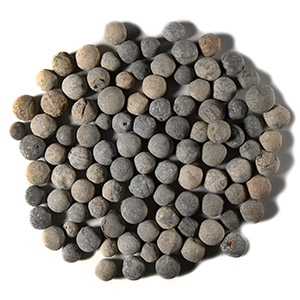
Lead Musket Ball Collection
17th-18th century A.D.Sold for (Inc. bp): £39
Group of ninty-nine lead musket and pistol balls. 2.08 kg total, 12-18 mm
UK gallery, early 2000s. -
Elamite Bronze Cudgel with Animals
Circa mid 3rd-early 2nd millennium B.C.Estimate: £1,200 - 1,700 (+bp*)
Opening Bid: £400
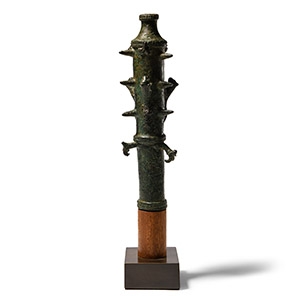
With ribbed terminals; the upper body with three relief panels of herringbone design, the main body decorated with spikes, three lion bodies arranged vertically, and three ram-head protomes under the central herringbone panel; mounted on a custom-made stand. 650 grams total, 18.5 cm high (26.5 cm high including stand)
Ex Kuizenga collection, Netherlands. Acquired in Hamburg, Germany, 22 December 1995.
Moorey notes that though the rows of spikes suggest that these objects were designed to be mounted on wooden shafts as cudgels, the projections in the form of lions (?) indicates the possibility that they were also used as votive or parade weapons. However, it does not exclude an effective use on the battlefield, especially if used by commanders as signs of rank. -
Byzantine 'Greek Fire' Ceramic Fire Bomb or Hand Grenade
10th-13th century A.D.Sold for (Inc. bp): £208
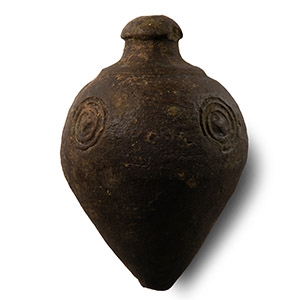
Piriform body decorated with concentric circles, with sphero-conical filler-hole, intended to be filled with explosive liquid and wick, used as a hand grenade. 472 grams, 13 cm
Acquired 1980-2015. Ex Abelita family collection. Accompanied by an academic paper by military specialist Dr Raffaele D'Amato, dated 15 July 2019 and titled 'Eastern Roman Empire - Greek Fire Bomb or Hand Grenade (μεσαίον kακάβιον) 9th-11th century AD'.
Apart from the use of siphons or manual flame-throwers called cheirosiphona, special corps of Roman soldiers employed terracotta grenades, in the form of small jars, abundantly evidenced in archaeological excavations. They were called μεσαία kακαβιά or κυτροκακάβια where the former had a bulbous shape and the latter a more cylindrical form.
