
Loading, please wait...
LOT 1355
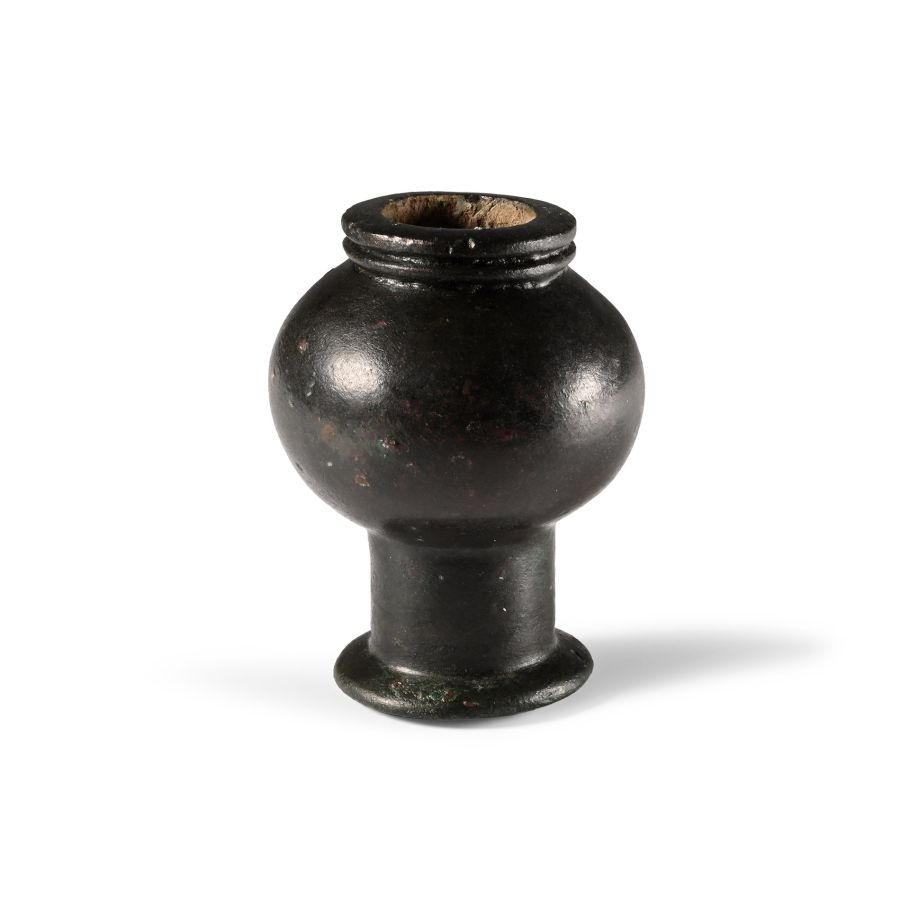
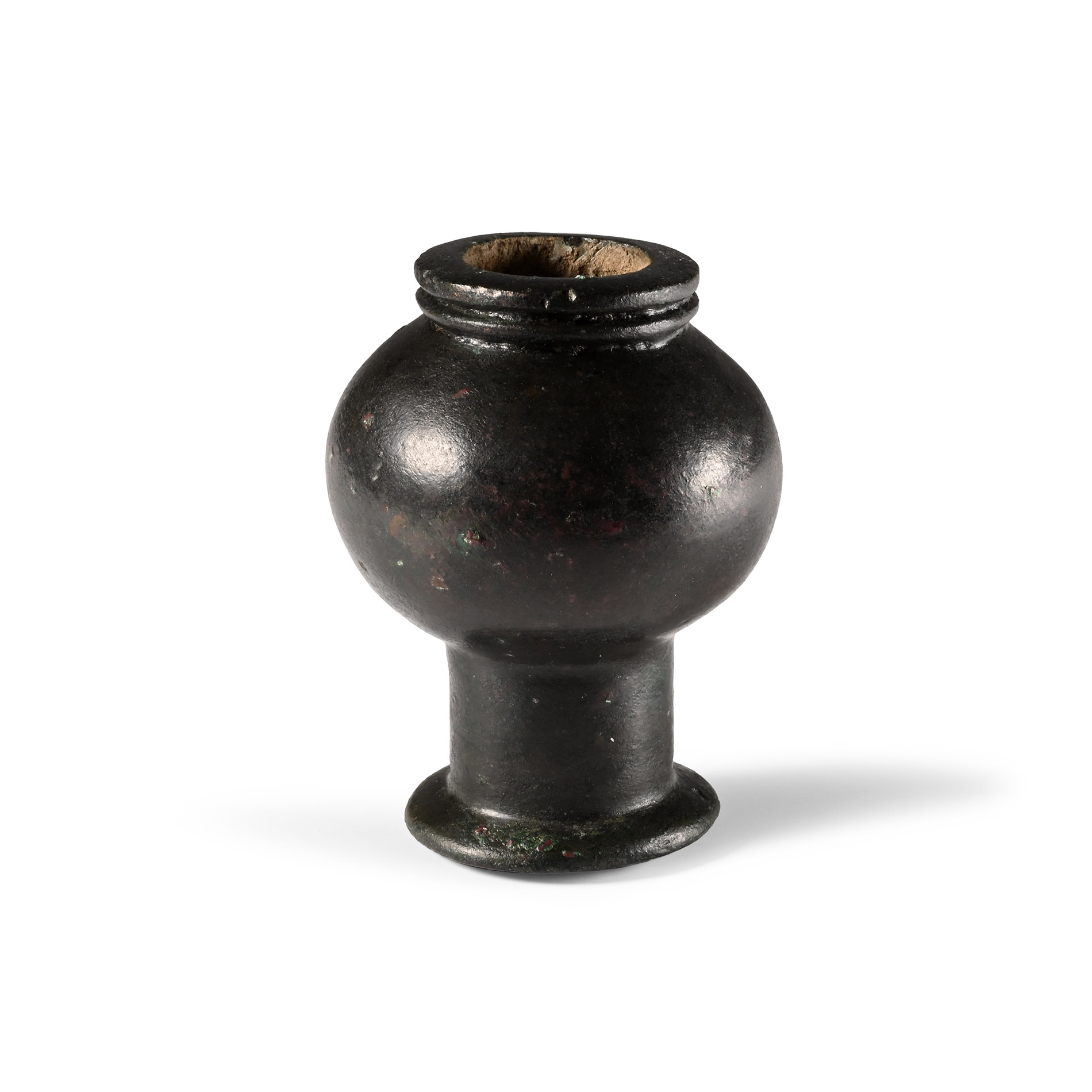
Luristan Sar-e Gorz Bronze Macehead
14TH-13TH CENTURY B.C.
2 3/4 in. (279 grams, 70 mm high).
With plain globular body, extended to a small raised ring encircling the top of the mace-head, circular short shaft expanding to a circular flat base.
ProvenanceAcquired 1980-2015.
Ex Abelita family collection.
For similar examples of maces see Gorelik, M., Weapons of Ancient East, IV millennium BC-IV century BC, Saint Petersburg (2003), pl.XXXI, no.21 (Luristan).
FootnotesCaucasian stone and bronze maces were distinguished by modestly finished, clean processed and predominantly close-to-ball shapes (with a variety of surface finishing, ranging from the smooth, ribbed, lobular forms to the rounded with protrusions and spikes), and the Western Iranian maces, especially the Luristan ones, notable for the variety of different forms. Similar mace-heads, probably realised in Luristan, decorated the head of the sceptres of Assyrian kings like Tukulti-Ninurta I (1243-1207 B.C.).
CONDITIONTimeLine Auctions follows a vetting process to ensure the authenticity and legality of all items, reinforcing our commitment to integrity and responsible trading. Each antiquity, antique, and coin lot undergoes thorough examination by a vetting committee of at least ten external specialists, professional trade association members, scientists, and archaeologists: Our Vetting Process
AUCTIONS:
TimeLine is a leading auction house specialising in antiquities, ancient art, collectables, natural history, coins, medals, and books. Our auctions offer museums, collectors, historians, and enthusiasts the opportunity to acquire unique and historically significant pieces.
-
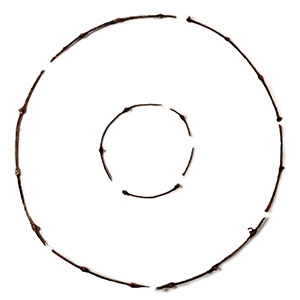
Cuman-Qipchak Iron Shield Rim Group
12th-13th century A.D.Sold for (Inc. bp): £104
Square in section and curved in profile with pierced lobes and attachment rivets. 252 grams total, 7.2-43 cm
UK gallery, early 2000s.
These kind of shields are often found in the burials of nomadic warriors of Eastern Europe accompanied by certain sets of weapons — four-part helmets, quiver kits, sabers and a spearhead. Such graves contained the remains of similar wooden shields with metal parts. Determining the dating of these burial complexes in the framework of the Golden Horde time, the Archaeologists dwell in detail on the attribution of the helmets and the remnants of the shields, linking their appearance in the Northeast Black Sea Coast with the resettlement here of the black hoods from Southern Russia in 1260s. -
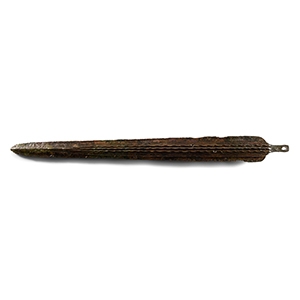
Wavy Blood Channelled Bronze Short-Sword
Late 2nd millennium B.C.Estimate: £600 - 800 (+bp*)
Opening Bid: £300
A North-Western Persian dagger or short-sword blade with rounded shoulders and thick mid-rib with undulated blood-channels running to the blade tip; short tang with fastening hole. 258 grams, 34 cm
Acquired 1980-2015. Ex Abelita family collection.
The Luri people produced a quantity of fine metalwork, which according to Dr Khorasani, could be due to a settled period which arose as a result of the defeat of the Elamites by the Babylonians, leaving the Luristani people in relative peace for a period of time after 1200 BC. According to Khorasani 'A culture of innovation and experimentation flourished, and the repertoire of the Luristan smiths expanded in the period between 1150-1050 BC.'. -

Luristan Socketted Bronze Cudgel
13th-7th century B.C.Sold for (Inc. bp): £260
A cudgel or handle of an axe or mace reinforced at both ends by raised moulding, the handle adorned with a double spiral in relief. 473 grams, 15.5 cm wide
Fine condition.
Private family collection formed in London, mid 1980s to early 1990s.
