
Loading, please wait...
LOT 1167
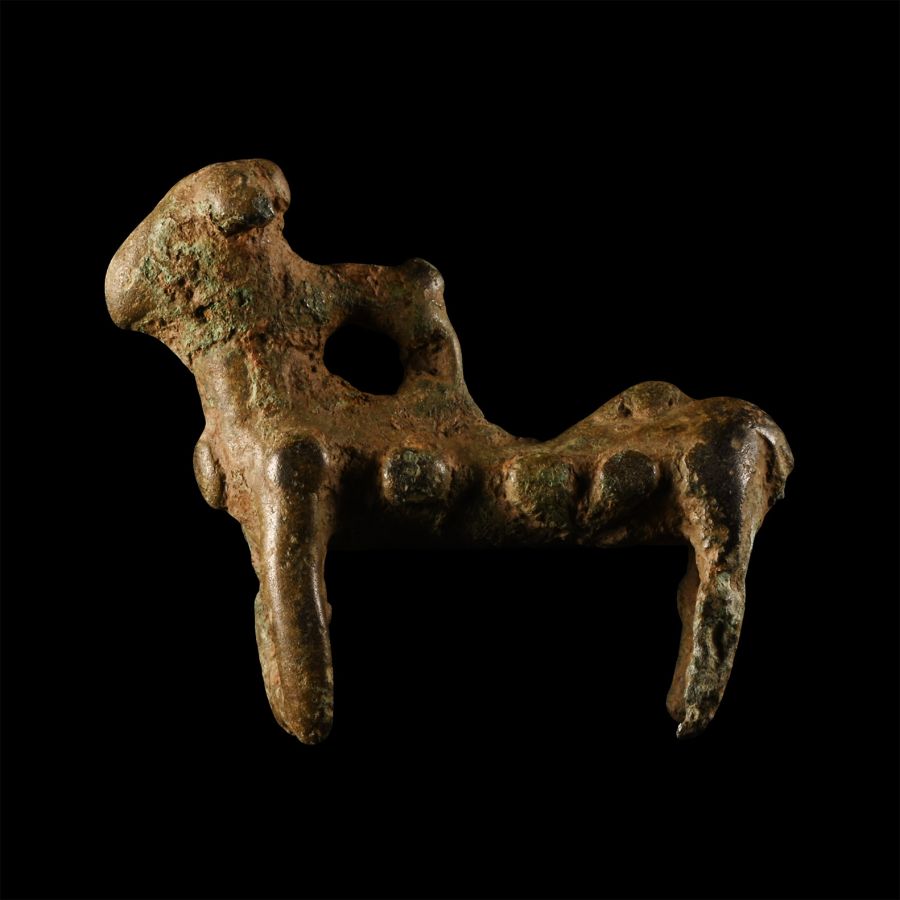
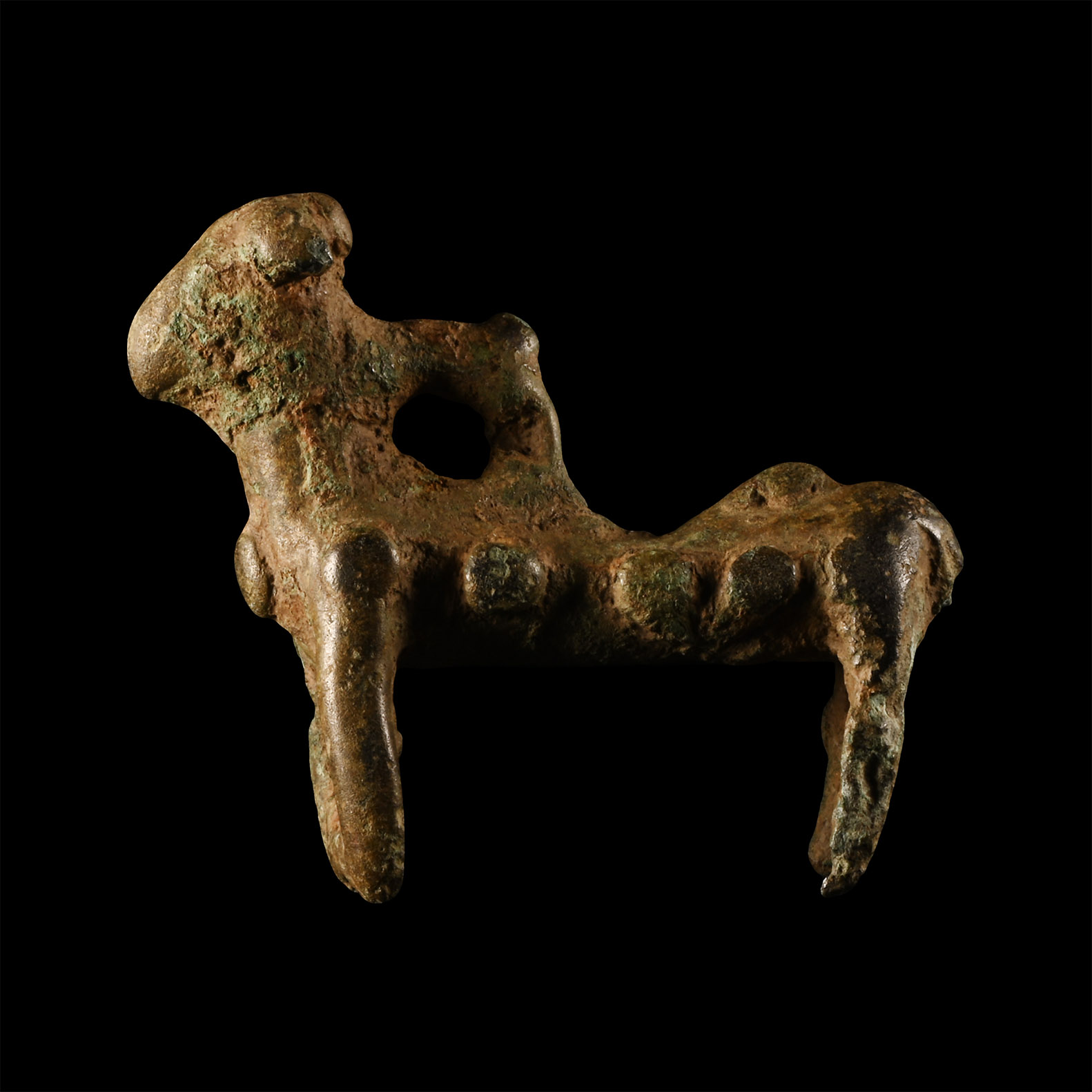
Luristan Bull Statuette
13TH-7TH CENTURY B.C.
1 5/8 in. (24.2 grams, 41 mm).
Standing upright with an elongated body, four short legs with the pairs of legs connected by a horizontal bar; small bosses decorating the body; suspension loop to the back. [No Reserve]
ProvenanceCollected from 1969-1999.
From the collection of the late Mr S.M., London, UK.
Accompanied by a copy of a previous catalogue information card.
Cf. for a similar horse bit in shape, Przeworski, S., ‘Luristan Bronzes in the collection of Mr. Frank Savery, British Consul-General at Warsaw’ in Archaeologia or Miscellanous Tracts relating to Antiquity, London, vol.LXXXVIII, 1940, pp.229-269, pl.LXXV, and for similar pendants with other animals pl.LXXVII.
FootnotesSuch a figurine might have been worn as part of a necklace or bracelet for decorative purposes. Due to the tribal and sometimes nomadic nature of many of these populations, many Luristan bronzes were not of great size. Statuettes of local fauna have been largely recovered from Luristan burials.
CONDITIONTimeLine Auctions follows a vetting process to ensure the authenticity and legality of all items, reinforcing our commitment to integrity and responsible trading. Each antiquity, antique, and coin lot undergoes thorough examination by a vetting committee of at least ten external specialists, professional trade association members, scientists, and archaeologists: Our Vetting Process
AUCTIONS:
TimeLine is a leading auction house specialising in antiquities, ancient art, collectables, natural history, coins, medals, and books. Our auctions offer museums, collectors, historians, and enthusiasts the opportunity to acquire unique and historically significant pieces.
-
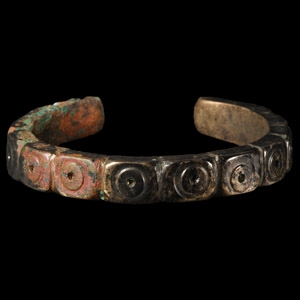
Western Asiatic Bronze Bracelet With Ring and Dots
13th-14th century A.D.Sold for (Inc. bp): £72
Comprising a penannular body with segmented ring-and-dot design. 69 grams, 65 mm
UK private collection before 2000. On the UK art market. Property of a London gentleman. -
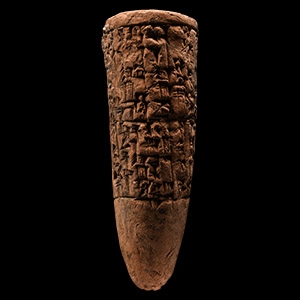
Old Babylonian Clay Cone of Ishme Dagan
Circa 20th-18th century B.C.Sold for (Inc. bp): £2,340
Of conical form with flat base and 18 lines of impressed cuneiform script; Sumerian text denoting a royal name: 'Ishme-Dagan, mighty man, King of Isin, king of the four world regions: when he cancelled the taxes of Nippur, the city beloved of Enlil, and excused its men from military service, he built the city wall of Isin. The name of that wall is Ishme-Dagan.' 350 grams, 14.4 cm
Formerly with an ADA member's gallery, 1980-1990s. From the collection of Dr D Gerrard, Buckinghamshire, UK. Accompanied by a copy of the original catalogue entry. -
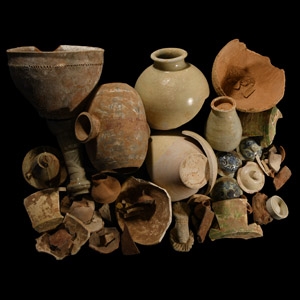
Holy Land and Other Terracotta Pottery Group
3rd-1st millennium B.C.Sold for (Inc. bp): £85
Including fragmentary ledge-handled storage jar, cocoon jar and other types. 13 kg total, 2-26 cm
Ex London, UK, gallery, 1980-1990s.
