
Loading, please wait...

LOT 1472
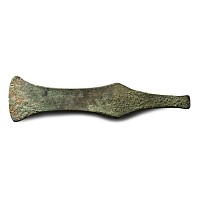
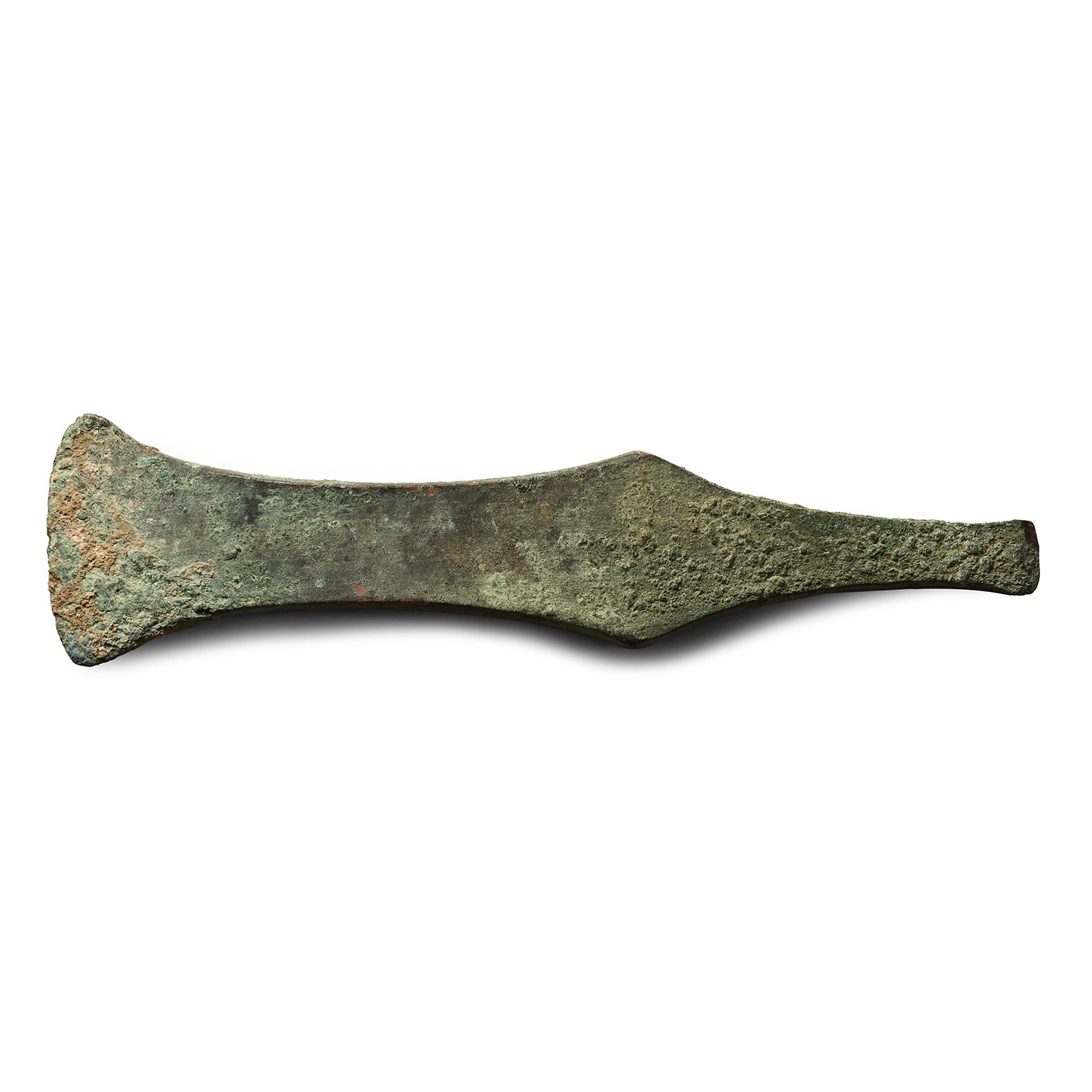
Luristan Bronze Tanged Chisel
13TH-7TH CENTURY B.C.
5 3/4 in. (154 grams, 14.5 cm).
With scooped edges to the flat-section blade, one broad cutting edge and one narrow. [No Reserve]
ProvenanceFrom a collection of a gentleman, acquired on the London art market in the 1990s.
CONDITIONTimeLine Auctions follows a vetting process to ensure the authenticity and legality of all items, reinforcing our commitment to integrity and responsible trading. Each antiquity, antique, and coin lot undergoes thorough examination by a vetting committee of at least ten external specialists, professional trade association members, scientists, and archaeologists: Our Vetting Process
AUCTIONS:
TimeLine is a leading auction house specialising in antiquities, ancient art, collectables, natural history, coins, medals, and books. Our auctions offer museums, collectors, historians, and enthusiasts the opportunity to acquire unique and historically significant pieces.
-
Medieval and Later Bronze Buckle Collection
14th-19th century A.D.Sold for (Inc. bp): £59
Including double-frame, shoe-buckle, scrolled and other types; many of these objects are published in the Detector Finds book series. 474 grams total, 12-71 mm
From the collection of the famous author, writer and speaker, Gordon Bailey, Essex, UK; formed since 1968. -
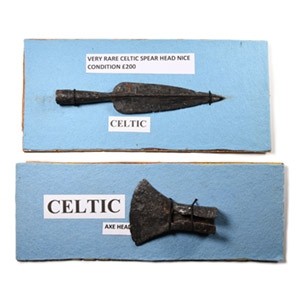
Iron Age Celtic Iron Axe and Spearhead Displays
Circa 2nd century B.C.-1st century A.D.Sold for (Inc. bp): £234
Comprising a spearhead with leaf-shaped blade and raised triangular mid-rib, short tapering open socket with inside wood remains, and a forged axe with folded rectangular-section open socket and flared crescent-edge blade. 791 grams total, 11.2-22.5 cm
From the collection of the famous author, writer and speaker, Gordon Bailey, Essex, UK; formed since 1968.
The Celtic warrior used a light javelin to throw and a heavier thrusting spear at close quarters. An iron spearhead of identical shape but with bronze decoration was recovered from the Thames and dated to the late Iron Age. -
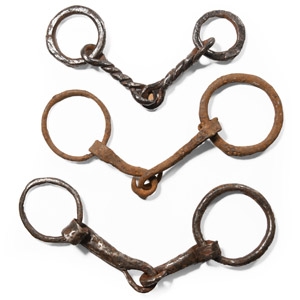
Medieval Iron Horse Bit Collection
14th-16th century A.D.Sold for (Inc. bp): £130
Snaffle bits with linked-ring joints, curb-bit ring to each end; many of these objects are published in the Detector Finds book series. 284 grams total, 17-20.5 cm
From the collection of the famous author, writer and speaker, Gordon Bailey, Essex, UK; formed since 1968.
