
Loading, please wait...
LOT 0297
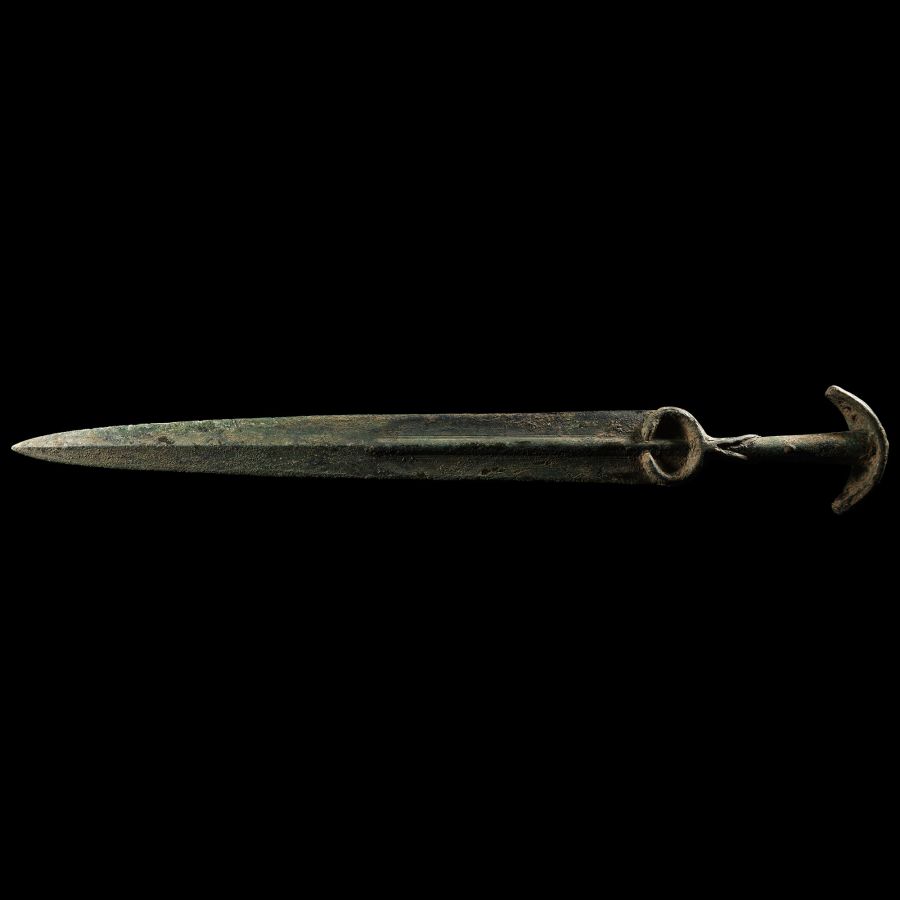
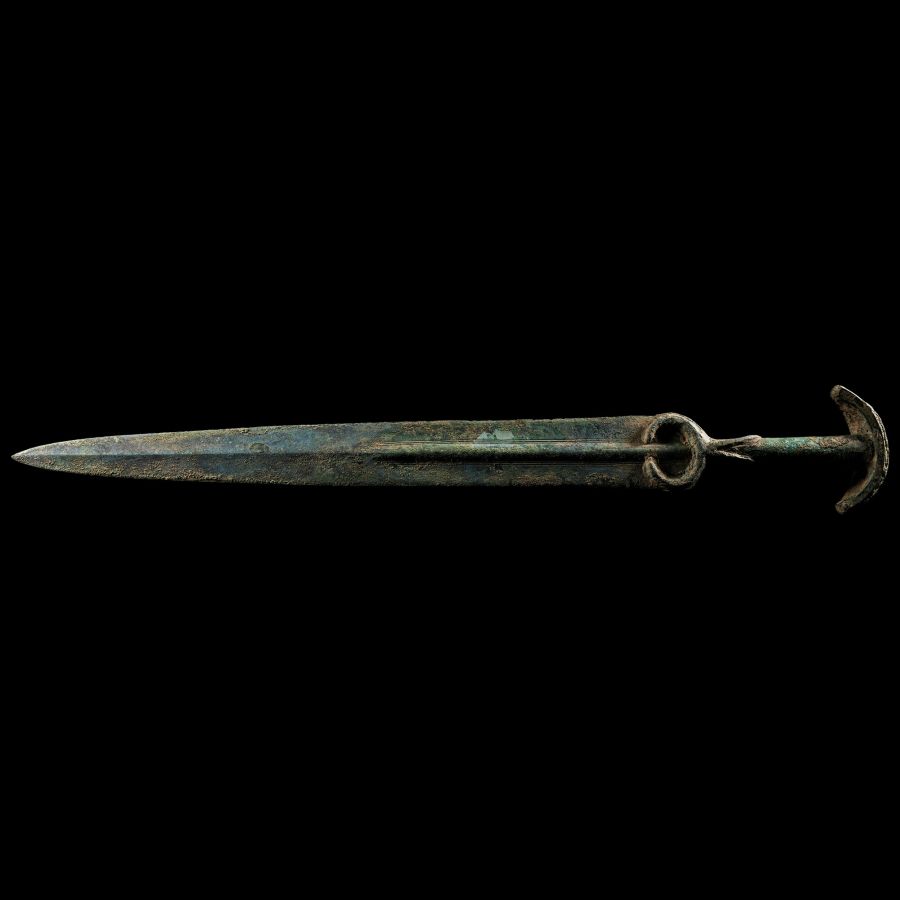
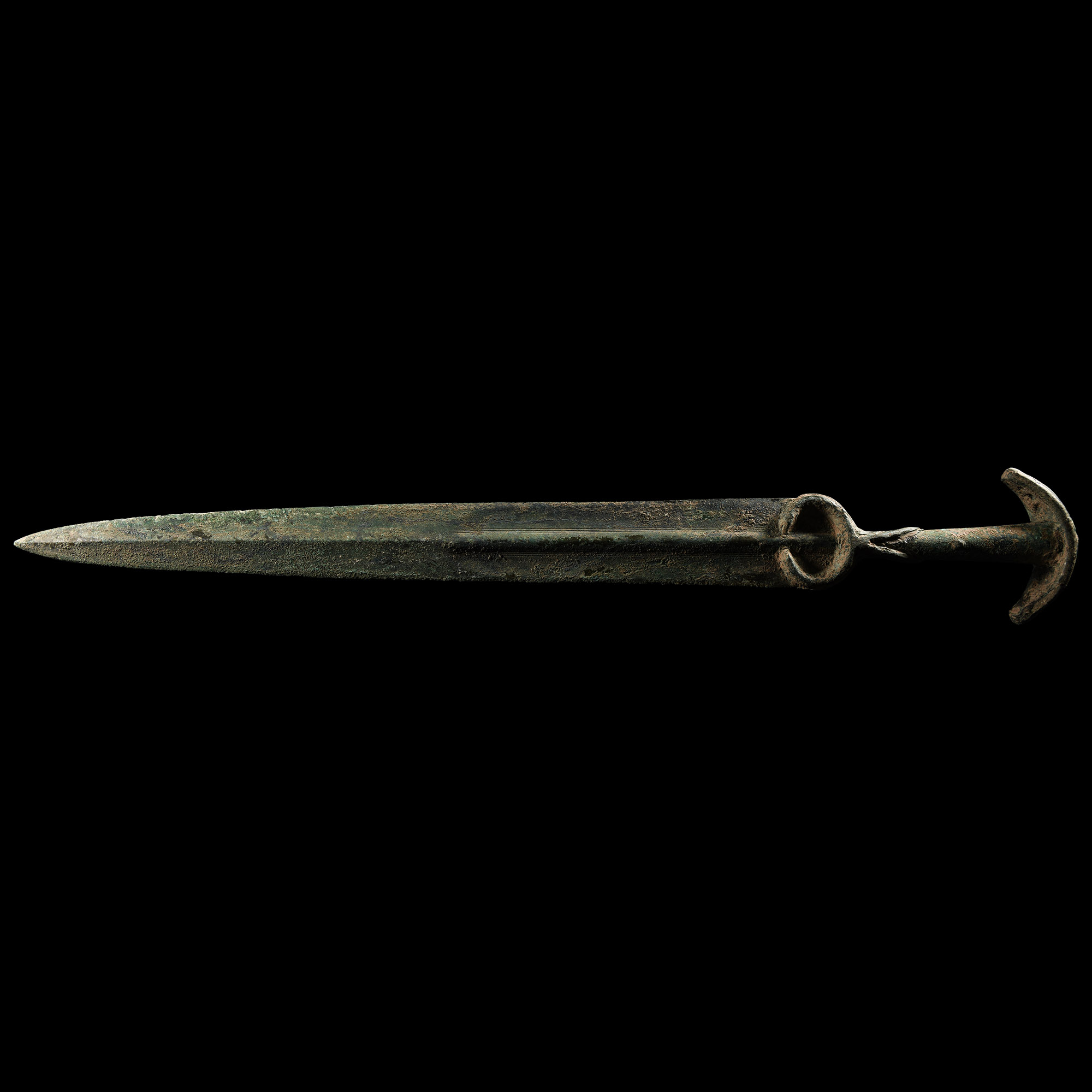
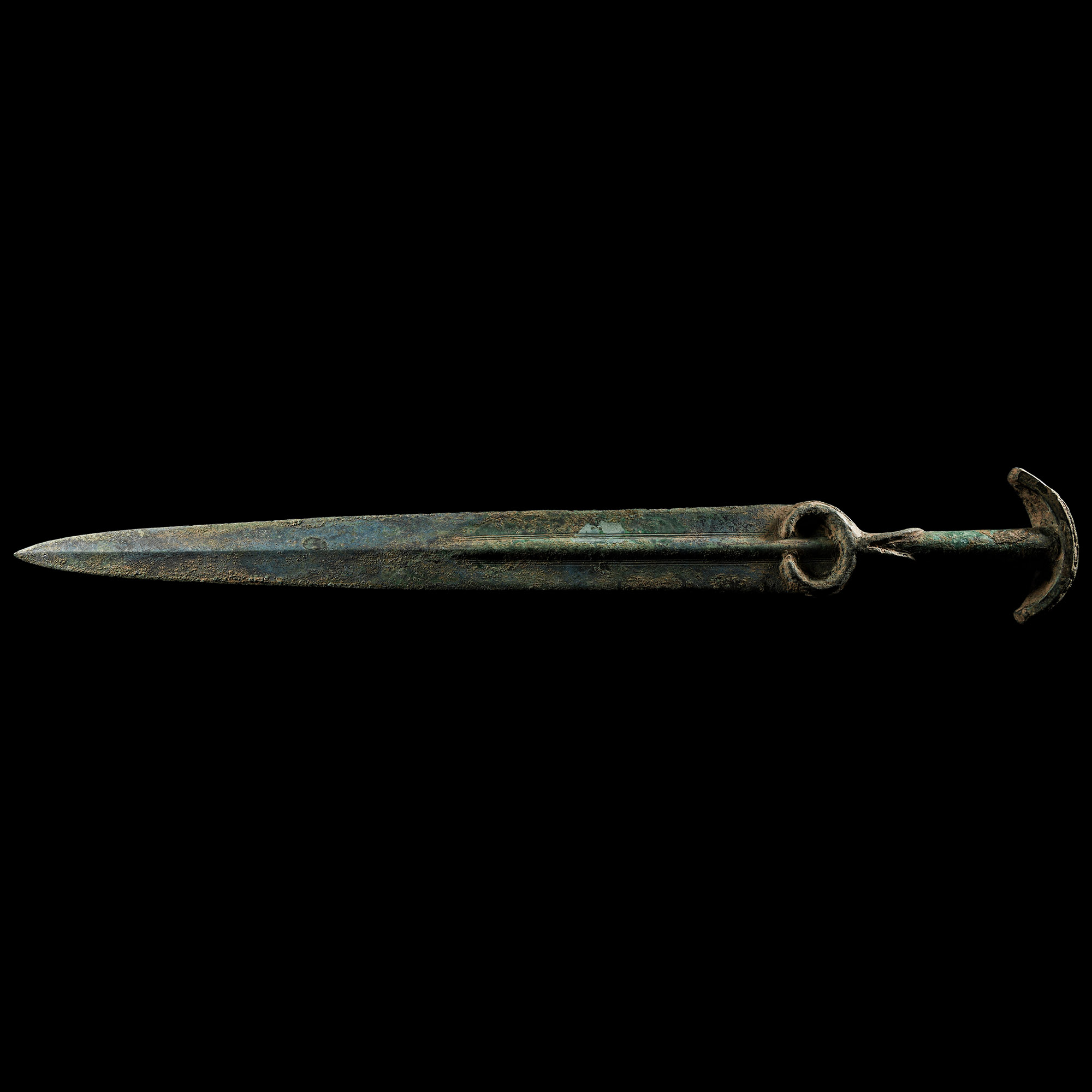
Luristan Bronze Sword
14TH-10TH CENTURY B.C.
22 in. (684 grams, 56 cm).
Of type II with crescentic pommel, the grip with V-shaped collar and penannular guard, blade with a broad, raised midrib.
ProvenanceEx Abelita family collection, 1988.
LiteratureSee Khorasani, M.M., Arms and Armour from Iran - The Bronze Age to the End of the Qajar Period, Tübingen, 2006, pp.398ff, nos.39, 41-43, for the types of pommels; for the penannular guard and blade see Godard, A., Les Bronzes du Luristan, Paris, 1931, pl.VII, no.15.
FootnotesThe crescentic pommel and the penannular guard were probably cast in a one piece-mould. These kinds of pommels are typical of the iron swords of type 2 from Luristan. A certain number of Luristan daggers and swords have bronze or iron blades with cast-on bronze hilts. The typology of winged pommel bronze grip is visible on examples in the British Museum and the National Museum of Iran.
CONDITIONTimeLine Auctions follows a vetting process to ensure the authenticity and legality of all items, reinforcing our commitment to integrity and responsible trading. Each antiquity, antique, and coin lot undergoes thorough examination by a vetting committee of at least ten external specialists, professional trade association members, scientists, and archaeologists: Our Vetting Process
AUCTIONS:
TimeLine is a leading auction house specialising in antiquities, ancient art, collectables, natural history, coins, medals, and books. Our auctions offer museums, collectors, historians, and enthusiasts the opportunity to acquire unique and historically significant pieces.
-
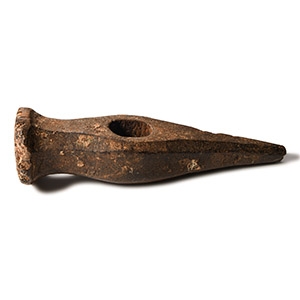
'The Customs House' Tudor Inscribed Iron Hammer-Head
16th century A.D.Sold for (Inc. bp): £156
Octagonal in section with one tapering end and one flat, circular end; square punch marks to one face in a pattern: '10B'. 2.82 kg, 24.2 cm
Found Thames foreshore, Customs House, London, UK, on Thursday 9th November 2006. Accompanied by a copy of the British Museum's Portable Antiquities Scheme (PAS) report no.LON-D6B085. -
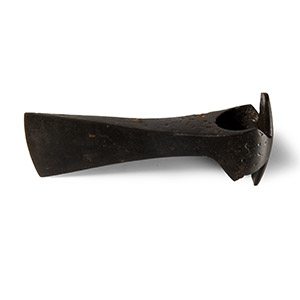
Viking Age Narrow Iron Axehead
Circa 9th-11th century A.D.Sold for (Inc. bp): £234
With triangular-section long blade extending to a socket with small lateral flanges and rectangular extension to the rear. 229 grams, 12.6 cm
Property of London businessman, from his grandfather's collection after WW2; thence by family descent. From the private collection of John Lawton, Surrey, UK. Accompanied by a copy of a previous catalogue information page. -
.jpg)
Viking Age Iron Sword with Bronze Hilt
10th-13th century A.D.Sold for (Inc. bp): £4,160
With a double-edged tapering blade, long tapering fullers and a narrow tang; boat-shaped bronze cross-guard with Jellinge Style decoration; the upper guard with similar ornament topped by a seven-lobed pommel. 675 grams, 88 cm
The blade is generally complete and in good conditions, although traces of corrosion are visible on the surface and on the edges; both cutting edges show strong traces of employ on battlefield, with battle-nicks along their length; pitting from possible water depot; still-homogenous blade structure, with strong delamination and material losses visible on the original surface of the metal.
From the private collection of a London gentleman, from his grandfather's collection formed before the early 1970s. Accompanied by an academic report by Dr Raffaele D’Amato. This lot has been checked against the Interpol Database of stolen works of art and is accompanied by search certificate number no.12011-213595.
This Couronian sword finds a good parallel with Baltic swords, used by Prussian, Couronians, Estonian and Lithuanian pagan warriors; see a sword once in the Prussian Museum, inventory V. Nr. 8368, from Janischken (Fig. 1,a); other clear parallels can be seen in Kazakevičius, 1996, figs.62-63 (fig.2) and Tomsons, 2012, fig.2 (Fig.3),3,7. The Curonian swords of this type, sometimes with animal head decoration on the lower guard, were widespread and used in the Eastern Baltic lands from 10th to 13th century.
