
Loading, please wait...
LOT 0244
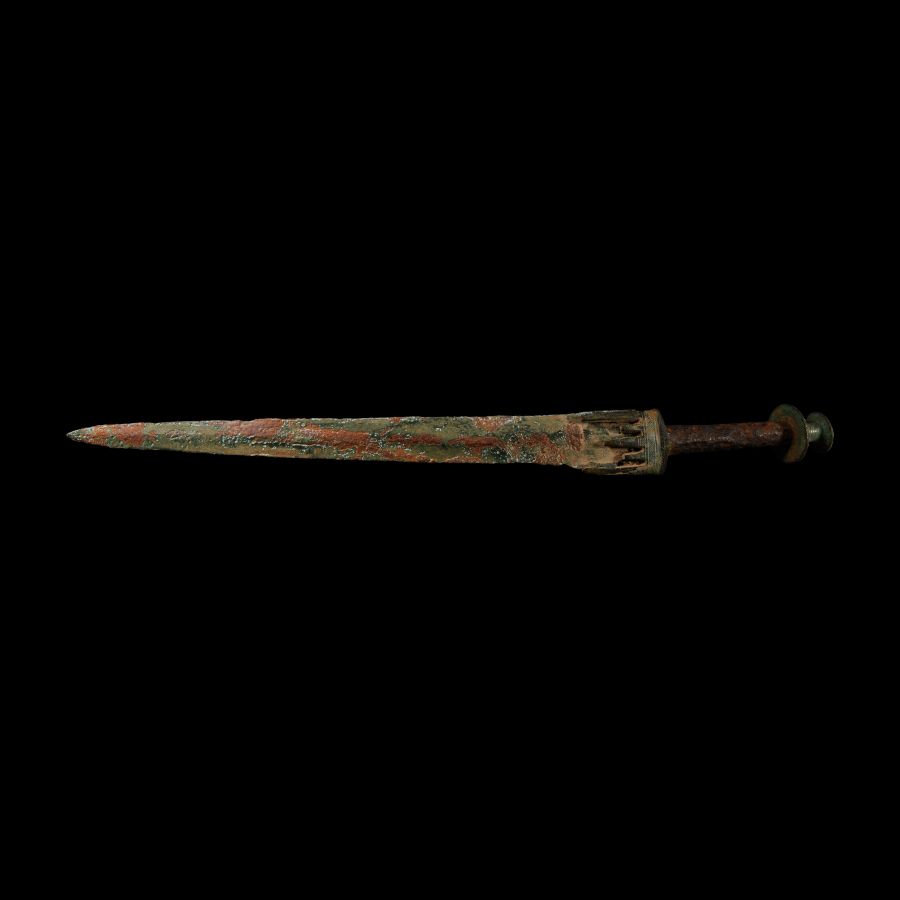
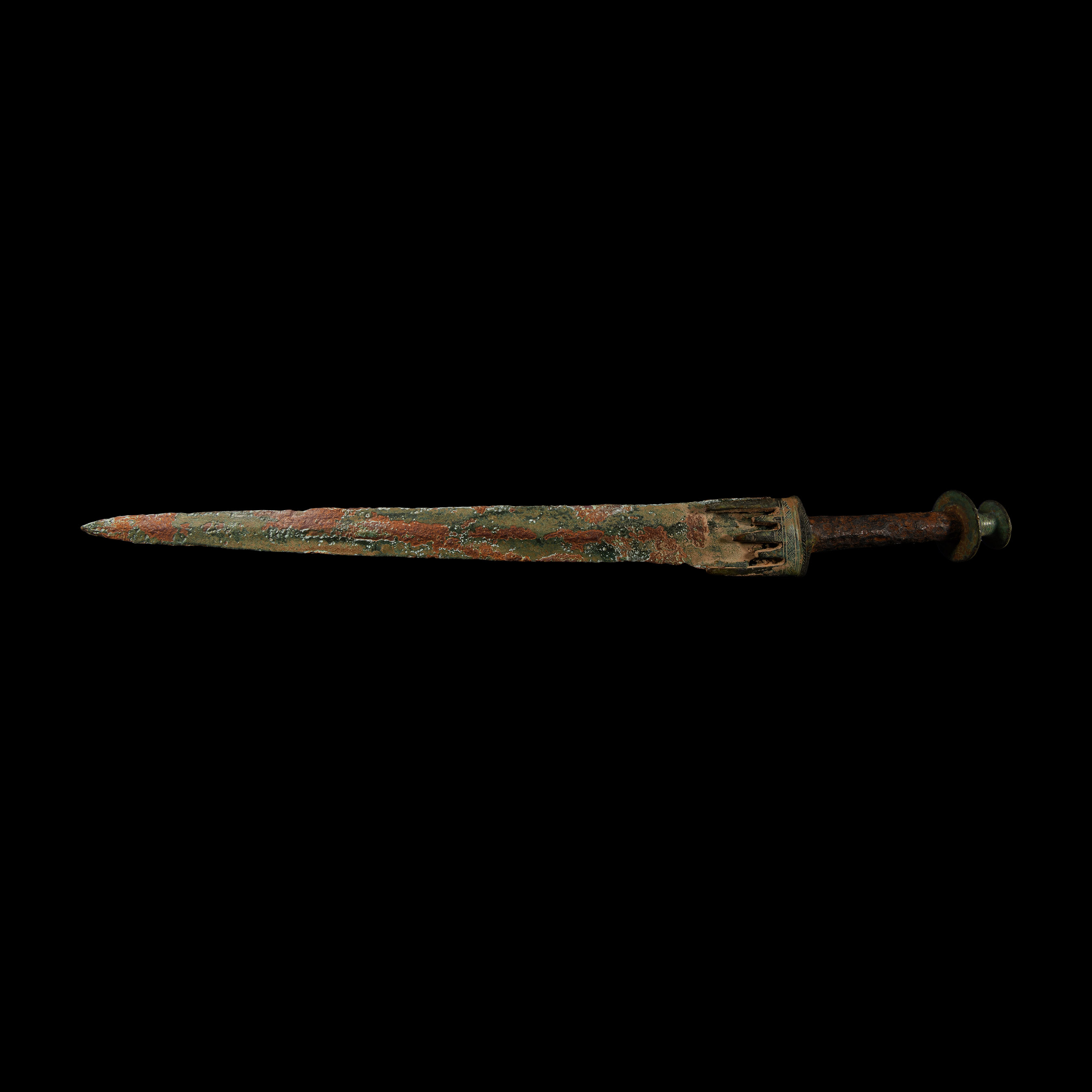
Luristan Bronze Sword with Hilt
13TH-6TH CENTURY B.C.
21 in. (635 grams, 35.5 cm).
Composed of a double-edged triangular blade with lentoid cross-section, long lower guard with strip extensions to both faces and edges, iron grip, bronze cotton-reel pommel.
ProvenanceEx West German collection, Cologne.
The Kusmirek Collection, UK.
TimeLine Auctions follows a vetting process to ensure the authenticity and legality of all items, reinforcing our commitment to integrity and responsible trading. Each antiquity, antique, and coin lot undergoes thorough examination by a vetting committee of at least ten external specialists, professional trade association members, scientists, and archaeologists: Our Vetting Process
AUCTIONS:
TimeLine is a leading auction house specialising in antiquities, ancient art, collectables, natural history, coins, medals, and books. Our auctions offer museums, collectors, historians, and enthusiasts the opportunity to acquire unique and historically significant pieces.
-
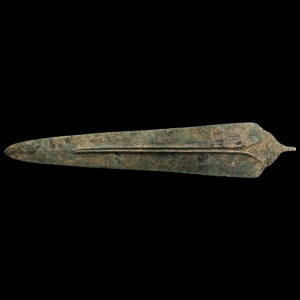
Luristan Bronze Short Sword Blade
1st millennium B.C.Sold for (Inc. bp): £130
Triangular profile with two parallel fullers tapering to a rounded tip, the tang forming an extension of the midrib. 194 grams, 30.7 cm
Ex German collection, Cologne, 1980-1990s.
The metalworking techniques used in making bronze weapons in Luristan were very complex. Surfaces were often finished in repoussé work, and some of the weapons were chased, others engraved. -
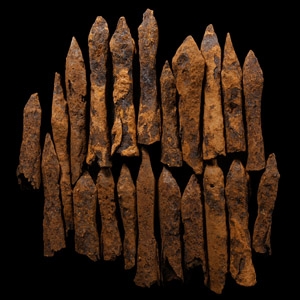
Medieval Iron Crossbow Bolt Group
Circa 12th-15th century A.D.Sold for (Inc. bp): £208
Composed of socketted bolts of various types, most with tapering or facetted square-section tips. 888 grams total, 5.4-10.3 cm
Acquired 1990s-early 2000s. East Anglian private collection. -
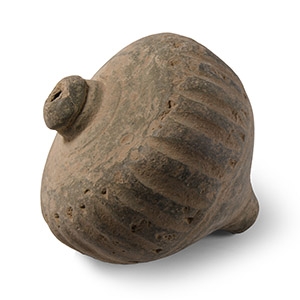
Byzantine 'Greek Fire' Fire Bomb or Hand Grenade
9th-11th century A.D.Sold for (Inc. bp): £143
Of squat piriform shape with shallow vertical dashes decorating the upper body, stamped triangles above and below. 579 grams, 10.4 cm
Family collection, acquired 1980-2015. Ex property of a North London gentleman. Accompanied by an academic paper by military specialist Dr Raffaele D'Amato, dated 15 July 2019 and titled 'Eastern Roman Empire - Greek Fire Bomb or Hand Grenade (μεσαίον kακάβιον) 9th-11th century AD'.
Apart from the use of siphons or manual flame-throwers called cheirosiphona, special corps of Roman soldiers employed terracotta grenades, in the form of small jars, abundantly evidenced in archaeological excavations. Such were the γανωτα, vessels (sometimes also of bronze) used for Greek fire. They were called μεσαία kακαβιά or κυτροκακάβια where the former had a bulbous shape and the latter a more cylindrical form.
