
Loading, please wait...

LOT 1490
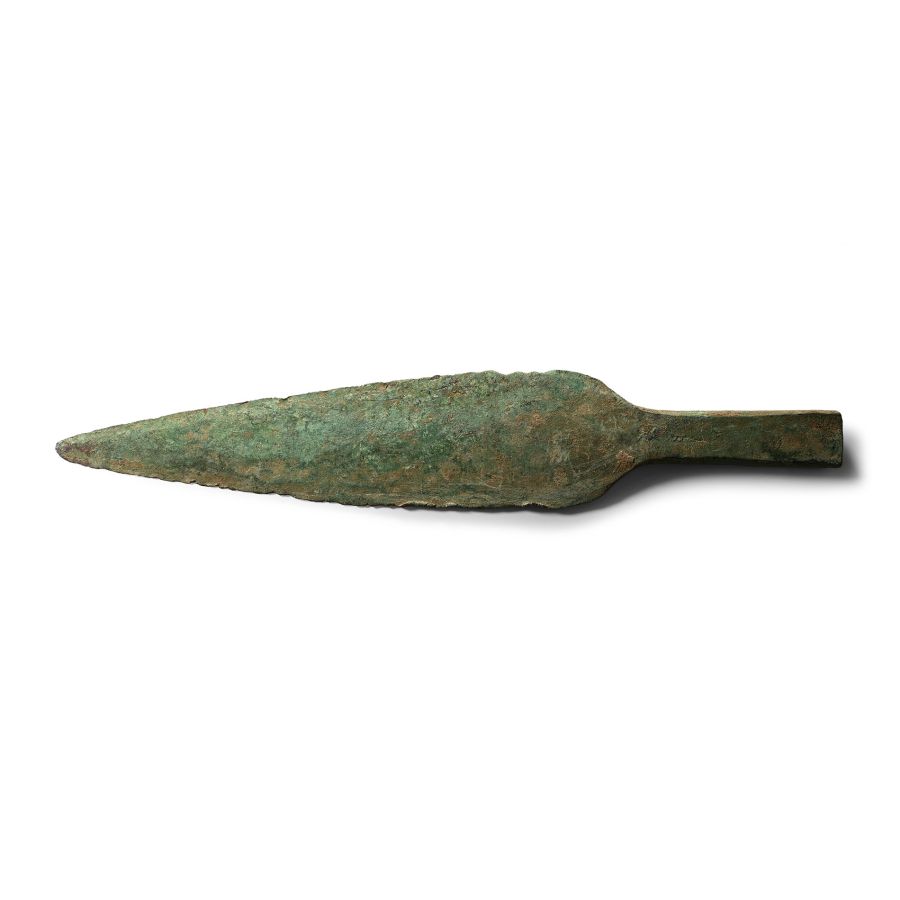
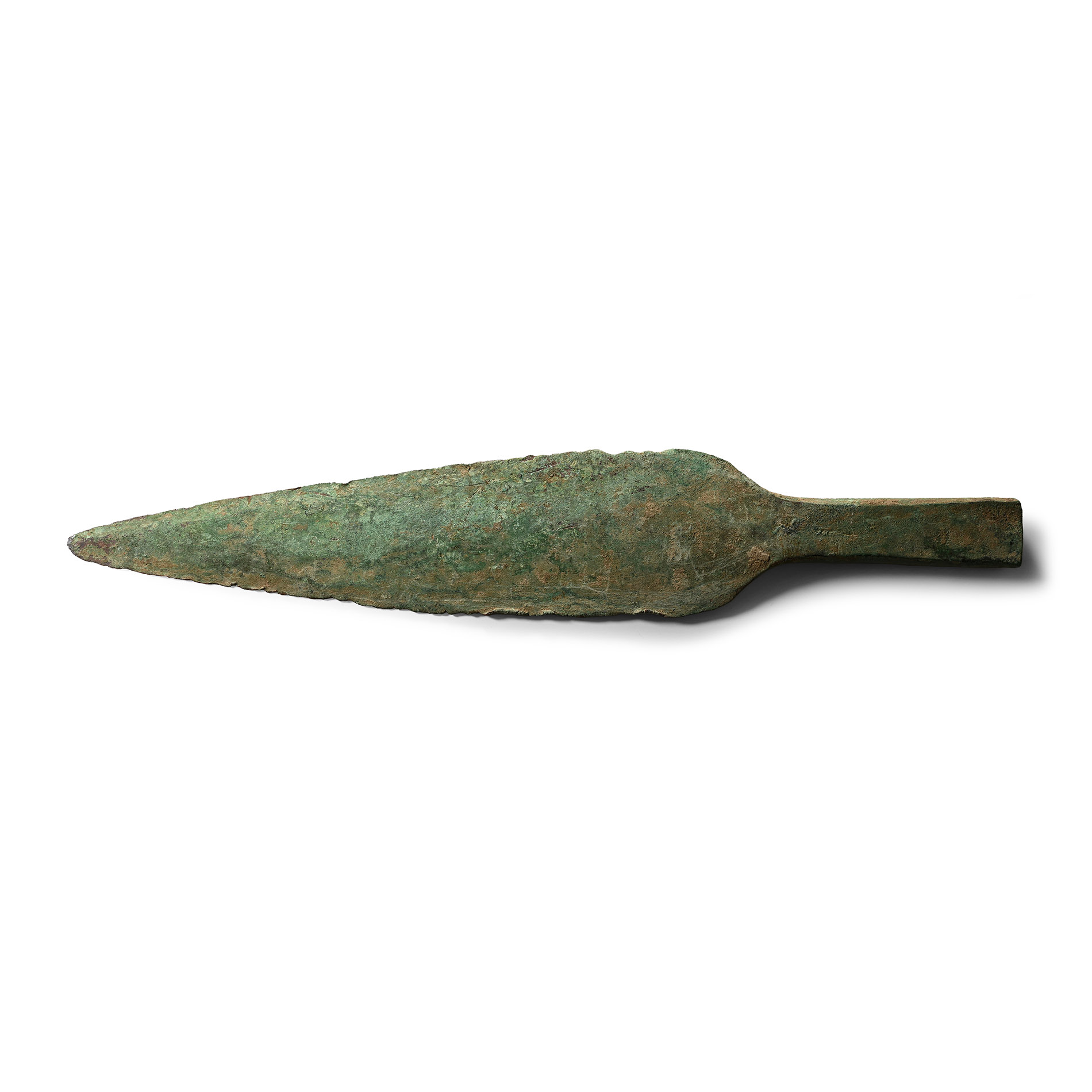
Luristan Bronze Sword with Handle
13TH-7TH CENTURY B.C.
16 1/2 in. (890 grams, 42 cm).
Substantial with leaf-shaped blade, lentoid in section and with rounded tip, rectangular-section tang; blade with nicked and chipped edge.
ProvenanceAcquired on the UK art market before 2000.
Property of an Essex, UK, gentleman.
TimeLine Auctions follows a vetting process to ensure the authenticity and legality of all items, reinforcing our commitment to integrity and responsible trading. Each antiquity, antique, and coin lot undergoes thorough examination by a vetting committee of at least ten external specialists, professional trade association members, scientists, and archaeologists: Our Vetting Process
AUCTIONS:
TimeLine is a leading auction house specialising in antiquities, ancient art, collectables, natural history, coins, medals, and books. Our auctions offer museums, collectors, historians, and enthusiasts the opportunity to acquire unique and historically significant pieces.
LOT 1490
Luristan Bronze Sword with Handle
Estimate £300 - 400€350 - 460 (for guidance only)$410 - 540 (for guidance only)
-
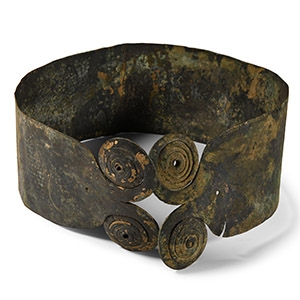
Luristan Bronze Armour Belt with Double Scroll Terminals
9th-7th century B.C.Sold for (Inc. bp): £169
A broad hammered military belt or cuirass band with plain surface, the terminals shaped as a double spiral ornament, holes in the centre of both ends for fastening. 330 grams, 22 cm
UK private collection before 2000. Acquired on the UK art market. Property of a London gentleman.
The rich and noble aristocrats of Luristan, Elamites, Hurrians, Lullubians, Kutians, and Kassites, went to battle splendidly equipped and used magnificent bronze armours. For metal sheets used for quiver plaques and bronze protective belts or shields, they used the hammering technique (Čakoškāri). -
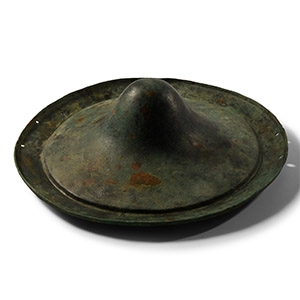
Large Bronze Age Shield Boss
8th century B.C.Sold for (Inc. bp): £195
A hammered discoid shield raised from a single sheet, displaying a central conoid boss; two pairs of circular piercings to the perimeter. 297 grams, 26.5 cm wide
UK private collection before 2000. Acquired on the UK art market. Property of a London gentleman.
These kind of shields, of small dimensions, were used by infantry or horse-archers of Luristan and neighbouring cultures (Elamites, Zagros Tribesmen, like Hurrians, Lullubians, Kutians, and Kassites, Assyrians), as well as by Urartu, West-Iranian and Northern Caucasian civilisations around the Caspian Sea. The bronze boss was probably attached to a leather and wooden background. -
.jpg)
Medieval Iron Axehead
15th-16th century A.D.Sold for (Inc. bp): £33
With square butt, scooped underside and a flared blade. 1.04 kg, 16 cm
Acquired on the UK market before 1992. Ex property of a North London gentleman.
