
Loading, please wait...

LOT 0302
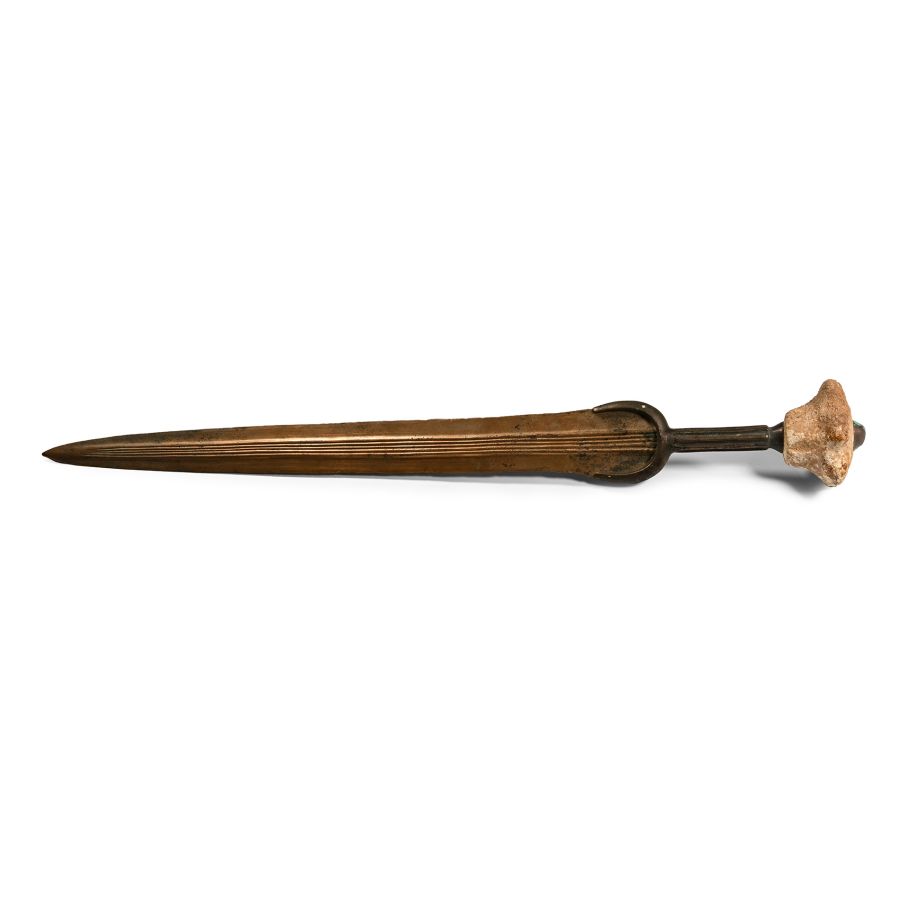
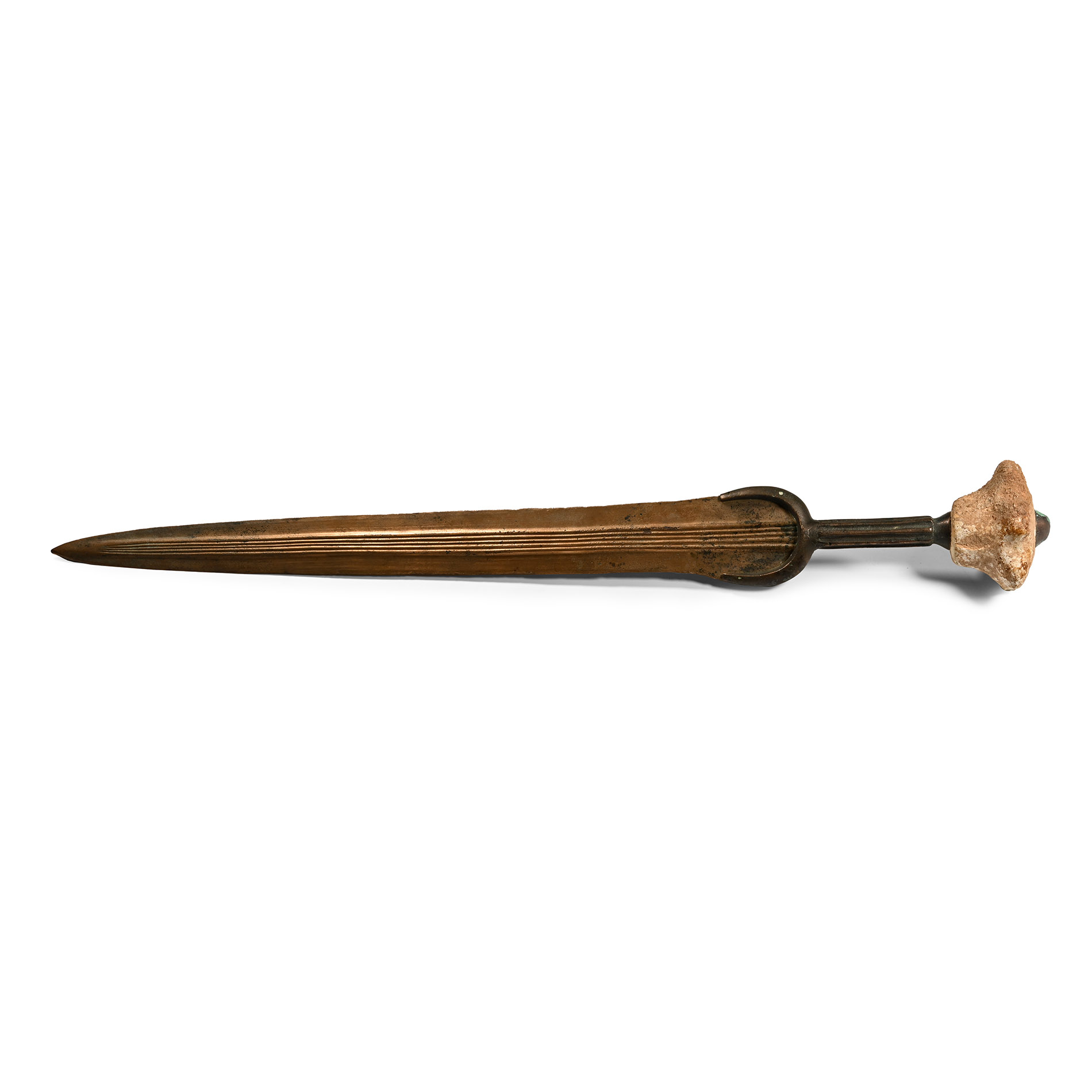
Luristan Bronze Sword with Decorated Stone Pommel
13TH-7TH CENTURY B.C.
25 in. (1.03 kg, 63.5 cm).
With solid cast hilt with penannular guard and a horizontally ribbed grip; a massive star-shaped pommel and a multi-fullered blade tapering to a sharp tip; handle restored.
ProvenanceAcquired 1980-2015.
Ex Abelita family collection.
Cf. Gorelik, M., Weapons of Ancient East, IV millennium BC-IV century BC, Saint Petersburg, 2003, in Russian, see pl.XIV no.40, from Luristan; Khorasani, M.M., Arms and Armor from Iran: The Bronze Age to the End of the Qajar Period, Tübingen, 2006, pp.394-5, for type.
FootnotesAccording to Moorey, such category of swords were distributed in the Northern Iran area, as proved by the Amarlu finds. Based on the example from the Ashmolean Museum, he dated them to the end of the 2nd millennium B.C., more precisely to a period between 1400-1200 B.C. The type was in use until the 7th century B.C.
CONDITIONTimeLine Auctions follows a vetting process to ensure the authenticity and legality of all items, reinforcing our commitment to integrity and responsible trading. Each antiquity, antique, and coin lot undergoes thorough examination by a vetting committee of at least ten external specialists, professional trade association members, scientists, and archaeologists: Our Vetting Process
AUCTIONS:
TimeLine is a leading auction house specialising in antiquities, ancient art, collectables, natural history, coins, medals, and books. Our auctions offer museums, collectors, historians, and enthusiasts the opportunity to acquire unique and historically significant pieces.
LOT 0302
Luristan Bronze Sword with Decorated Stone Pommel
Estimate £800 - 1,000€930 - 1,160 (for guidance only)$1,080 - 1,350 (for guidance only)
-
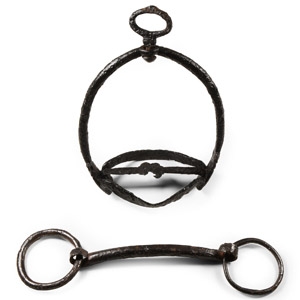
Medieval Iron Stirrup and Horse Bit
14th-16th century A.D.Sold for (Inc. bp): £59
Comprising: a snaffle bit with single bar and an iron stirrup in a form of elongated D, with an oval-shaped loop at the top, wide openwork footrest slightly curved forward, with decoration at the sides. 467 grams total, 18.5-26 cm
From the collection of the famous author, writer and speaker, Gordon Bailey, Essex, UK; formed since 1968.
Snaffle bits have not altered very much in their design over the centuries. Medieval snaffle bits have survived in reasonable numbers, although they are still rare. A number of different designs are known for them. Some had a plain straight bar serving as the mouth piece, like our example. The 15th-16th century stirrup shows an interesting decoration at the sides of the footrest. -
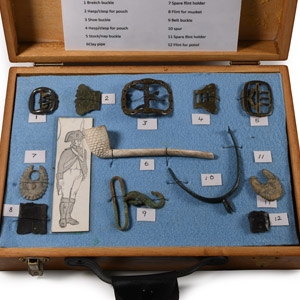
Cased British Military 'Published' Artefact Collection
Late 17th-early 19th century A.D.Sold for (Inc. bp): £124
Comprising: breech and shoe, hat, belt ands stock/nap bronze buckles; clasps for pouches; a clay pipe; spare flint holders; a flint for musket; a flint for pistol; a bronze spur; military buttons for Royal Marine, Artillery, Coldstream and Dragoon Guards from 1795 to 1820; an officer’s whistle; a bayonet holder. 1.36 kg total, case: 30.5 x 22 x 6.5 cm
From the collection of the famous author, writer and speaker, Gordon Bailey, Essex, UK; formed since 1968.
Various military items have been recovered from the military sites of the Napoleonic Wars. Buttons are the most common items, made of copper, with some signs of gilding and silvering. Also small buckles are frequent finds, as well as musket balls and musket parts. These latter are rare because the individual soldiers were responsible for the care and maintenance of their fire-arms. -
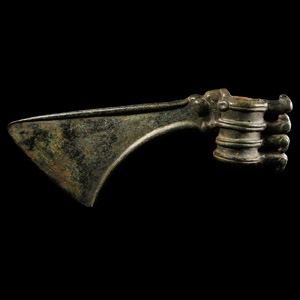
Luristan Bronze Spike-Butted Axehead
11th-8th century B.C.Estimate: £3,000 - 4,000 (‡+bp*)
Opening Bid: £1,500
Blade with folded upper and lower edge, cylindrical socket with projecting ribs formed as the necks and heads of birds, blace 'projecting' from the mouth of a roaring lion at the neck. 478 grams, 22.5 cm
Ex Parisian private collection. with Cuvreau Expertises Enchères S.A., sale 60, 21 June 2009, lot 105. This lot has been checked against the Interpol Database of stolen works of art and is accompanied by search certificate number no.11876-206787.
