
Loading, please wait...
LOT 1124
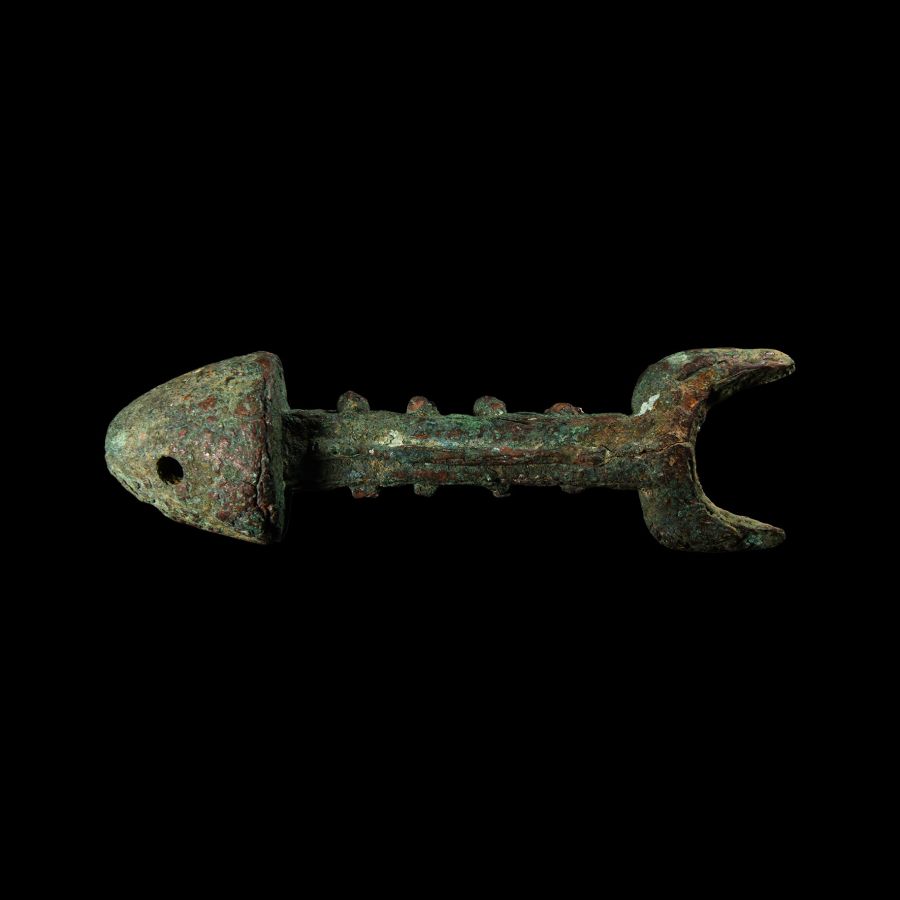
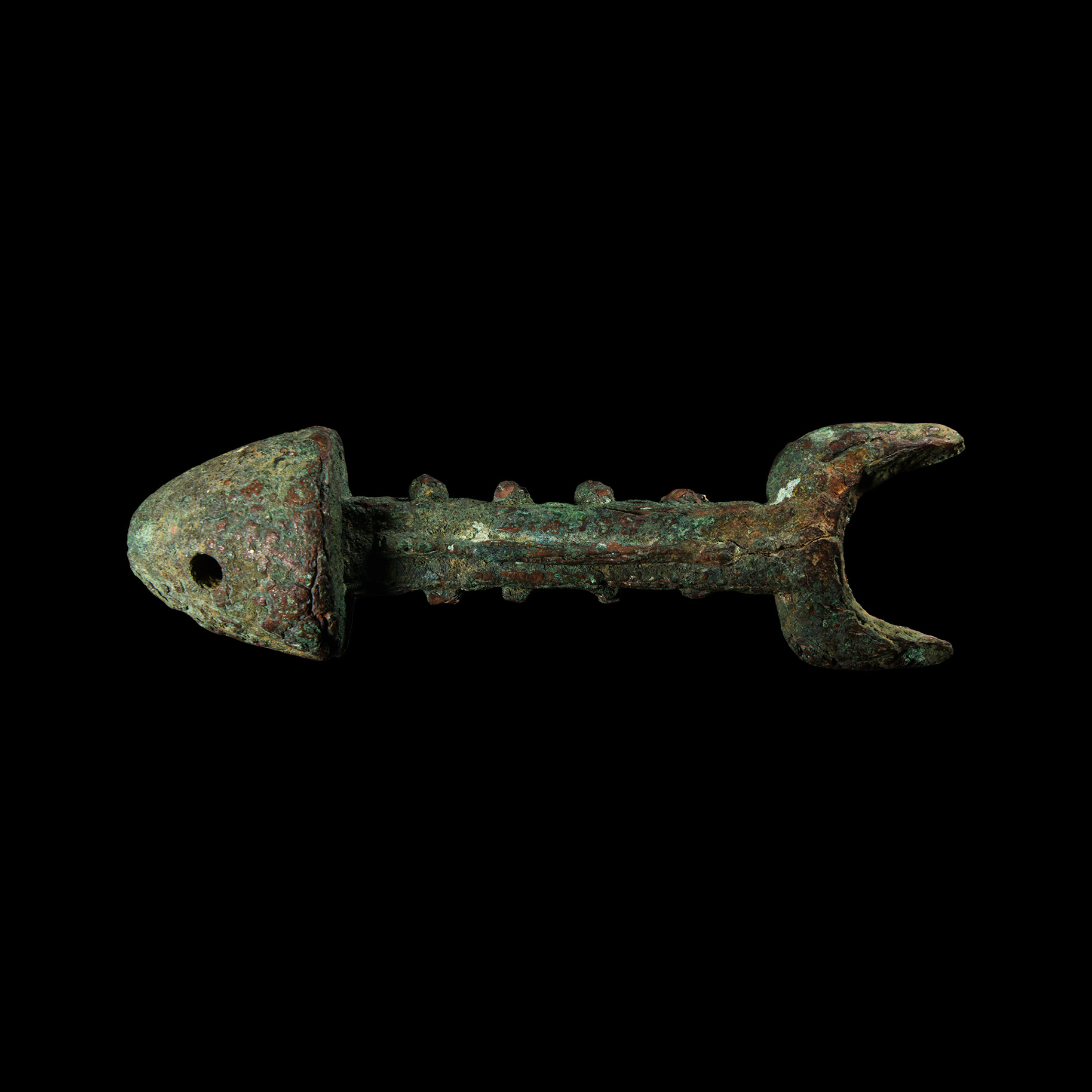
Luristan Bronze Sword Hilt
2ND MILLENIUM B.C.
6 1/2 in. (492 grams, 16.5 cm).
With crescent-shaped guard to accept blade, square-section grip with central rib to two sides and four evenly-spaced studs to the other two, and a conical hollow-cast mushroom pommel pierced on three sides.
ProvenanceAcquired in the early 1990s.
Ex Guernsey collection.
The Kusmirek Collection, UK.
Cf. Khorasani, M. M., Arms and Armor from Iran: The Bronze Age to the End of the Qajar Period, Tübingen, 2006, pp.393-4, for type.
CONDITIONTimeLine Auctions follows a vetting process to ensure the authenticity and legality of all items, reinforcing our commitment to integrity and responsible trading. Each antiquity, antique, and coin lot undergoes thorough examination by a vetting committee of at least ten external specialists, professional trade association members, scientists, and archaeologists: Our Vetting Process
AUCTIONS:
TimeLine is a leading auction house specialising in antiquities, ancient art, collectables, natural history, coins, medals, and books. Our auctions offer museums, collectors, historians, and enthusiasts the opportunity to acquire unique and historically significant pieces.
-
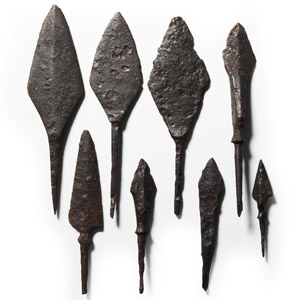
Medieval Iron Arrowhead Group
12th-15th century A.D.Sold for (Inc. bp): £169
Comprising tanged arrowheads of various types, including leaf-shaped, lozengiform, triangular and leaf-shaped examples, together with others. 66 grams total, 41-88 mm
Acquired on the German art market, before 2000. Ex German collection. The Kusmirek Collection, UK. -
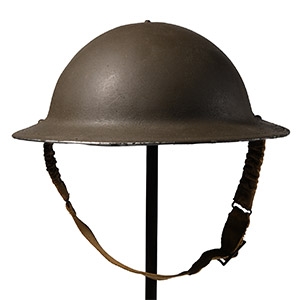
British WWII 'Tommy's' Helmet
1939-1945 A.D.Sold for (Inc. bp): £130
Standard issue steel helmet with leather liner and fabric chin-strap, finished green. 1.14 kg, 31 wide
The Kusmirek Collection, UK. -
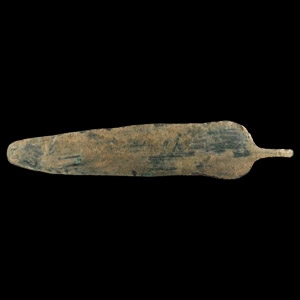
Luristan Bronze Spearhead
14th-10th century B.C.Estimate: £120 - 170 (+bp*)
Opening Bid: £60
Lanceolate profile with rounded tip and deep shoulders, short tang. 223 grams, 40 cm
Ex German collection, Cologne, 1980-1990s.
The metalworking techniques used in making bronze weapons in Luristan were very complex. Surfaces were often finished in repoussé work, and some of the weapons were chased, others engraved. The spearhead seems to belong to the type V (heavy spearheads) of the Khorasani's classification, having ovate blade with rounded and gently curved shoulders. Unfortunately the original mid-rib is today completely effaced.
