
Loading, please wait...
LOT 1050
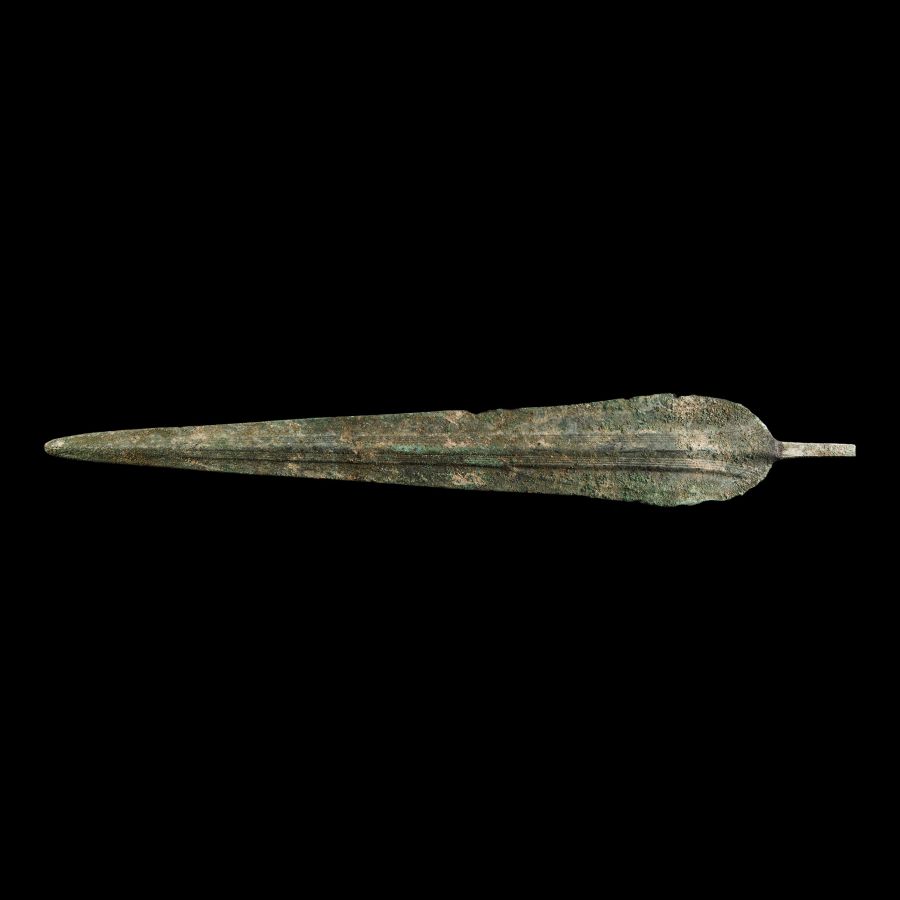
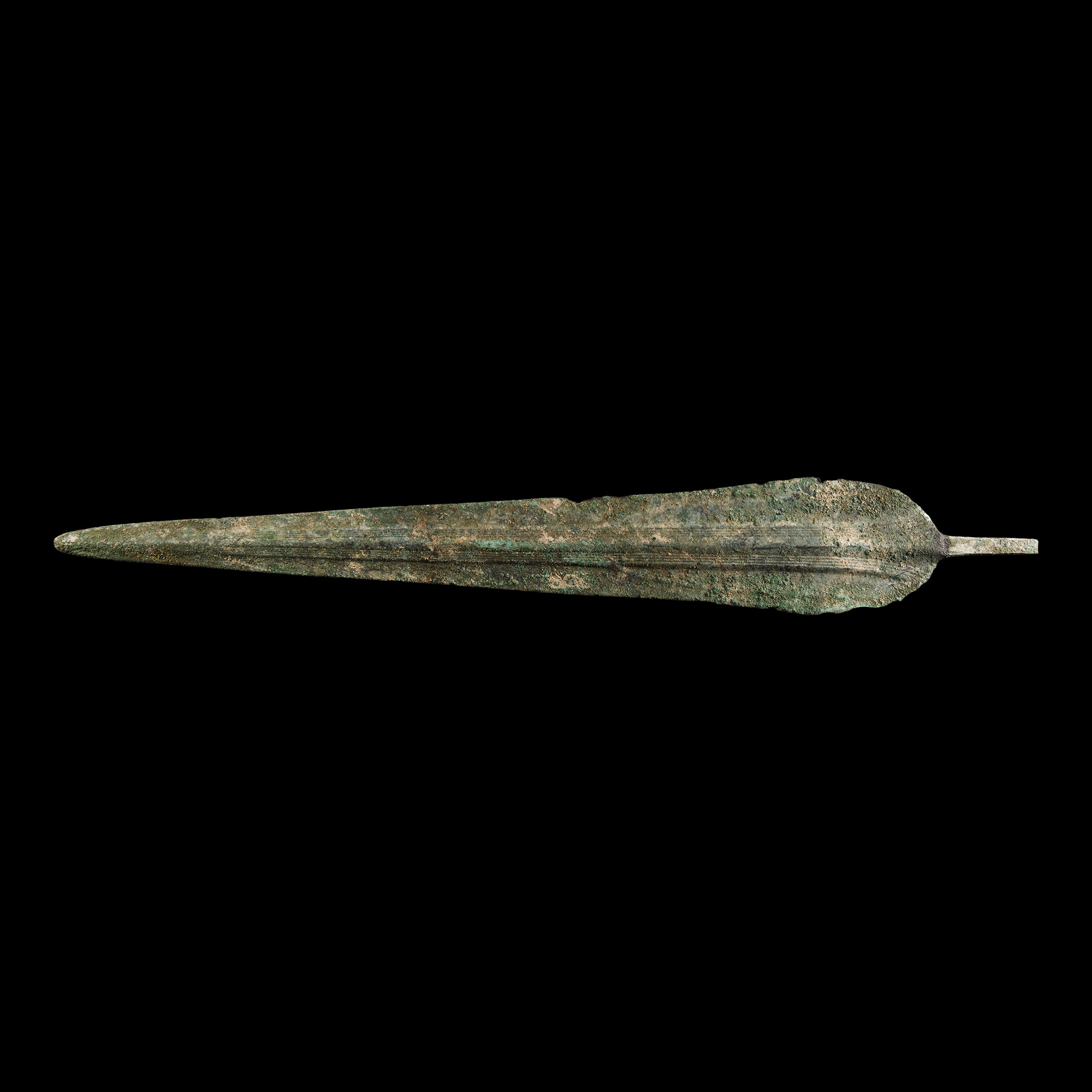
Luristan Bronze Sword Blade
1ST MILLENNIUM B.C.
18 in. (445 grams, 45.5 cm).
Comprising a narrow leaf-shaped blade with midrib and lateral channels, rounded shoulders, short tang with attachment hole.
ProvenanceEx German collection, Cologne, formed 1980s-1990.
The Kusmirek Collection, UK.
Cf. Christie's, The Axel Guttmann Collection of Ancient Arms and Armour, part 2, London, 2004, item 36, p.33.
FootnotesThe metalworking techniques used in making bronze weapons in early Iran were very complex. Surfaces were often finished in repoussé work, and some of the weapons were chased, others engraved. The function of the ridges here was not only decorative, however, but principally to reduce suction and thus allow the blade to be withdrawn speedily. The ruling elites of warrior horsemen were buried in the graves with their weapons and horses which are the main sources of the Luristan and North-Western bronze weapons.
CONDITIONTimeLine Auctions follows a vetting process to ensure the authenticity and legality of all items, reinforcing our commitment to integrity and responsible trading. Each antiquity, antique, and coin lot undergoes thorough examination by a vetting committee of at least ten external specialists, professional trade association members, scientists, and archaeologists: Our Vetting Process
AUCTIONS:
TimeLine is a leading auction house specialising in antiquities, ancient art, collectables, natural history, coins, medals, and books. Our auctions offer museums, collectors, historians, and enthusiasts the opportunity to acquire unique and historically significant pieces.
LOT 1050
Luristan Bronze Sword Blade
Estimate £200 - 300€230 - 350 (for guidance only)$270 - 410 (for guidance only)
-
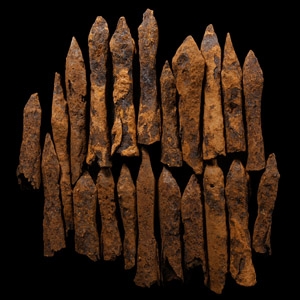
Medieval Iron Crossbow Bolt Group
Circa 12th-15th century A.D.Sold for (Inc. bp): £208
Composed of socketted bolts of various types, most with tapering or facetted square-section tips. 888 grams total, 5.4-10.3 cm
Acquired 1990s-early 2000s. East Anglian private collection. -
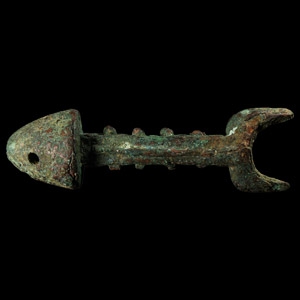
Luristan Bronze Sword Hilt
2nd millenium B.C.Sold for (Inc. bp): £234
With crescent-shaped guard to accept blade, square-section grip with central rib to two sides and four evenly-spaced studs to the other two, and a conical hollow-cast mushroom pommel pierced on three sides. 492 grams, 16.5 cm
Acquired in the early 1990s. Ex Guernsey collection. The Kusmirek Collection, UK. -
.jpg)
Luristan Bronze Blade Collection
Early 1st millennium B.C.Sold for (Inc. bp): £260
Comprising six bronze short tapering blades, all with rounded shoulders and flattened mid-ribs, four with tapering tangs, one with tang pierced at tip; one of the narrowest blades is without a tang. 485 grams total, 20-24 cm
Fine condition.
Acquired 1980-2015. Ex Abelita family collection.
Moorey, Gordon and Khorasani created a classification of bladed weapons, according to which daggers are edged weapons not greater than 36cm in length, dirks (short swords) are between 36cm and 50cm in length, and swords are edged weapons greater than 50cm in length. These weapons belong to the dagger category.
