
Loading, please wait...
LOT 0273
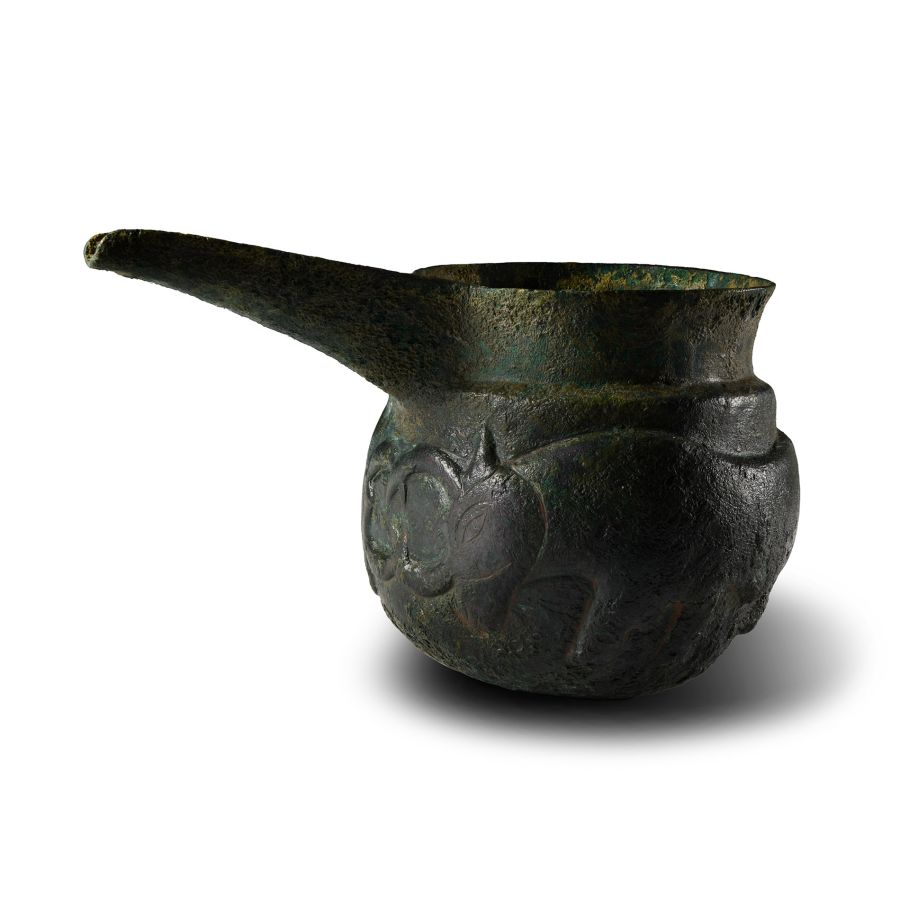
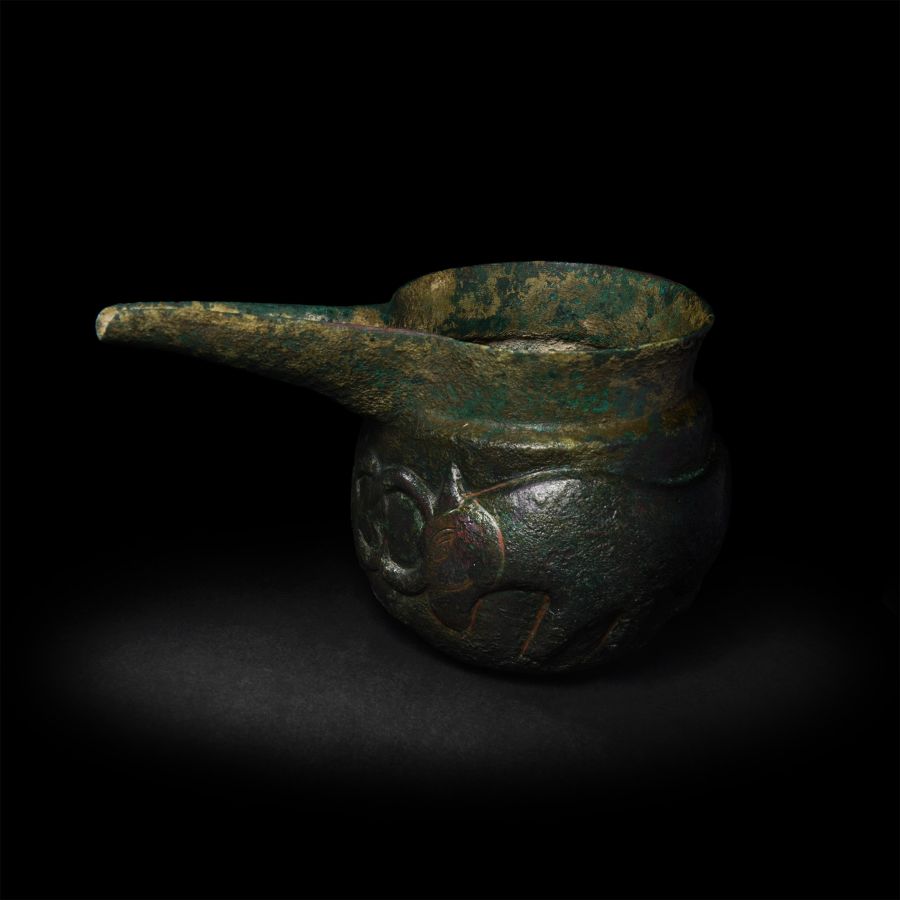
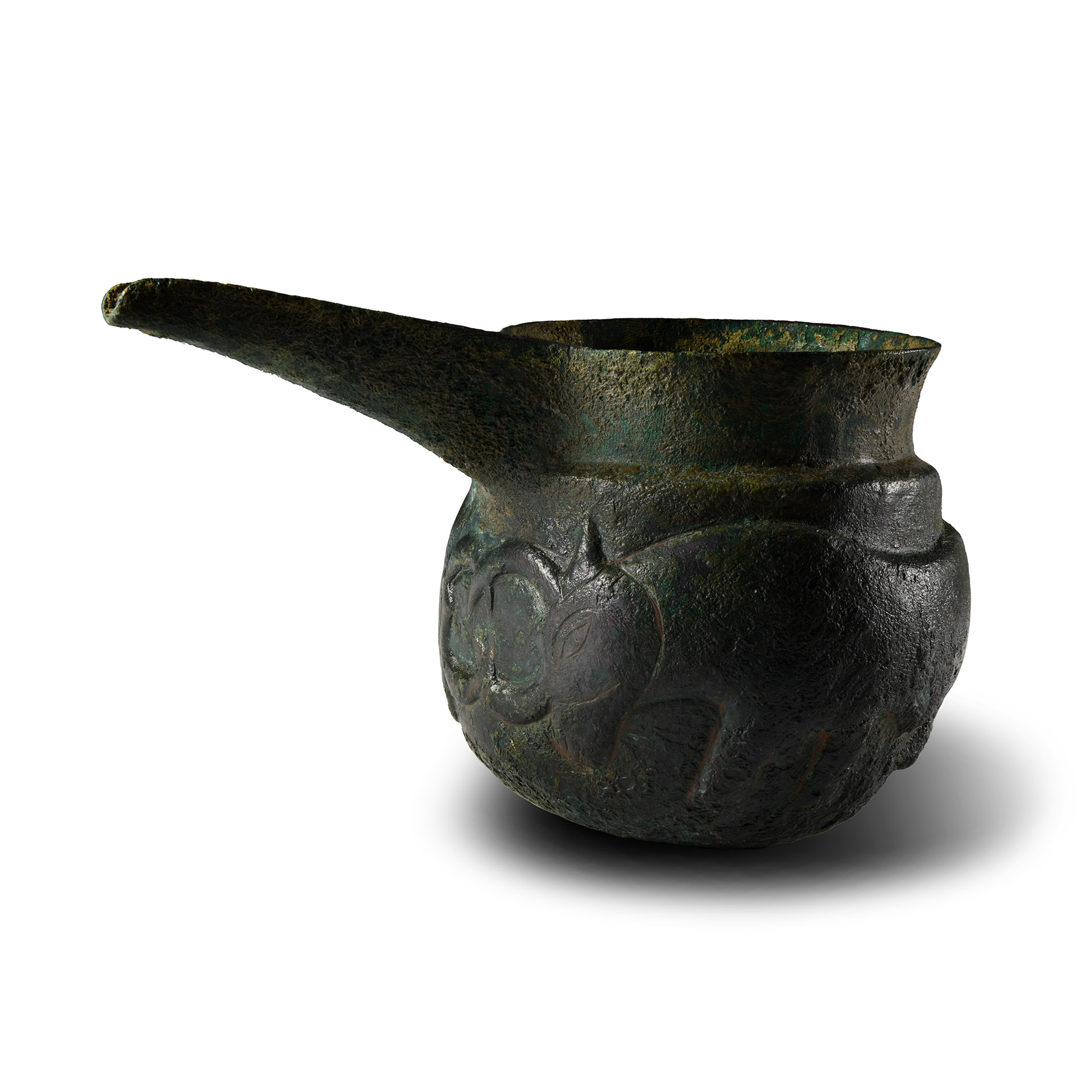
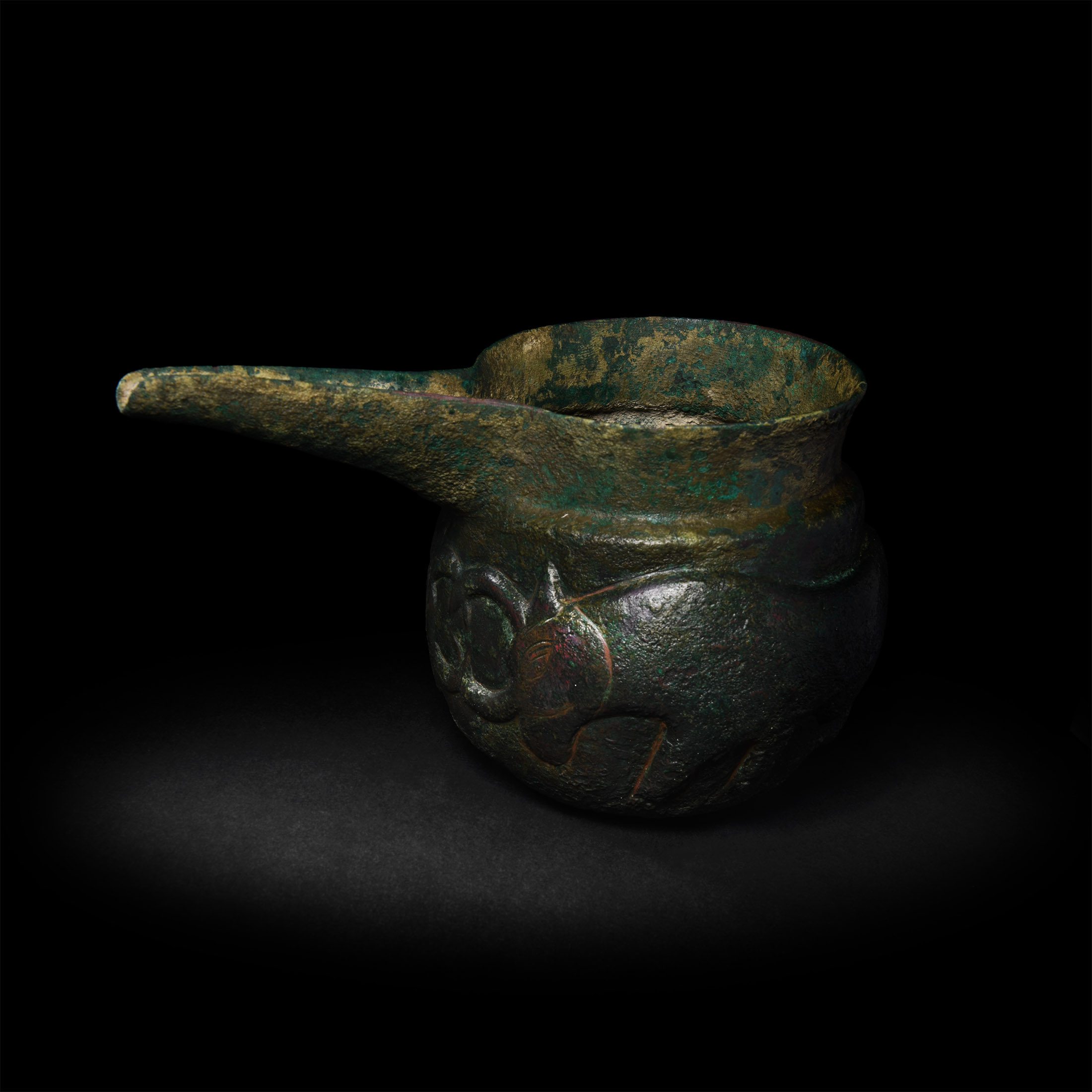
Luristan Bronze Spouted Vessel with Attacking Bulls
LATE 2ND MILLENNIUM B.C.
7 1/2 in. (496 grams, 19 cm wide).
Composed of a squat body, stepped shoulder, broad rim and U-section spout, the body displaying a frieze of repoussé fighting bulls, their heads lowered and horns interlocking beneath the spout.
ProvenanceAcquired before 1983.
Ex London gallery, 1990s.
This lot has been checked against the Interpol Database of stolen works of art and is accompanied by search certificate no.11352-191889.
Cf. Musees Paris, Bronzes du Luristan, Paris, 2008, p.69, for a similar vessel with different decorative scheme.
CONDITIONTimeLine Auctions follows a vetting process to ensure the authenticity and legality of all items, reinforcing our commitment to integrity and responsible trading. Each antiquity, antique, and coin lot undergoes thorough examination by a vetting committee of at least ten external specialists, professional trade association members, scientists, and archaeologists: Our Vetting Process
AUCTIONS:
TimeLine is a leading auction house specialising in antiquities, ancient art, collectables, natural history, coins, medals, and books. Our auctions offer museums, collectors, historians, and enthusiasts the opportunity to acquire unique and historically significant pieces.
LOT 0273
Luristan Bronze Spouted Vessel with Attacking Bulls
Estimate £1,200 - 1,700€1,390 - 1,970 (for guidance only)$1,620 - 2,300 (for guidance only)
-
Western Asiatic Mixed Bead Necklace String
1st millennium B.C. and laterSold for (Inc. bp): £20
Graduated group of mainly oblate glass beads with and a recent Indian barrel-shaped glass bead with etched white lattice as a centrepiece. 34 grams, 38 cm
Acquired 1980-2015. Ex Abelita family collection. -
Anatolian Violin Type Marble Idol
2500-2300 B.C.Sold for (Inc. bp): £2,340
The schematic figure with a shallow lentoid-shaped cross-section; mounted on a custom-made display base. 36 grams total, 94 mm high including stand
Acquired in Europe before 1995. This lot has been checked against the Interpol Database of stolen works of art and is accompanied by search certificate number no.11866-206514. -
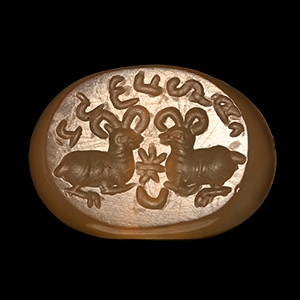
Sassanian Chalcedony Seal with Two Rams
3rd-7th century A.D.Sold for (Inc. bp): £442
With intaglio scene of two opposed rams with a star between and legend above. 808 grams, 23 mm
Acquired between 1980-1983. From the 'Empire' collection, an important UK private collection of seals.
