
Loading, please wait...
LOT 1029
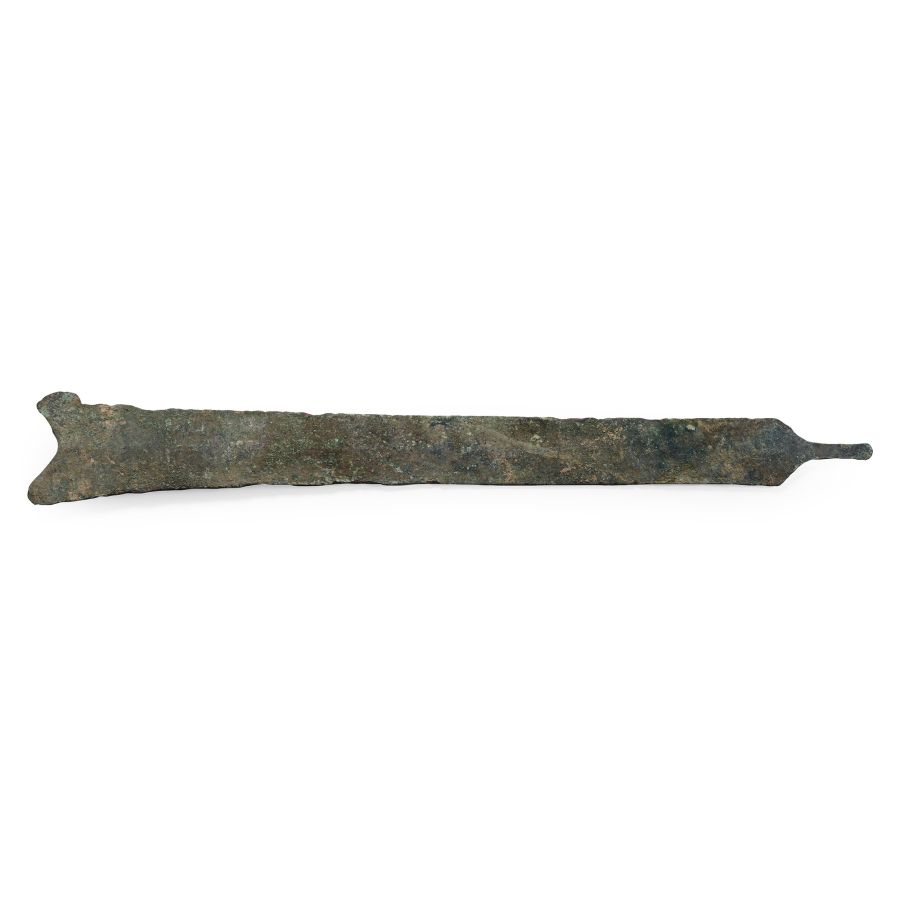
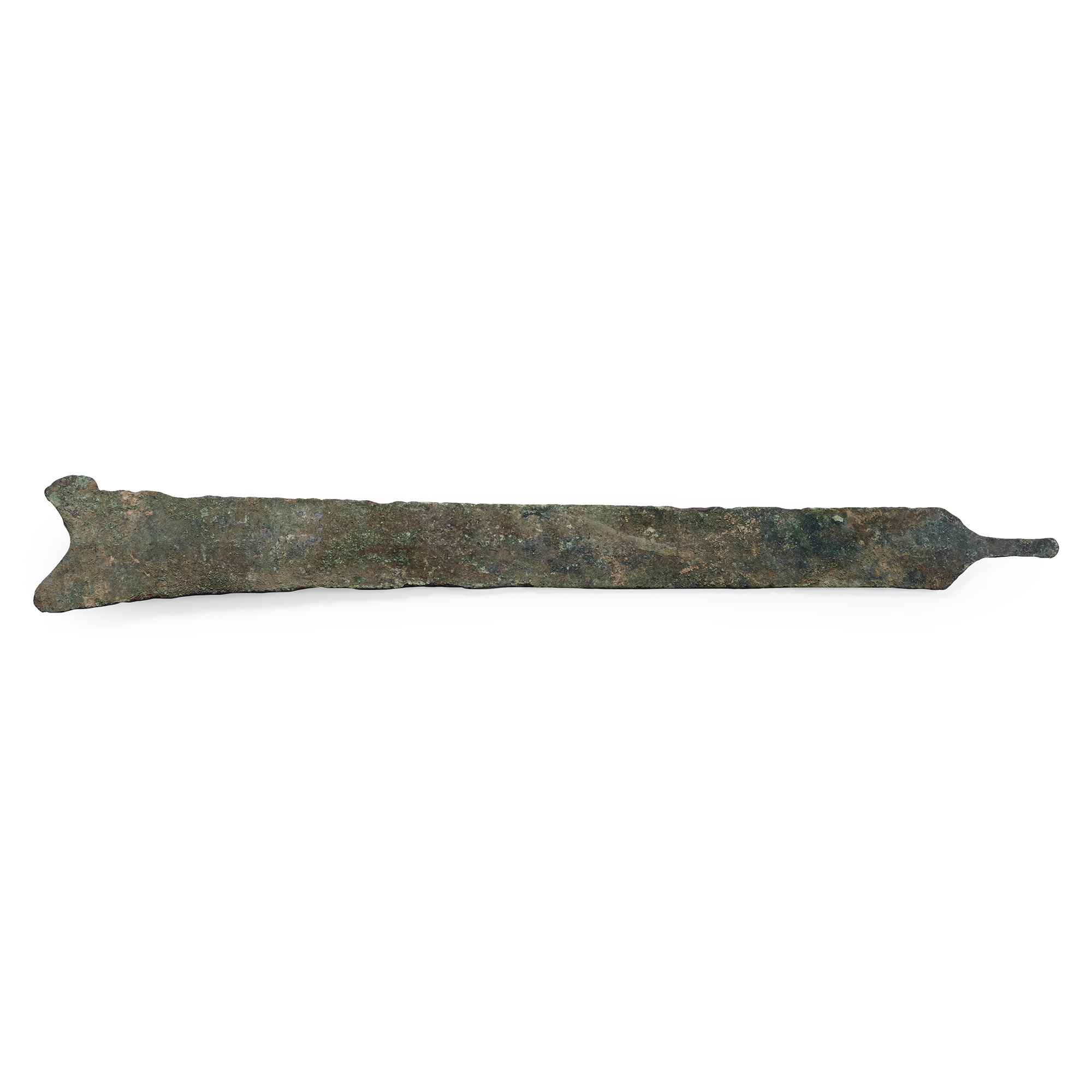
Luristan Bronze Splayed Spear Blade
2ND-1ST MILLENNIUM B.C.
13 3/4 in. (112 grams, 35 cm).
Double-edged blade widening at the tip and forming two points at the tip, short rectangular-section tang.
ProvenanceEx London art market, 1980-1990s.
This lot has been cleared against the Art Loss Register database, and is accompanied by an illustrated lot declaration signed by the Head of the Antiquities Department, Dr Raffaele D'Amato.
Cf. Sharifi, M., ‘The Middle Bronze Age in the Little Zab Basin in the Light of the Excavations at Barde Zard Tepe, Northwest Iran’ in Iranian Journal of Archaeological Studies’,2018, pp.39-56, fig.11, for similar but not identical tools.
FootnotesThis blade was probably for a short sword or dagger, which was transformed into a working tool.
CONDITIONTimeLine Auctions follows a vetting process to ensure the authenticity and legality of all items, reinforcing our commitment to integrity and responsible trading. Each antiquity, antique, and coin lot undergoes thorough examination by a vetting committee of at least ten external specialists, professional trade association members, scientists, and archaeologists: Our Vetting Process
AUCTIONS:
TimeLine is a leading auction house specialising in antiquities, ancient art, collectables, natural history, coins, medals, and books. Our auctions offer museums, collectors, historians, and enthusiasts the opportunity to acquire unique and historically significant pieces.
-
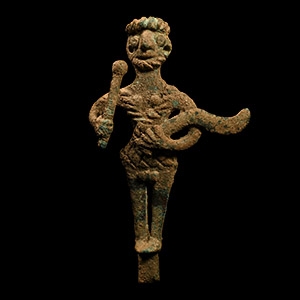
Canaanite Bronze Bearded Warrior God Holding Mace
Early 2nd millennium B.C.Sold for (Inc. bp): £4,420
Modelled in the round with braided headdress and hatched body, mace in the right hand and khopesh cradled in left arm. 109 grams, 12 cm
Acquired in Paris and London, 1970s. From a collection of Canaanite gods in bronze, from the collection of a London, UK, gentleman. This lot has been checked against the Interpol Database of stolen works of art and is accompanied by a search certificate number no.12699-234382. This lot has been cleared against the Art Loss Register database, and is accompanied by an illustrated lot declaration signed by the Head of the Antiquities Department, Dr Raffaele D'Amato. -
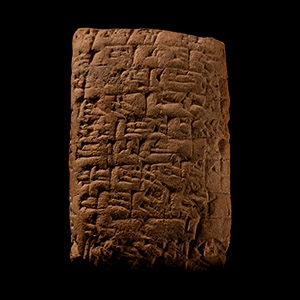
Old Babylonian Terracotta Cuneiform Tablet from 'Warad-Amurru' to 'Ubar-Shamash' Concerning Barley
19th-16th century B.C.Sold for (Inc. bp): £975
Pillow-shaped with impressed bands of cuneiform text to both broad faces, one edge and one end. 70 grams, 60 mm
Specialised collection of cuneiform texts, the property of a London gentleman and housed in London before 1988. Thence by descent to family members. Examined by Professor Wilfrid George Lambert FBA (1926-2011), historian, archaeologist, and specialist in Assyriology and Near Eastern archaeology, in the late 1980s and early 1990s. The collection is exceptional for the variety of types, including some very rare and well preserved examples. This lot has been cleared against the Art Loss Register database, and is accompanied by an illustrated lot declaration signed by the Head of the Antiquities Department, Dr Raffaele D'Amato. -
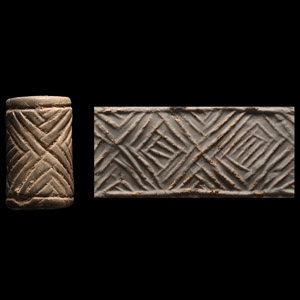
Proto-Sumerian Limestone Geometric Cylinder Seal
3rd millennium B.C.Sold for (Inc. bp): £91
With geometric design of hatched lozenges and concentric bands; supplied with a museum-quality impression. 16.3 grams, 29 mm
Acquired in the mid 1980-1985. Private collection, Switzerland, thence by descent. Private collection, since the late 1990s. This lot has been cleared against the Art Loss Register database, and is accompanied by an illustrated lot declaration signed by the Head of the Antiquities Department, Dr Raffaele D'Amato.
