
Loading, please wait...
LOT 1436
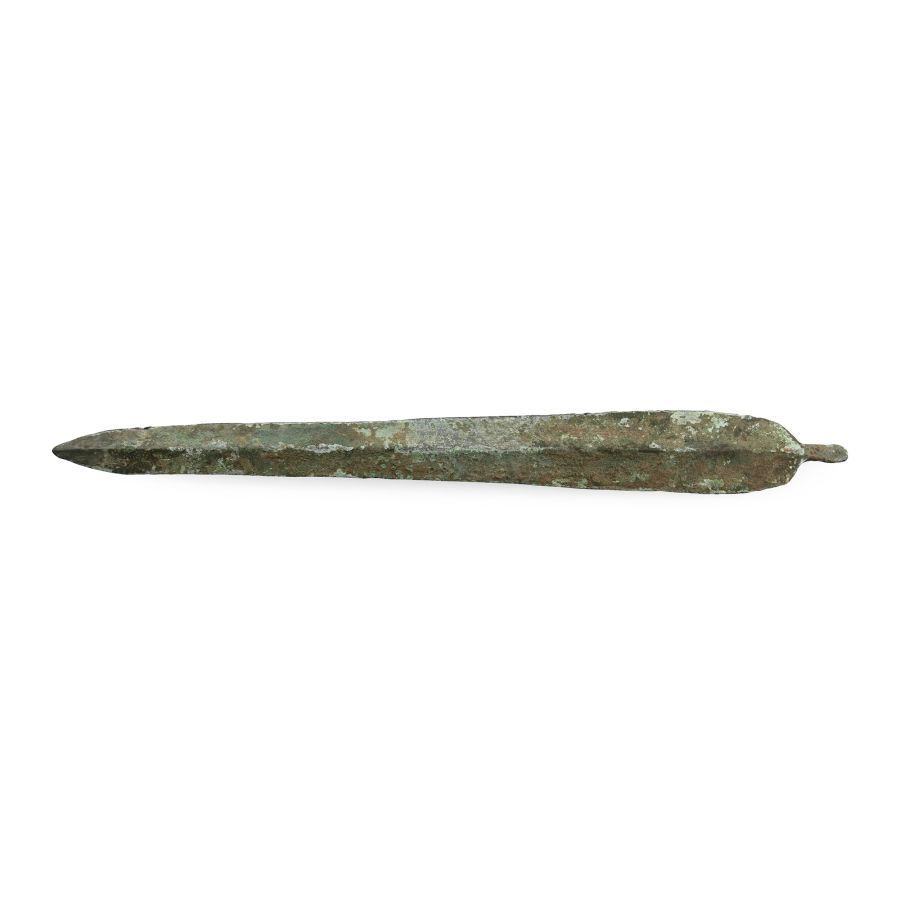
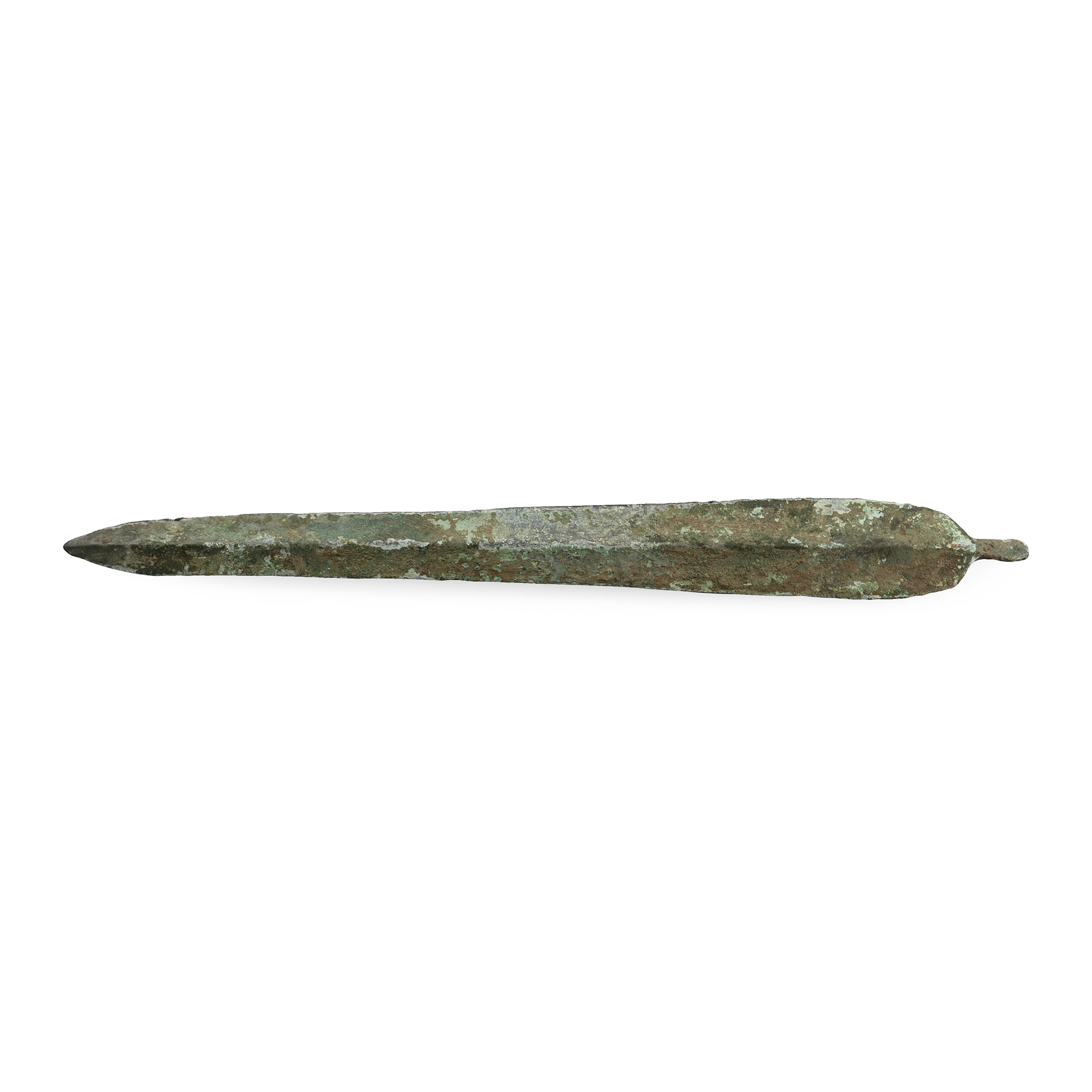
Luristan Bronze Spearhead
1ST MILLENNIUM B.C.
14 1/8 in. (262 grams, 36 cm).
With lentoid-section blade, median rib and curved shoulders, tapering towards the end, rectangular stub tang. [No Reserve]
ProvenanceEnglish private collection, late 1970s-early 1980s.
From the property of a late Lincolnshire, UK, gentleman.
Cf. Khorasani, M.M., Arms and Armor from Iran: The Bronze Age to the End of the Qajar Period, Tübingen, 2006, p.628, no.275, for type.
CONDITIONTimeLine Auctions follows a vetting process to ensure the authenticity and legality of all items, reinforcing our commitment to integrity and responsible trading. Each antiquity, antique, and coin lot undergoes thorough examination by a vetting committee of at least ten external specialists, professional trade association members, scientists, and archaeologists: Our Vetting Process
AUCTIONS:
TimeLine is a leading auction house specialising in antiquities, ancient art, collectables, natural history, coins, medals, and books. Our auctions offer museums, collectors, historians, and enthusiasts the opportunity to acquire unique and historically significant pieces.
-
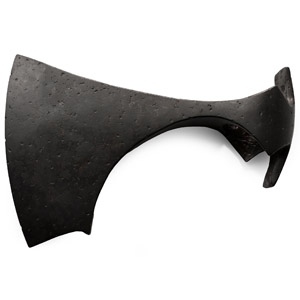
Viking Age Iron Socketted Bearded Axehead
Circa 10th-11th century A.D.Sold for (Inc. bp): £1,040
Finely curved broad blade with chin to the lower edge, rounded socket with lateral triangular extensions and a rectangular extension to the rear; professionally cleaned, conserved, and restored. 632 grams, 19 cm
Cleaned, conserved and restored.
From the family collection of a South East London collector; formerly acquired in the late 1950s.
This type of bearded axe seems to correspond to the E2 category of the Viking axe classification, but also has affinity with the Slavic type of axes Y. Usually these bearded axeheads (skeggöks) had a longer edge, designed to split tree trunks into planks and beams. Some of the bearded axes were known as halfÞynna öx; the neck on such a 'half thin axe' was thinly forged, to make it lighter. -
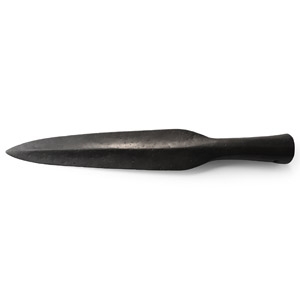
Very Large Finno-Ugrian Iron Socketted Spearhead
Circa 12th-13th century A.D.Sold for (Inc. bp): £111
Leaf-shaped blade with raised midrib extending to facetted-section tapering socket with fastening hole; professionally cleaned, conserved, and restored. 745 grams, 38.7 cm
Cleaned, conserved and restored.
From the family collection of a South East London collector; formerly acquired in the late 1950s.
The more common weapons of Finno-Ugrian people were axes commonly found from all Finnic areas, as well as spears. Among Baltic and Finnic people, especially in Finland and Karelia, knives called 'puukko' were common, as well as axes, spears, flat bows and longbows. Swords were usually imported from Germanic areas, Sweden, or from elsewhere in Scandinavia, some having often typically Scandinavian animal ornaments, although Finnish-made items have also been found. -
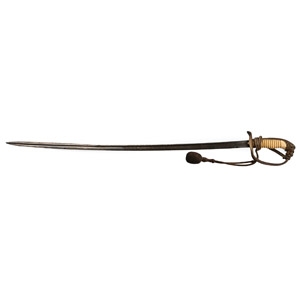
Kriegsmarine WWI German Naval Officer's Sword
Early 20th century A.D.Sold for (Inc. bp): £364
Comprising a slender single-edged blade with etched maritime design; the hilt composed of a ribbed bone handle, a lion-head pommel, and an ornate guard with a folding edge to one side. 728 grams, 87.5 cm
From the private collection of author and historian Dr DeWitt Bailey, one of the global authorities on the confederate army in the US civil war; thence by descent to his grandson.
