
Loading, please wait...
LOT 1455
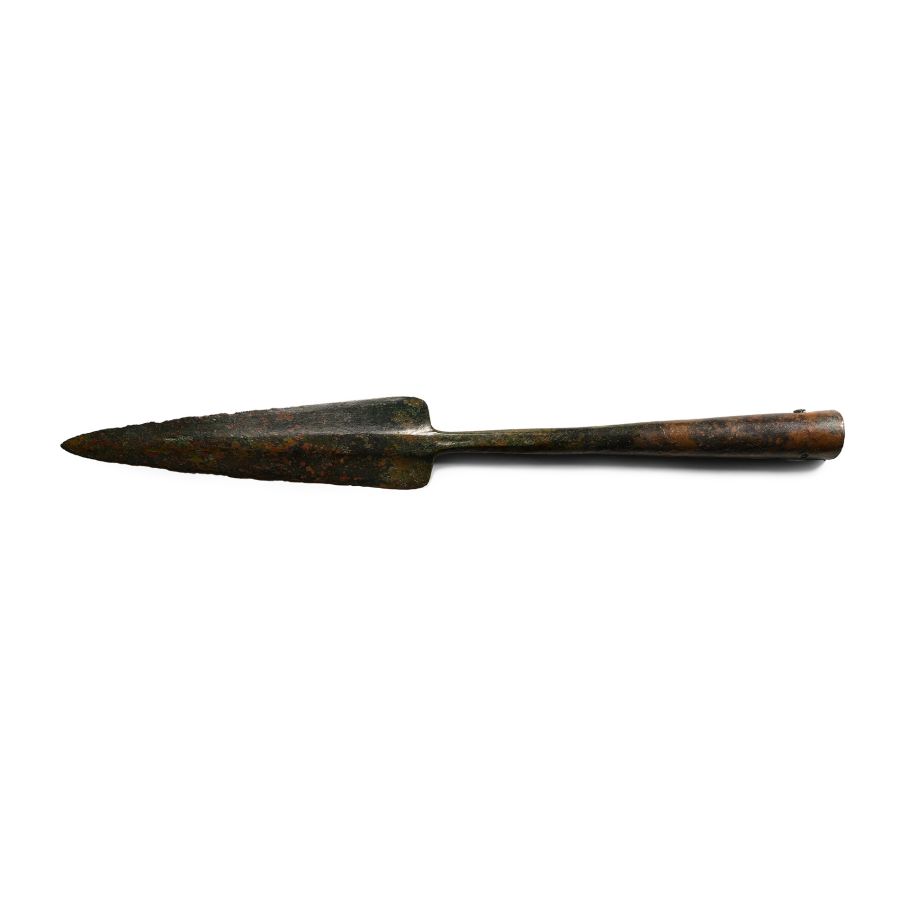
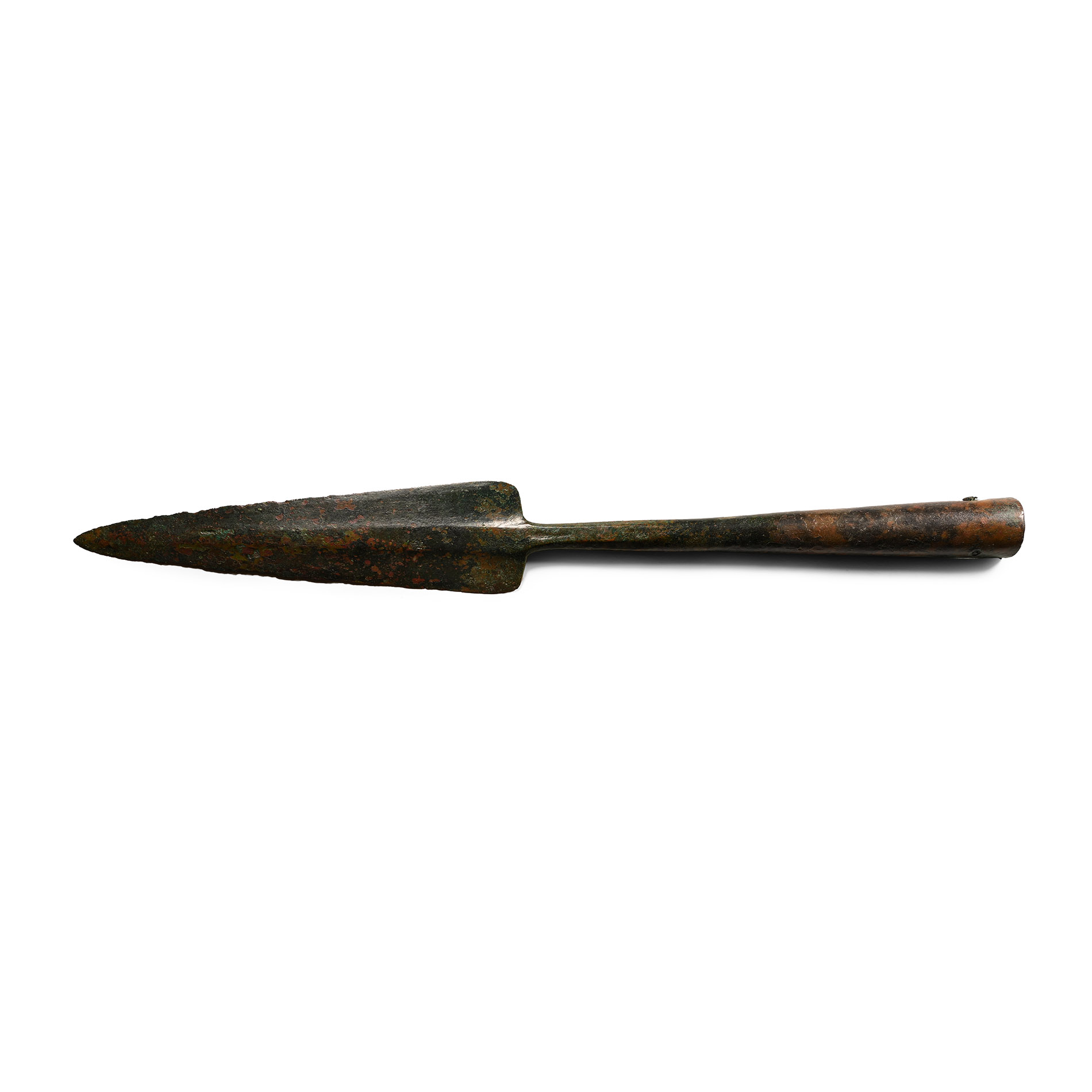
Luristan Bronze Spearhead
13TH-7TH CENTURY B.C.
17 1/4 in. (355 grams, 44 cm).
Composed of a leaf-shaped blade with tapering socket.
ProvenanceAcquired 1980-2015.
Ex Abelita family collection.
This lot is accompanied by an illustrated lot declaration signed by the Head of the Antiquities Department, Dr Raffaele D’Amato.
This lot is accompanied by an illustrated lot declaration signed by the Head of the Antiquities Department, Dr Raffaele D'Amato.
TimeLine Auctions follows a vetting process to ensure the authenticity and legality of all items, reinforcing our commitment to integrity and responsible trading. Each antiquity, antique, and coin lot undergoes thorough examination by a vetting committee of at least ten external specialists, professional trade association members, scientists, and archaeologists: Our Vetting Process
AUCTIONS:
TimeLine is a leading auction house specialising in antiquities, ancient art, collectables, natural history, coins, medals, and books. Our auctions offer museums, collectors, historians, and enthusiasts the opportunity to acquire unique and historically significant pieces.
-
.jpg)
Viking Age Iron Bearded Axehead
11th-13th century A.D.Sold for (Inc. bp): £169
With triangular section narrow blade widening to a curved bevelled edge with square chin and butt, D-section socket. 633 grams, 15.5 cm
From the private collection of a London gentleman, from his grandfather's collection formed before the early 1970s. This lot is accompanied by an illustrated lot declaration signed by the Head of the Antiquities Department, Dr Raffaele D'Amato. -
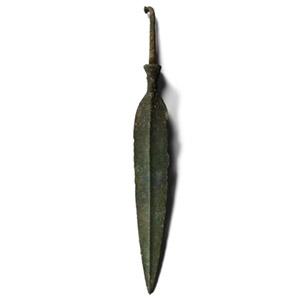
Large Luristan Bronze Spearhead
Late 3rd millennium B.C.Sold for (Inc. bp): £117
Leaf-shaped blade with pronounced midrib and thick neck, flared base, square-section tang with stud. 504 grams, 41cm
Ex London art market, 1980-1990s. This lot is accompanied by an illustrated lot declaration signed by the Head of the Antiquities Department, Dr Raffaele D'Amato.
The type belongs to the category of tripartite lances with long pointed biconvex blade and single bevelled tang. In this typology the blade, of rhomboidal section, is usually well balanced. The stem, medium or short, is widened at its base and forms a fairly clean stop. Elements of shaft of a similar spear found at Tepe Hissar has allowed to reconstruct the length of the spear reaching up to 1.40 m. -
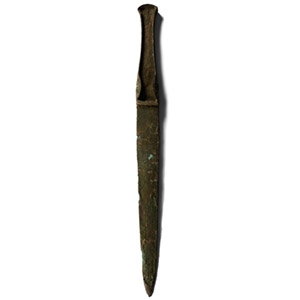
Luristan Bronze Dirk
12th century B.C.Sold for (Inc. bp): £195
With lentoid-section blade, integral tapering hilt with flared finial, lateral flanges to accept a panel of bone or wood to each face forming the grip. 283 grams, 40 cm
Ex London art market, 1980-1990s. This lot is accompanied by an illustrated lot declaration signed by the Head of the Antiquities Department, Dr Raffaele D'Amato.
The dirk belongs to the type IIIa of the Medvedskaya classification. In these specimens handle and blade are cast in one piece. In Luristan, daggers produced up until the second half of the 2nd millennium B.C. were simple bronze or copper blades with the tangs attached by rivets to a handle made of organic material.
