
Loading, please wait...
LOT 1344
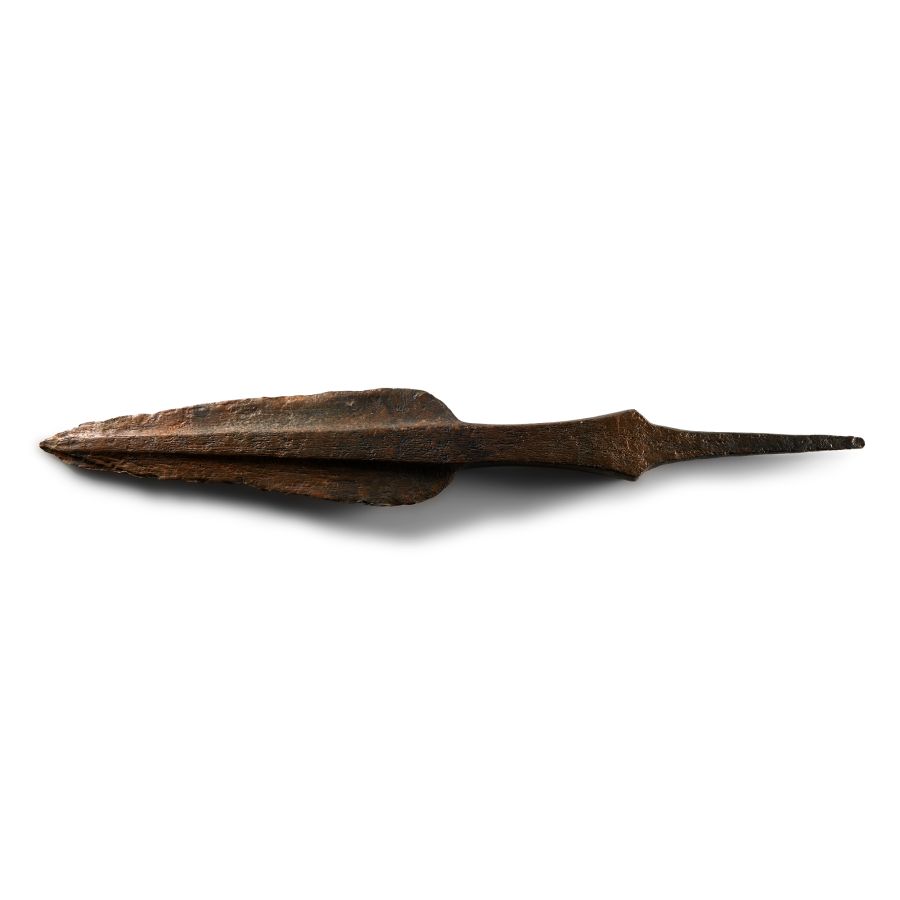
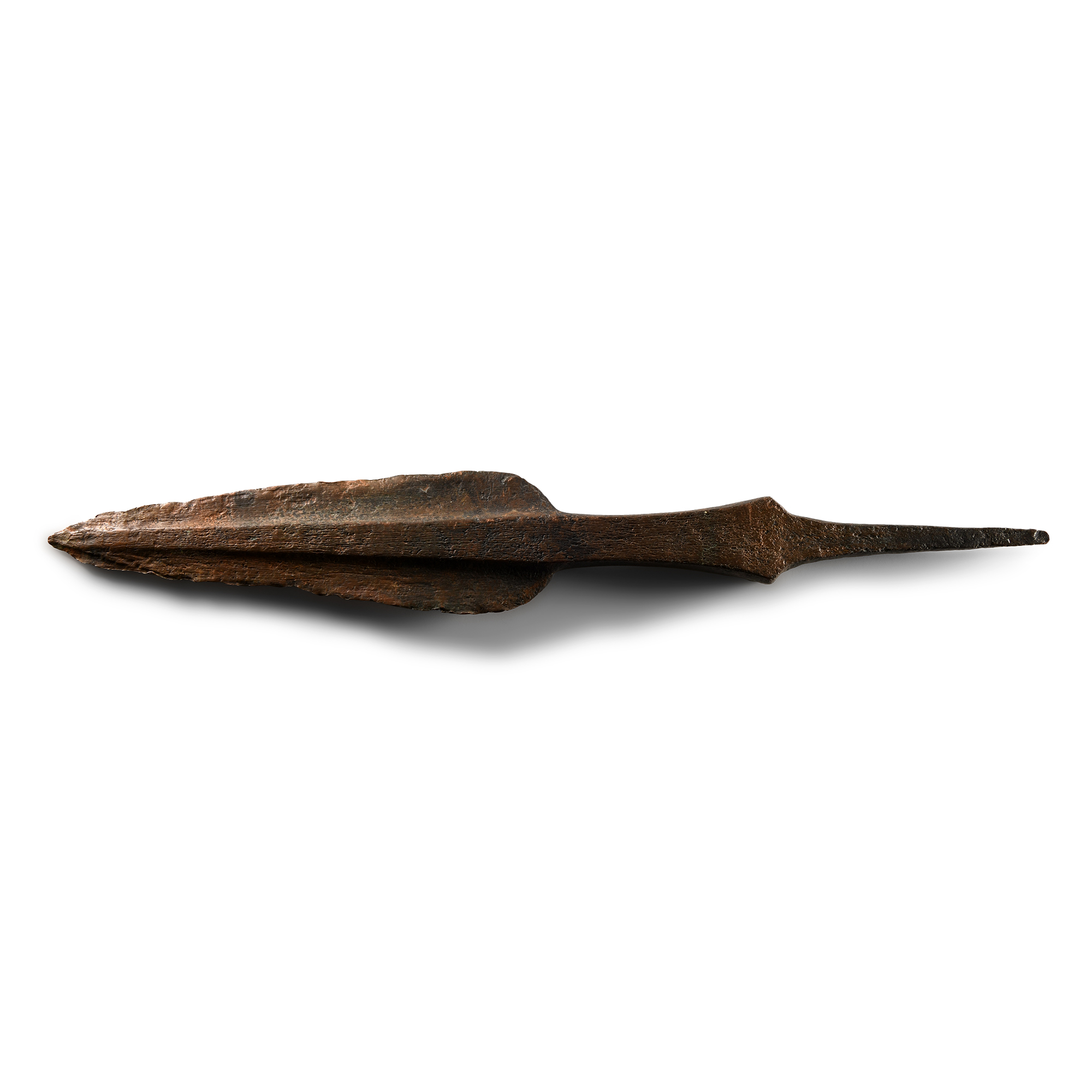
Luristan Bronze Spearhead
13TH-7TH CENTURY B.C.
11 3/4 in. (310 grams, 30 cm).
With broad leaf-shaped blade, thick square-section midrib, flared shoulder and substantial tang.
ProvenanceFrom an old English collection formed in the 1980s.
Property of an Essex gentleman; acquired on the UK art market.
Cf. Khorasani, M.M., Arms and Armour from Iran. The Bronze Age to the End of the Qajar Period, Tübingen, 2006, p.630, no.280.
CONDITIONTimeLine Auctions follows a vetting process to ensure the authenticity and legality of all items, reinforcing our commitment to integrity and responsible trading. Each antiquity, antique, and coin lot undergoes thorough examination by a vetting committee of at least ten external specialists, professional trade association members, scientists, and archaeologists: Our Vetting Process
AUCTIONS:
TimeLine is a leading auction house specialising in antiquities, ancient art, collectables, natural history, coins, medals, and books. Our auctions offer museums, collectors, historians, and enthusiasts the opportunity to acquire unique and historically significant pieces.
LOT 1344
Luristan Bronze Spearhead
Estimate £100 - 140€120 - 160 (for guidance only)$140 - 190 (for guidance only)
-
Roman Pattern-Welded Iron Spatha with Inlaid Military Figure
Late 2nd-early 3rd century A.D.Sold for (Inc. bp): £5,850
With double-edged blade of Lauriacum Hromówka typology with blood channels running for the most of its length; inlaid figure of standing Mars Ultor wearing armour (statos) and plumed galea helmet, holding a shield (aspis) and a spear; the blade cleaned and conserved on one side. 467 grams, 82 cm
From the private collection of a London gentleman, from his grandfather's collection formed before the early 1970s. Accompanied by an academic report by Dr Raffaele D’Amato. This lot has been checked against the Interpol Database of stolen works of art and is accompanied by search certificate number no.11922-209659. -
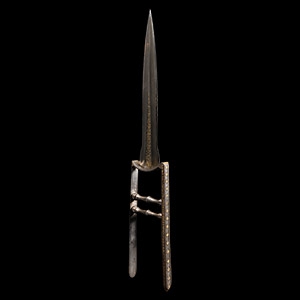
Indian Quatar Iron Dagger
18th-19th century A.D.Estimate: £1,000 - 1,400 (+bp*)
Opening Bid: £550
Comprising a broad blade tapering to an armour-piercing point, the steel side bars and balustered grips decorated with copper Koftgari work flowers and scrolls. 488 grams, 48 cm
General condition very good.
Property of a London gallery.
Unique to South Asia, the quatar or katar was a dagger that held at the crossbars with a clenched fist. The weapon was meant to be thrust into the opponent or prey from a close range. Rajput and Mughal royalty used this weapon to hunt tigers and even crocodiles to demonstrate their bravery and martial skill. -
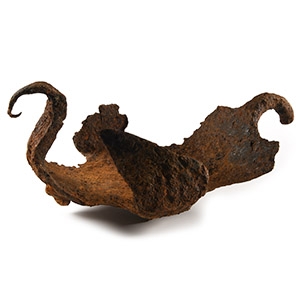
Roman Iron 'Hipposandal' Military Ice Horseshoe
1st-4th century A.D.Sold for (Inc. bp): £390
With lateral curved plates and scrolled bar to the front, rear panel with hooked spur for attachment. 617 grams, 21 cm
From a collection acquired on the UK art market from various auction houses and collections mostly before 2000. From an important Cambridgeshire estate; thence by descent.
Hipposandals (soleae ferreae) were used on horses with injured hooves, a sort of equine orthopaedic shoe used by the mulomedicus, i.e. a Roman military veterinarian. Another important function was that to protect the hooves of the horse from injuries and damages from hard objects. The hipposandal of type 1 was formed from a sub-oval plate which tapered towards the front and rear with projections at the front, back and on either side. The heel was upturned at about 45 degrees and flared outwards. It would have terminated with a downward facing hook, now missing. The base of the sole was flat.
