
Loading, please wait...
LOT 1045
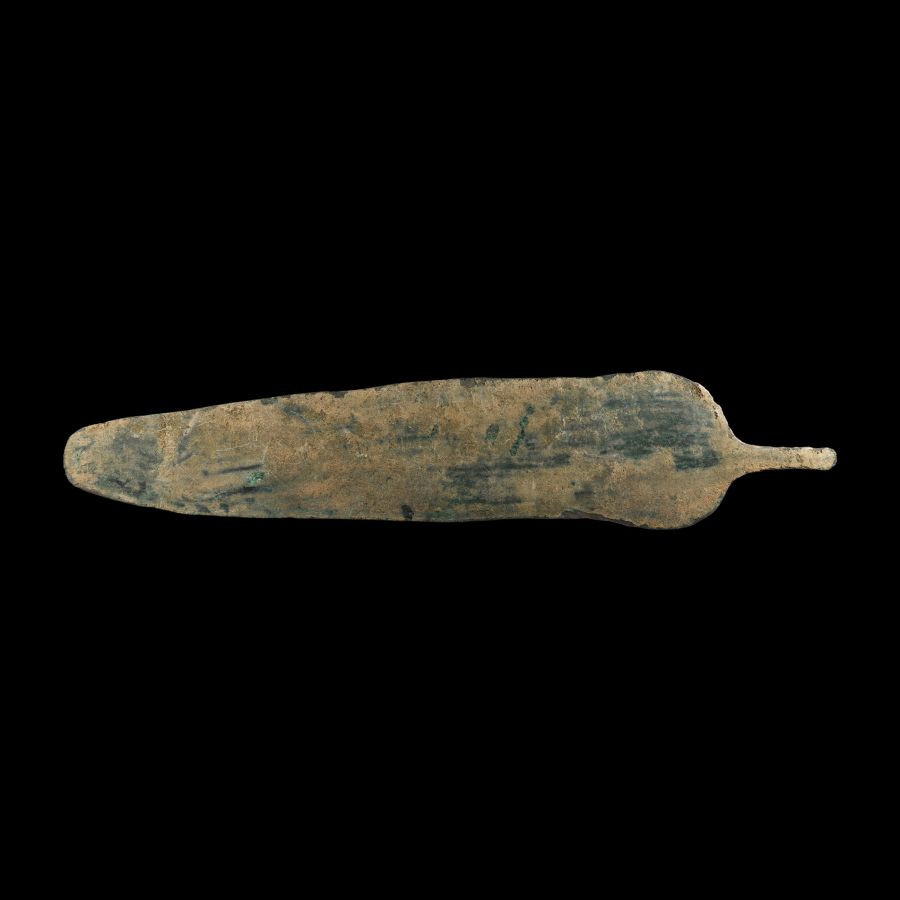
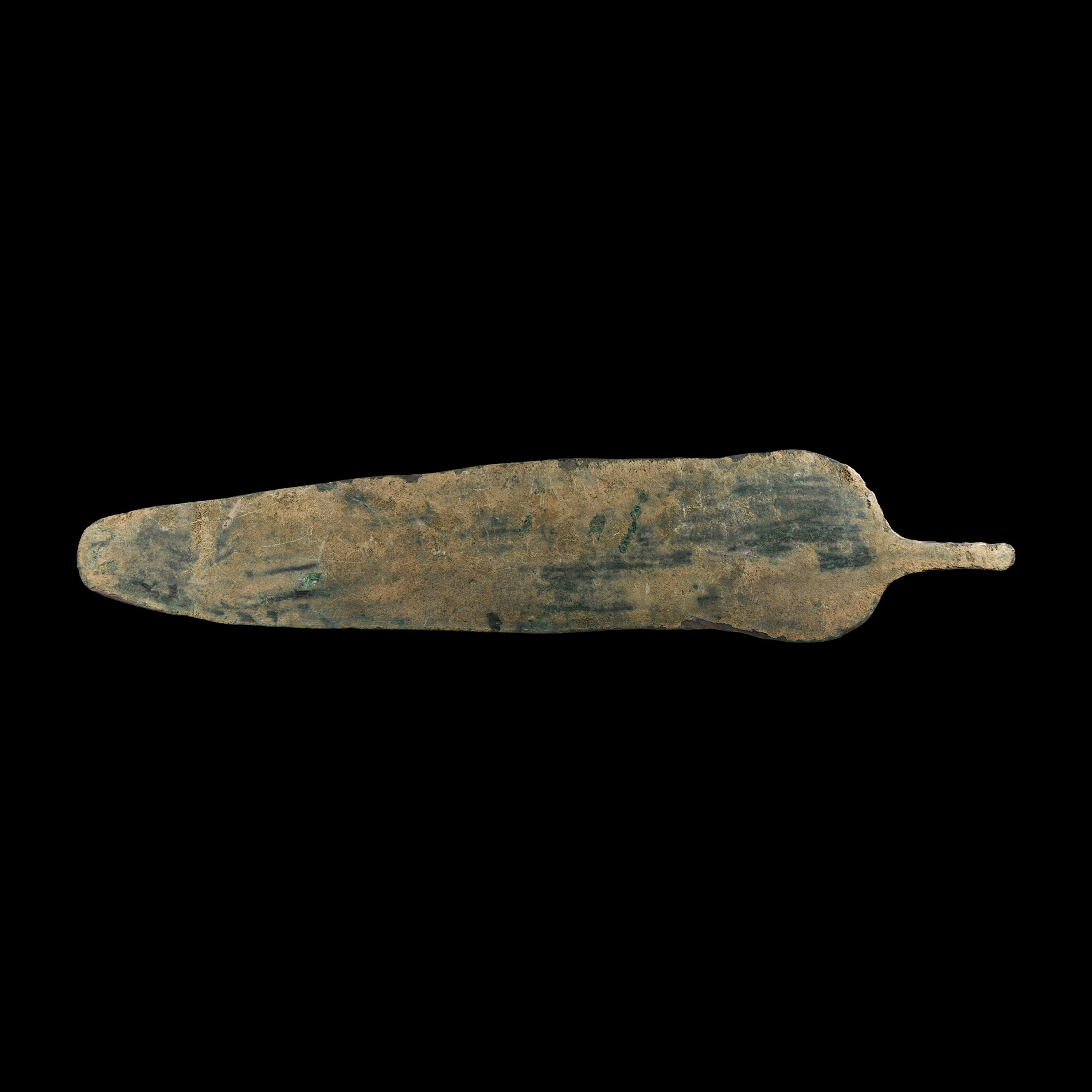
Luristan Bronze Spearhead
14TH-10TH CENTURY B.C.
15 3/4 in. (223 grams, 40 cm).
Lanceolate profile with rounded tip and deep shoulders, short tang.
ProvenanceEx German collection, Cologne, 1980-1990s.
LiteratureCf. Khorasani, M.M., Arms and Armour from Iran. The Bronze Age to the End of the Qajar Period, Tübingen, 2006, s. cat 270, for type;.Béguin, G., Bronzes du Luristan. Énigmes de l'Iran Ancien IIIe - Ier millénaire avant J.C., Paris, 2008, p38.
FootnotesThe metalworking techniques used in making bronze weapons in Luristan were very complex. Surfaces were often finished in repoussé work, and some of the weapons were chased, others engraved. The spearhead seems to belong to the type V (heavy spearheads) of the Khorasani's classification, having ovate blade with rounded and gently curved shoulders. Unfortunately the original mid-rib is today completely effaced.
CONDITIONTimeLine Auctions follows a vetting process to ensure the authenticity and legality of all items, reinforcing our commitment to integrity and responsible trading. Each antiquity, antique, and coin lot undergoes thorough examination by a vetting committee of at least ten external specialists, professional trade association members, scientists, and archaeologists: Our Vetting Process
AUCTIONS:
TimeLine is a leading auction house specialising in antiquities, ancient art, collectables, natural history, coins, medals, and books. Our auctions offer museums, collectors, historians, and enthusiasts the opportunity to acquire unique and historically significant pieces.
LOT 1045
Luristan Bronze Spearhead
Estimate £120 - 170€140 - 200 (for guidance only)$160 - 230 (for guidance only)
-
.jpg)
Nathan Starr 1816 Pattern Musket
1832 A.D.Sold for (Inc. bp): £715
Type III, made under contract by Nathan Starr of Middletown, CT; with .69 calibre, 107 cm (42”) browned barrel with side lock marked with Starr’s earlier style of 'US / (ornate sunburst) / N. STARR' ahead of the cock and 'MIDDTN / CONN / 1832 / (rosette)' to the rear with 'US / JM' over a raised 'P' in sunken circular cartouche to top of breech, with various inspection and other small marks, fitted with sling swivels (upper possibly a replacement), steel ramrod with flared tip, full wood stock with steel butt plate, trigger guard, side-plate, barrel rings and fore-end, lock with brass pan; action in good working order. 4.10 kg, 148 cm
Acquired from M J Noble Ltd, UK, 2015. The Kusmirek Collection, UK. Accompanied by the Noble purchase invoice and listing.
Sold as an exempt item under Section 58 (2) of the Firearms Act, 1968, to be held as a curiosity or ornament. No license required but buyer must be over 18 years of age. Overseas bidders should note that, due to UK regulations governing export of all firearms, overseas buyers will need to make arrangements for shipping this lot out of the UK directly, by air freight, with a specialist company or agent. -
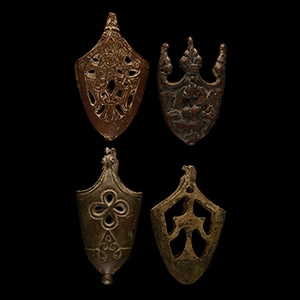
Viking Age Bronze Sword Scabbard Chape Collection
9th-11th century A.D.Sold for (Inc. bp): £715
Comprising: one heater-shaped with openwork raven motif to each face; one similar with openwork raven enmeshed in tendrils; one with fleur-de-lys to the centre of each upper edge and a lobed spur to each side; one with openwork quatrefoil to each face and knop finial to the apex. 145 grams total, 55-85 mm
From the collection of a North American gentleman, formed in the 1990s. -
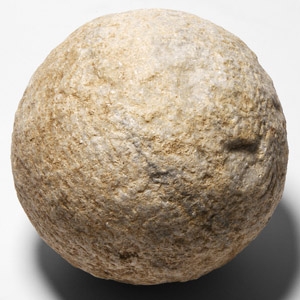
Roman Marble Ballista Catapult Shot
1st-3rd century A.D.Sold for (Inc. bp): £169
Suitable for use with an onager or other catapult-type siege weapon; with smooth surface. 1.4 kg, 10 cm
Acquired 1971-1972. From the collection of the vendor's father. Property of a London, UK, collector.
The operation of the onager (Latin for 'wild ass') is first mentioned in 353 A.D. by Ammianus Marcellinus in his Res Gestae and more fully in Vegetius's Epitoma Rei Militaris probably written in the reign of Emperor Theodosius I (378-395 A.D.).
