
Loading, please wait...
LOT 1482
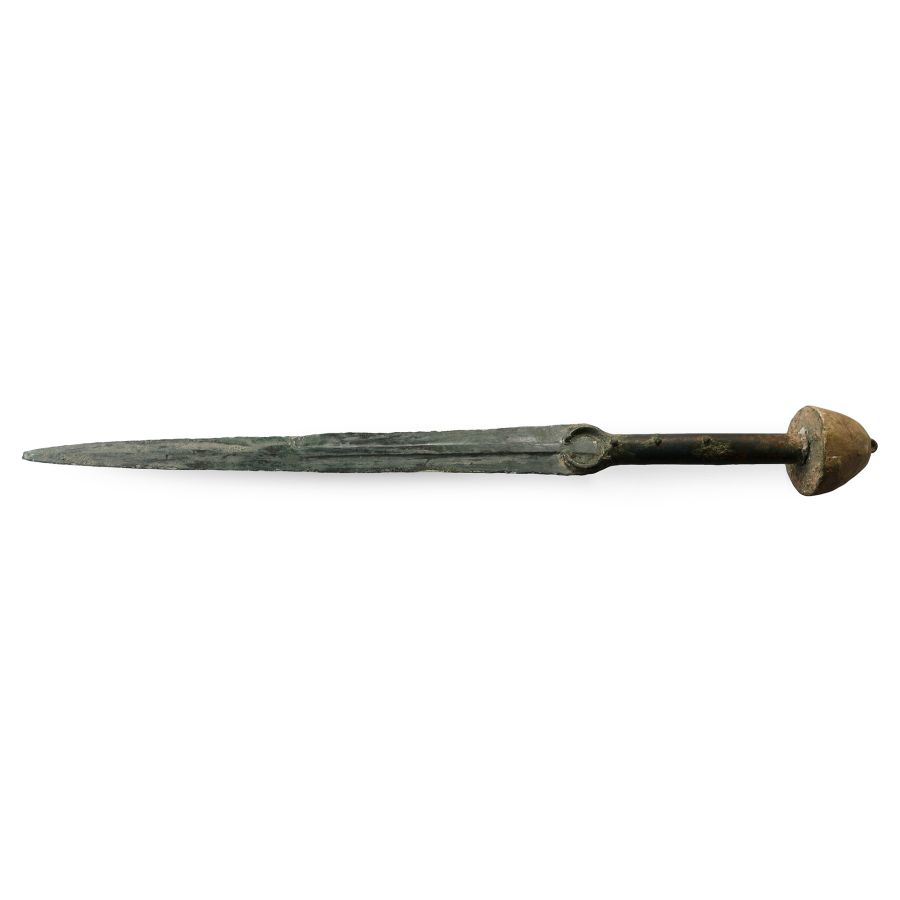
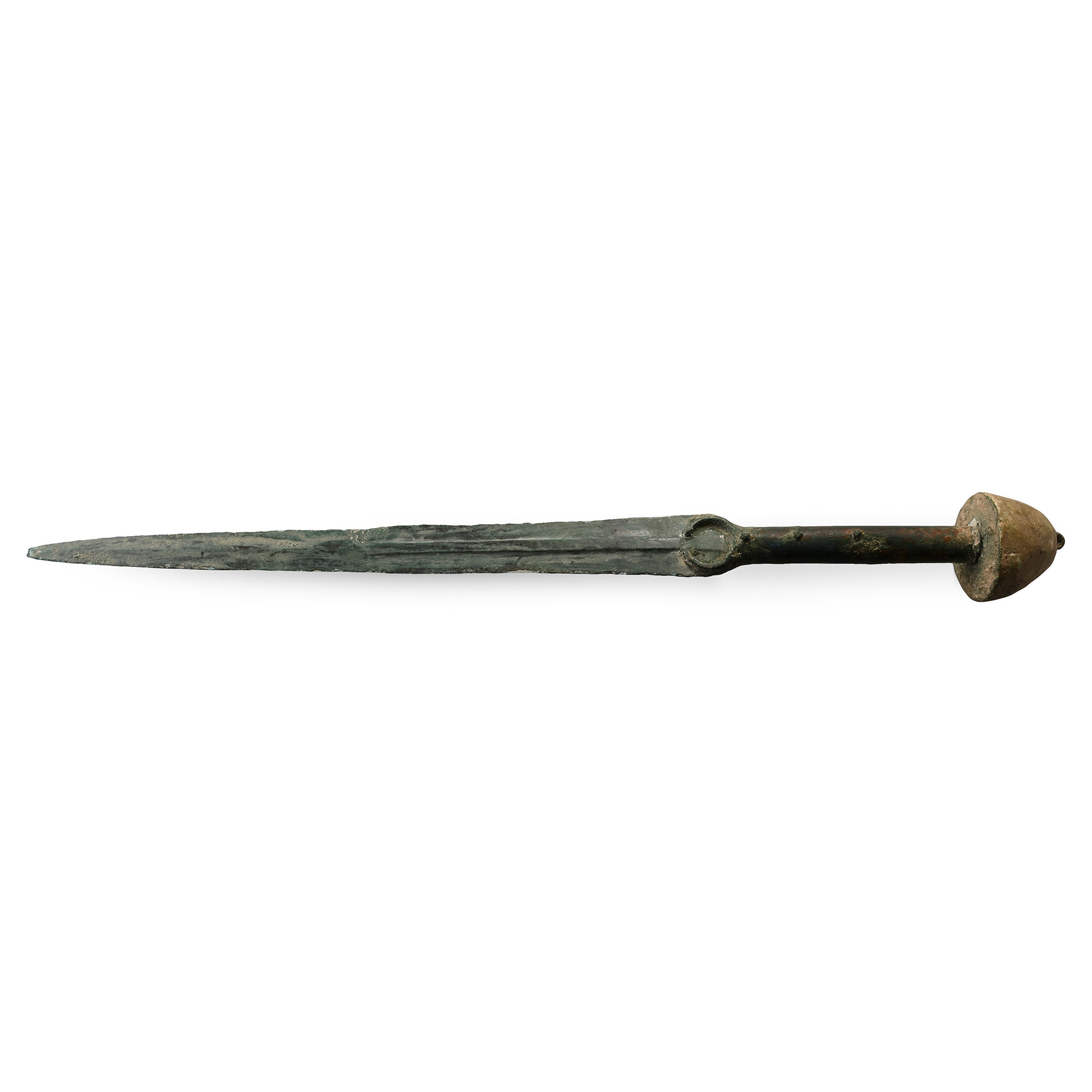
Luristan Bronze Short Sword
2ND-1ST MILLENNIUM B.C. AND LATER
22 7/8 in. (521 grams, 58 cm).
With leaf-shaped two-edged blade, crescent guard; restored hilt with columnar grip and stone pommel. [No Reserve]
ProvenanceFrom a North West London collection; previously acquired in the 1980s.
CONDITIONTimeLine Auctions follows a vetting process to ensure the authenticity and legality of all items, reinforcing our commitment to integrity and responsible trading. Each antiquity, antique, and coin lot undergoes thorough examination by a vetting committee of at least ten external specialists, professional trade association members, scientists, and archaeologists: Our Vetting Process
AUCTIONS:
TimeLine is a leading auction house specialising in antiquities, ancient art, collectables, natural history, coins, medals, and books. Our auctions offer museums, collectors, historians, and enthusiasts the opportunity to acquire unique and historically significant pieces.
-
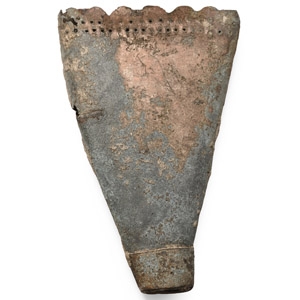
Medieval Bronze Sword Chape
15th-16th century A.D.Sold for (Inc. bp): £20
Scalloped border on the upper edge, sharply tapering body with collar at the narrow end. 16.7 grams, 71 mm
Ex European collection, 1990s. Ex Cambridgeshire, UK, collection. -
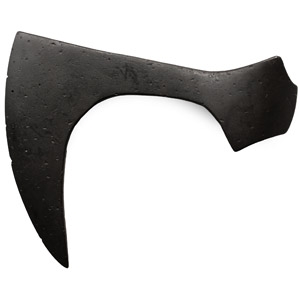
Viking Age Iron Socketted Hooked Axehead
Circa 9th-12th century A.D.Sold for (Inc. bp): £260
With long, deeply curved blade, short neck, socket with triangular wings above and below; professionally cleaned, conserved, and restored. 460 grams, 15 cm
Cleaned, conserved and restored.
From the family collection of a South East London collector; formerly acquired in the late 1950s.
These axes are typical of Baltic workmanship. During this age, the axes were the favourite weapons of many Baltic people, including the Curonian army which included lightly armed soldiers who fought with spears, shields, fighting knives and axes. A heavily armed soldier could also carry a sword, a helmet, a shield, and a wide-bladed axe. -
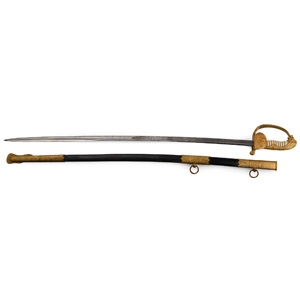
Kriegsmarine WWI German Naval Officer's Sword and Scabbard
Early 20th century A.D.Sold for (Inc. bp): £780
Comprising a slender single-edged blade with etched maritime designs; the hilt composed of a wire-bound ribbed bone handle, a lion-head pommel with inset eyes (one absent), and an ornate guard with folding edges, one side with a socket for securing the scabbard; accompanied by a leather scabbard with ornate metal fittings. 847 grams total, 93 cm
From the private collection of author and historian Dr DeWitt Bailey, one of the global authorities on the confederate army in the US civil war; thence by descent to his grandson.
