
Loading, please wait...
LOT 1437
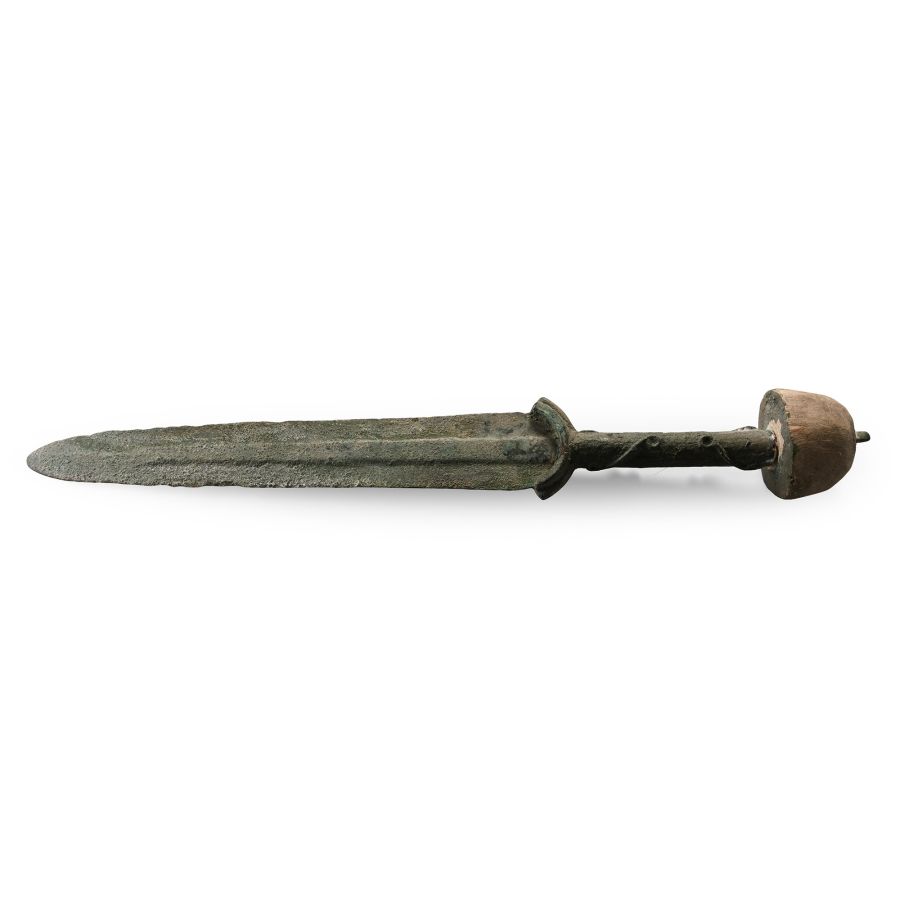
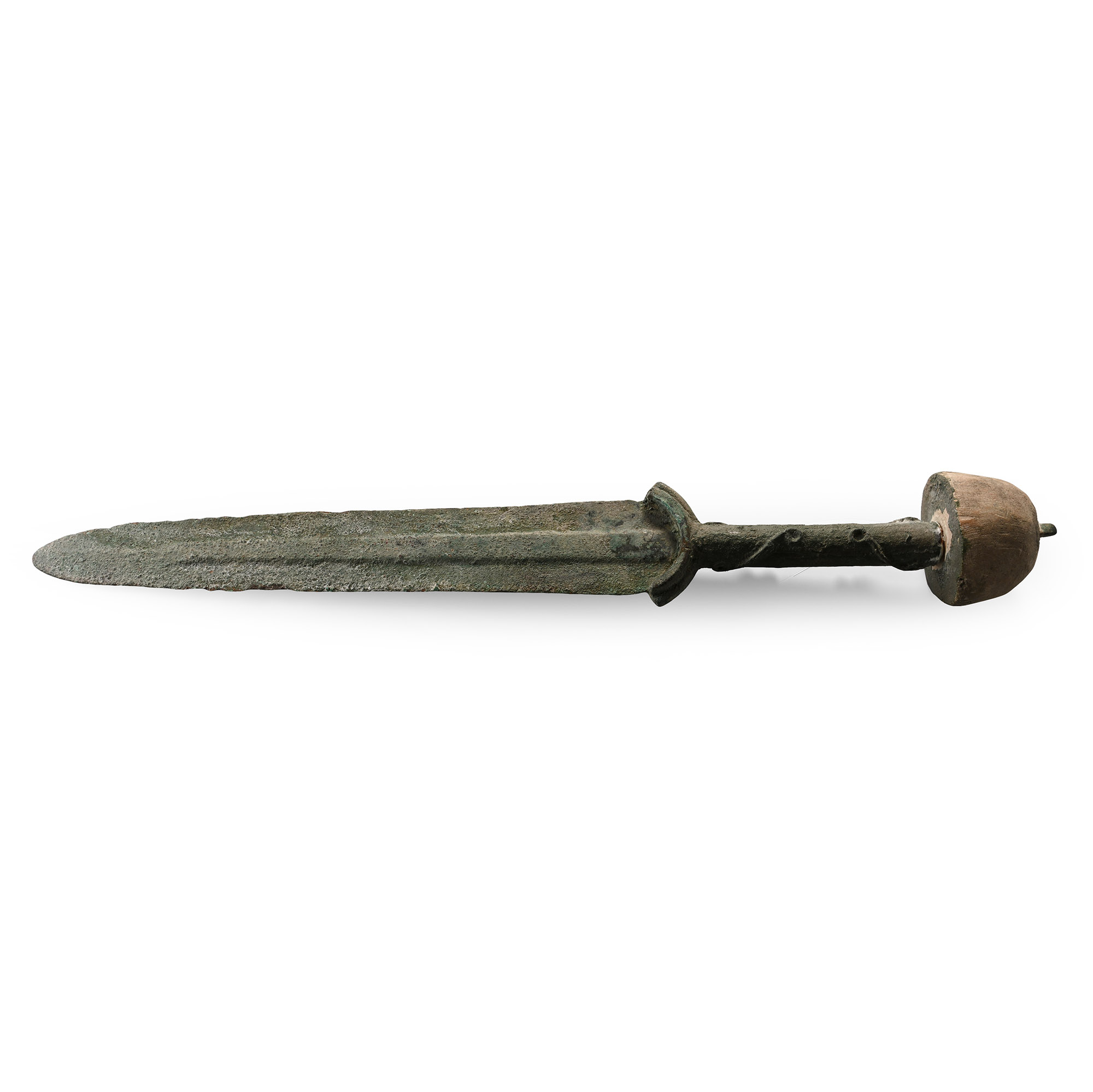
Luristan Bronze Short Sword
2ND-1ST MILLENNIUM B.C. AND LATER
21 3/8 in. (878 grams, 54.2 cm).
With tapering, double-edged triangular blade and central midrib; crescent-shaped, tri-lobed guard at the shoulder; restored decorated cylindrical hilt with domed stone pommel. [No Reserve]
ProvenanceFrom a North West London collection; previously acquired in the 1980s.
LiteratureSee Khorasani, M.M., Arms and Armour from Iran. The Bronze Age to the End of the Qajar Period, Tübingen, 2006.
CONDITIONTimeLine Auctions follows a vetting process to ensure the authenticity and legality of all items, reinforcing our commitment to integrity and responsible trading. Each antiquity, antique, and coin lot undergoes thorough examination by a vetting committee of at least ten external specialists, professional trade association members, scientists, and archaeologists: Our Vetting Process
AUCTIONS:
TimeLine is a leading auction house specialising in antiquities, ancient art, collectables, natural history, coins, medals, and books. Our auctions offer museums, collectors, historians, and enthusiasts the opportunity to acquire unique and historically significant pieces.
-
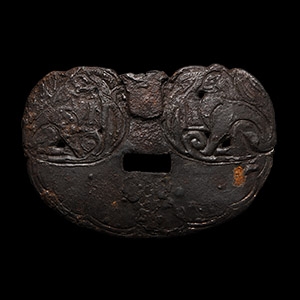
Japanese Bronze Sword Guard with Seated Beasts
16th-17th century A.D.Estimate: £180 - 240 (‡+bp*)
Opening Bid: £90
Facing each other in relief, incised scallops below. 46 grams, 97 mm
From the collection of a North American gentleman, formed in the 1990s. -
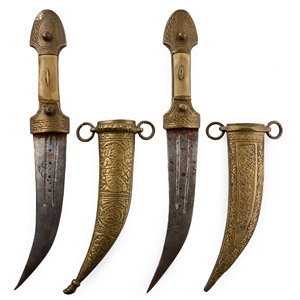
Western Asiatic Style Dagger Pair
20th century A.D.Sold for (Inc. bp): £65
Each a curved steel blade with two fullers, stamped 'SYRIE'; waisted bronze grip with applied bone panels, tendril ornament and 'SYRIA' legend to reverse; cast scabbard with suspension rings, guilloche decoration and 'SYRIA' legend. 655 grams total, 26.5-27 cm
Acquired during the 1960s. From an old North London oriental and ethnographical collection. From the property of a late Lincolnshire, UK, gentleman. -
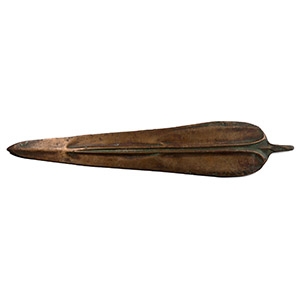
Western Asiatic Bronze Sword Blade
Mid 1st millennium B.C.Sold for (Inc. bp): £234
Two-edged leaf-shaped blade with short rectangular tang, corrugated midrib extending almost to the tip and flared at the shoulders. 384 grams, 38.7 cm
From a London collection, early 2000s.
