
Loading, please wait...
LOT 0258
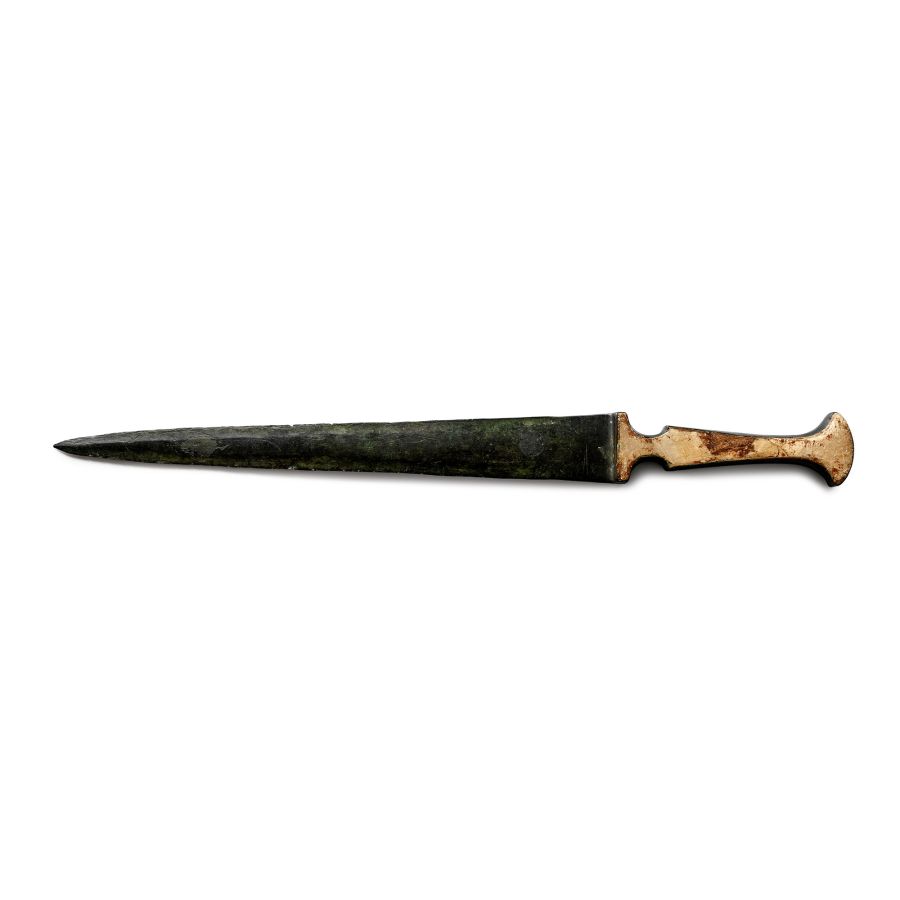
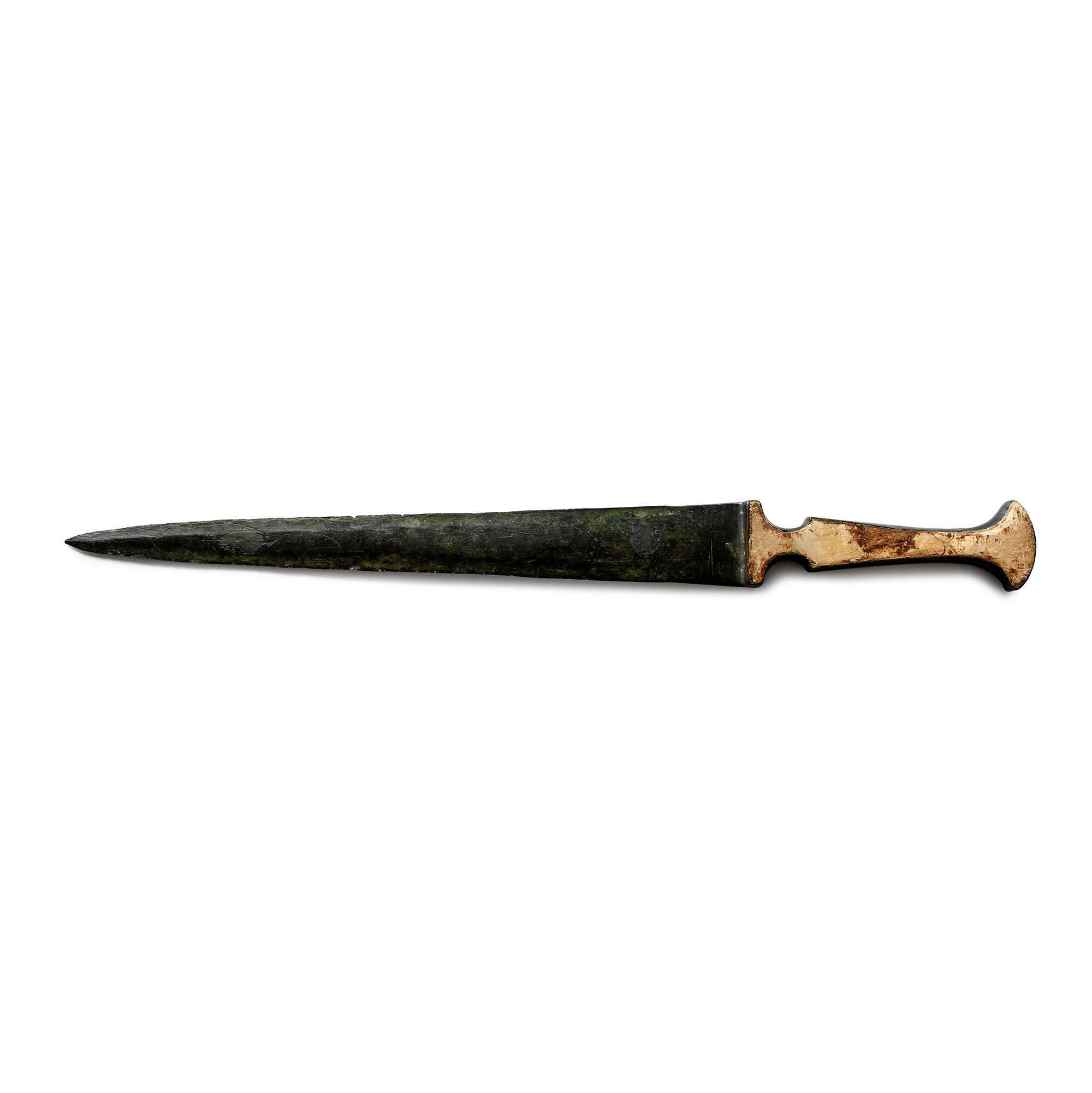
Luristan Bronze Short Sword with Inlaid Handle
1000 B.C.
19 5/8 in. (515 grams, 50 cm).
With triangular tapering blade, flanged hilt to accept inlays, bone on the handle, two angular indentations on each side of the guard.
Provenancewith Bonhams, London, 4 July 1996, no.324.
Private collection, Suffolk.
Cf. Khorasani, M.M., Arms and Armour from Iran - The Bronze Age to the End of the Qajar Period, Tübingen, 2006, p.378, cat.7,9.
FootnotesThis dirk is of Medvedskaya type I, a common weapon among dirks and daggers produced in Luristan. According to Moorey, such kind of daggers were produced in Western Persia at least since the 13th century B.C. and remained in use at least until the 9th century B.C. The two practically identical examples published by Khorasani are preserved in the National Museum of Teheran.
CONDITIONTimeLine Auctions follows a vetting process to ensure the authenticity and legality of all items, reinforcing our commitment to integrity and responsible trading. Each antiquity, antique, and coin lot undergoes thorough examination by a vetting committee of at least ten external specialists, professional trade association members, scientists, and archaeologists: Our Vetting Process
AUCTIONS:
TimeLine is a leading auction house specialising in antiquities, ancient art, collectables, natural history, coins, medals, and books. Our auctions offer museums, collectors, historians, and enthusiasts the opportunity to acquire unique and historically significant pieces.
-
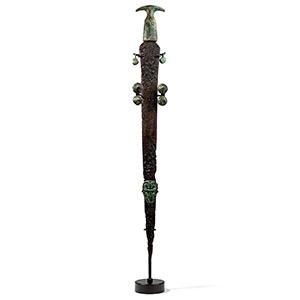
Caucasian Bronze Hilted Iron Sword
Iron Age, 8th-6th century B.C.Estimate: £4,000 - 6,000 (+bp*)
Opening Bid: £1,600
A broad sword with tapering blade and rounded shoulders, bronze hilt with crescentic pommel and apotropaic eye motifs to both sides; accompanied by bronze scabbard or baldric elements including a pair of eyelets with suspension loops, four circular appliqués with conical tips and ropework borders, and a scabbard chape with two opposing ibexes; mounted on a custom-made display stand. 2.2 kg total, 78 cm including stand
From the private collection of a London gentleman, from his grandfather's collection formed before the early 1970s. Accompanied by an academic report by Dr Raffaele D'Amato. This lot has been checked against the Interpol Database of stolen works of art and is accompanied by search certificate number no.12914-245170.
The sword belongs to the Caucasian culture of the Colchis, and represents a very rare typology. A similar blade was found together with early Scythian arrows during excavations at Karmir-Blur. A similar combination found at Kulanurkhva’s excavations suggests that the appearance of such blades in Abkhazia is linked to the Scythian campaigns in Near Eastern Asia. -
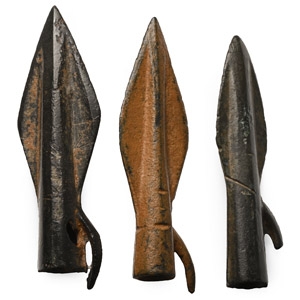
Greek Bronze Arrowhead Group
Circa 5th-3rd century B.C.Sold for (Inc. bp): £65
Each socketted with a side lug and raised midrib. 20.4 grams total, 43-48 mm
From a private Tyneside collection, formed since the early 2000s. -
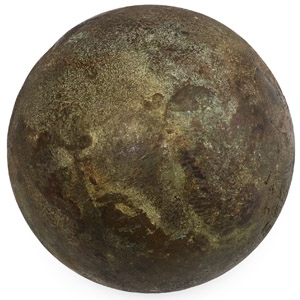
Crimean War Bronze Shrapnel Cannon Ball
Dated 1854 A.D.Sold for (Inc. bp): £117
Hollow-formed shot with plug in situ, engraved: 'INKERMAN / NOV 1854 / 49 FOOT'. 1.7 kg, 80 mm
Acquired on the UK art art. Property of a Nottinghamshire, UK, gentleman.
The 49th (Princess Charlotte of Wales's) (Hertfordshire) Regiment of Foot was an infantry regiment which took part in the Crimean War and fought at the Battle of Inkerman in November 1854.
